Only 12 Pearl Harbor survivors remain. On the 84th anniversary, none can attend this year’s remembrance

Guno צְבִי

We fight, We win, Am Yisrael Chai
Survivors of the 1941 Japanese bombing of Pearl Harbor have long been the center of a remembrance ceremony held each year on the military base’s waterfront.

But today only 12 are still alive — all centenarians — and this year none is able to make the pilgrimage to Hawaii to mark the event, scheduled for Sunday.

That means no one attending will have firsthand memories of serving during the attack, which killed more than 2,300 troops and catapulted the US into World War 2. The development is not a surprise and is an evolution of an ongoing trend. As survivors fade, their descendants and the public are increasingly turning to other ways of learning about the bombing.

 
I forgot that FDR had been a secretary of the Navy, and one reason the conspiracy theories about FDR allowing the attack on Pearl Harbor don't make any sense is because he loved the Navy and would never have intentionally allowed its destruction.
If you look at the history closely, FDR wanted the battlefleet at Pearl Harbor (the battleships) to put pressure on Japan with its forward basing. The Navy's top brass wanted it kept on the West coast as they saw no strategic value to putting them at Pearl. FDR, being CinC got his way.

Otherwise, the only things at Pearl Harbor would have been the carriers and a portion of the Pacific Fleet and Scouting Fleet that supported them along with submarines. That would have made Pearl Harbor a poor target for the Japanese, who only decided to attack it as an almost last-minute add on to their initial plan for conquest in the Pacific.
 
If you look at the history closely, FDR wanted the battlefleet at Pearl Harbor (the battleships) to put pressure on Japan with its forward basing. The Navy's top brass wanted it kept on the West coast as they saw no strategic value to putting them at Pearl. FDR, being CinC got his way.

Otherwise, the only things at Pearl Harbor would have been the carriers and a portion of the Pacific Fleet and Scouting Fleet that supported them along with submarines. That would have made Pearl Harbor a poor target for the Japanese, who only decided to attack it as an almost last-minute add on to their initial plan for conquest in the Pacific.
Battleships essentially turned out to almost be a non-factor in the War in the Pacific.
 
Battleships essentially turned out to almost be a non-factor in the War in the Pacific.
Yes, but in 1941 they still represented the power of a nation at sea. The USN wanted them on the West coast, and interestingly, for the most part after Pearl Harbor that's where our battleships (under Admiral Pye) sat. During the Midway battle, Pye's battleline was steaming between Midway and the West coast with his 8 battleships as a rear guard just in case things went wrong. Yes, by Midway we had 8 older battleships in the Pacific.

FDR fucked up ordering the battlefleet to Pearl, but his reasoning wasn't a "conspiracy" of some sort either. He was playing amateur Admiral, something Churchill did too from time to time. Another FDR awshit was insisting that the Alaska class large cruisers be built. The Navy didn't want them and were going to cancel the project, but FDR did and that's why they were built.
 
Yes, but in 1941 they still represented the power of a nation at sea. The USN wanted them on the West coast, and interestingly, for the most part after Pearl Harbor that's where our battleships (under Admiral Pye) sat. During the Midway battle, Pye's battleline was steaming between Midway and the West coast with his 8 battleships as a rear guard just in case things went wrong. Yes, by Midway we had 8 older battleships in the Pacific.

FDR fucked up ordering the battlefleet to Pearl, but his reasoning wasn't a "conspiracy" of some sort either. He was playing amateur Admiral, something Churchill did too from time to time. Another FDR awshit was insisting that the Alaska class large cruisers be built. The Navy didn't want them and were going to cancel the project, but FDR did and that's why they were built.
You can blame FDR for tactical mistakes 'till the cows come home. Obviously for your own hyperpartian political reasons.

You can't change the fact that under FDR's leadership, America fought a two-front global war, and utterly vanquished three major world powers: Nazi Germany, Imperial Japan, and Fascist Italy.
 
You can blame FDR for tactical mistakes 'till the cows come home. Obviously for hyperpartian political reasons.

FDR's mistakes were strategic, not tactical. For the most part he stayed out of making military decisions and that worked well. His one failing on the grand strategy level when dealing with Churchill and Stalin was both of them steamrollered him into some bad political deals and strategic choices.
You can't change the fact that under FDR's leadership, America fought a two-front global war, and utterly vanquished three major world powers: Nazi Germany, Imperial Japan, and Fascist Italy.

The US, in combination with the USSR and Britain / the Commonwealth, fought it. FDR's leadership at the higher levels of strategy made some bad choices. They were nowhere near fatal and for the most part FDR let the military run their operations without meddling in them.
 
Battleships essentially turned out to almost be a non-factor in the War in the Pacific.
Agreed. Their main use was shelling islands prior to the Marines landing.

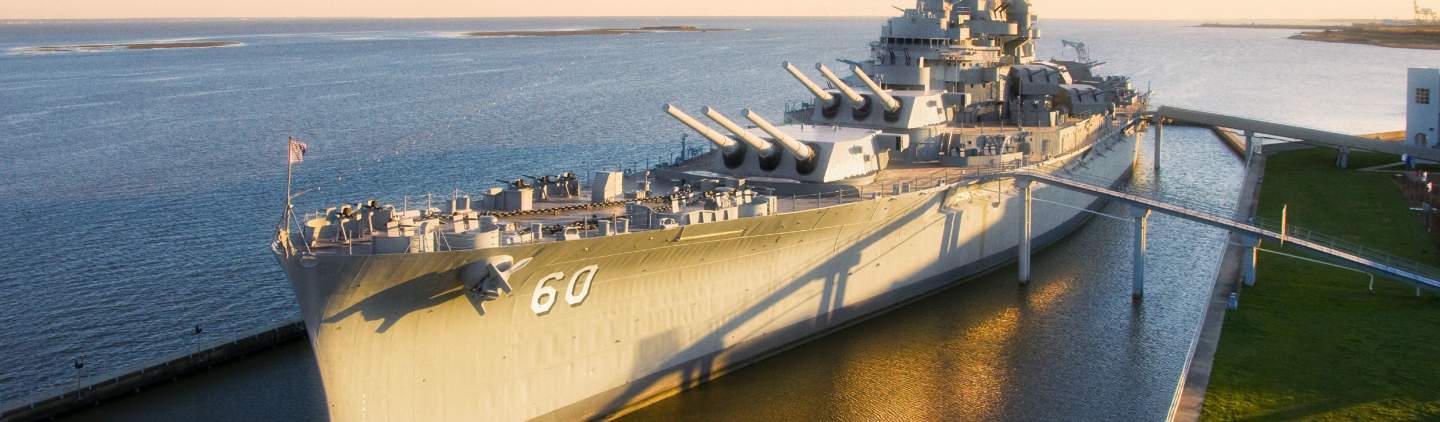
Westbound on I-10 from Pensacola to Mobile there used to be billboard that said something like "You are within range of the guns of the USS Alabama. 23 miles".

BattleshipPark_57_m_e0f273b8-a47b-481d-bf58-77f95fbd7c80.jpg
 
You can blame FDR for tactical mistakes 'till the cows come home. Obviously for your own hyperpartian political reasons.

You can't change the fact that under FDR's leadership, America fought a two-front global war, and utterly vanquished three major world powers: Nazi Germany, Imperial Japan, and Fascist Italy.
MAGAts hate anything left of Alt-Right. Sad.
 
FDR's mistakes were strategic, not tactical. For the most part he stayed out of making military decisions and that worked well. His one failing on the grand strategy level when dealing with Churchill and Stalin was both of them steamrollered him into some bad political deals and strategic choices.


The US, in combination with the USSR and Britain / the Commonwealth, fought it. FDR's leadership at the higher levels of strategy made some bad choices. They were nowhere near fatal and for the most part FDR let the military run their operations without meddling in them.
:lolup: Trying to diminish and minimize America's historic victory in WW2.

Germany had allies too, please don't attribute America's victory to Canada and Free French forces. Soviets stayed in the fight partly because of FDR'S lend-leadr.

Most Republicans tended towards isolationism, and if they had held the the reigns of power there was a risk they would have accommodated Hitler and allowed him terms to surrender conditionally.

FDR led America to total victory in a global two front war and utterly vanquished three major world powers.
 
:lolup: Trying to diminish and minimize America's historic victory in WW2.
Looking at it realistically. The USSR ground the German army up. The US and Britain destroyed their air force and bombed Germany into rubble.
Germany had allies too, please don't attribute America's victory to Canada and Free French forces. Soviets stayed in the fight partly because of FDR'S lend-leadr.

The US provided the bulk of the industry and economic wealth needed to defeat the Axis. The Soviets stayed in the fight because they decided to. Lend-Lease did little or nothing to stop the early German successes in Russia. The Russians did that pretty much on their own. What Lend-Lease did do was give the Russians the means to go on the offensive in late 1943 and in 1944 and push the Germans back to Berlin.

The British / Commonwealth played a significant role in Europe in ground warfare. The various Allied powers + Britain were roughly equal in size to what the US contributed in the MTO / ETO.

Different story in the Pacific. That was almost entirely a US operation. Even in the CBI and SWPA areas of operations the US provided the overwhelming majority of forces.
Most Republicans tended towards isolationism, and if they had held the the reigns of power there was a risk they would have accommodated Hitler and allowed him terms to surrender conditionally.

Starting about 1936, the US began to prepare for another war in either Europe or the Pacific. Most of the preparations were in building infrastructure to expand US industrial capacity and provide forward basing for those wars. Little was done initially to expand the military or military production itself. Republicans and Democrats alike voted in favor of this. It is one of the big reasons the Great Depression ended which up to that point had dragged on due largely to FDR's social-welfare programs failing to recover the economy.
FDR led America to total victory in a global two front war and utterly vanquished three major world powers.
Italy was not a "major world power." By the time of Pearl Harbor, Italy was pretty much finished.

US war planning was really what won. FDR happened to be in office, and he let the military run with that for the most part.
 
Agreed. Their main use was shelling islands prior to the Marines landing.

Westbound on I-10 from Pensacola to Mobile there used to be billboard that said something like "You are within range of the guns of the USS Alabama. 23 miles".

BattleshipPark_57_m_e0f273b8-a47b-481d-bf58-77f95fbd7c80.jpg
That's cool!

I read that the U S. had to build fairly smallish and slender battleships that could pass through the Panama Canal. We never built bohemeths like the German Bismarck or the Japanese Yamato.
 
That's cool!

I read that the U S. had to build fairly smallish and slender battleships that could pass through the Panama Canal. We never built bohemeths like the German Bismarck or the Japanese Yamato.
I'd never heard of that, but it makes sense. Then again, I'd never heard of the Washington Naval Treaty either until I saw it mentioned in the link about the USS Alabama below.

On the subject of naval behemoths, that's a common dilemma in war gaming; do you put all of your assets into one large ship or into several smaller ones? I favor the latter. History showed what happened to the Bismarck and Yamamoto. LOL

The first American battleships designed after the Washington Treaty system began to break down in the mid-1930s took advantage of an escalator clause that increased the main battery to 16-inch (406 mm) guns. However, Congress refused to authorize larger battleships, which kept their displacement close to the Washington Treaty limit of 35,000 long tons (36,000 t).


:lolup: Trying to diminish and minimize America's historic victory in WW2.

Germany had allies too, please don't attribute America's victory to Canada and Free French forces. Soviets stayed in the fight partly because of FDR'S lend-leadr.

Most Republicans tended towards isolationism, and if they had held the the reigns of power there was a risk they would have accommodated Hitler and allowed him terms to surrender conditionally.

FDR led America to total victory in a global two front war and utterly vanquished three major world powers.
The naysayers who claim the Russians would have won the war without the US always "forget" about Lend Lease and how it was American industry that provided the assets to beat both Germany and Japan. Stalin was more effective at killing his own people than Hitler did with his suicidal Operation Barbarossa.

After Pearl Harbor and Germany declaring war on the US, I don't know of any Republicans who would have committed political suicide by accepting anything less than unconditional surrender. Two world wars within 30 years of each other was too much to risk by letting the enemy survive to fight a third one.

 
I am paying attention to the conspiracy theory that at the very top of Washington there was knowledge of the impending attack, and they let it happen because it advanced their interests.

Exactly like how the Zionist Bastards knew all about the Oct 7 operation, and let it happen.
 
That's cool!

I read that the U S. had to build fairly smallish and slender battleships that could pass through the Panama Canal. We never built bohemeths like the German Bismarck or the Japanese Yamato.
While the USN specified that US ships had to have a beam that could pass through the Panama Canal (that ended with building of "super" carriers and battleships--the United States and Montana class respectively) about 1943, up to that point yes. The German ships were draft limited as they had to be able to traverse the Keil Canal (wide but shallow).

US battleships weren't "smallish" by any stretch. If anything, both Japan and Germany, due in part to their limited naval engineering capacity, built battleships that were, for their weight, less effective than ones the US constructed for their weight. British battleships--and ships in general--were limited in length and beam by requirements they fit in existing Royal Navy drydocks that often dated back to the Victorian era.

For Yamato vs. the Iowa class:


While I would disagree with some of this, it's not that bad overall.

 
I am paying attention to the conspiracy theory that at the very top of Washington there was knowledge of the impending attack, and they let it happen because it advanced their interests.

Exactly like how the Zionist Bastards knew all about the Oct 7 operation, and let it happen.
Not the case. Aside from that, peace time complacency in Hawaii had as much to do with it as anything. There were something like 20 to 30 signs of an impending or immediate attack that could or should have alerted the US military in Hawaii and put the bases there on full alert, but they all fell through the cracks.
 
Back
Top