
signalmankenneth
Verified User
This incident significantly impacts the U.S. military's situational awareness and command capabilities in the region.
Amid the twisted metal, what looks like a large flying saucer lies upside down.
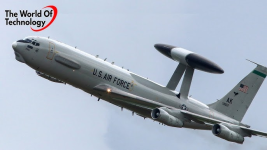
It is, or was, the rotating radar dome that usually sits above the E-3 Sentry, one of the jewels in America’s military crown – essentially a $500m (£375m) flying battlefield nerve centre that allows commanders to track everything in the air across hundreds of miles.
As of Friday morning, the United States had 16 of the vital but ageing Cold War-era aircraft, with roughly 40 per cent of the fleet deployed to the Middle East.
Now they have 15, after Iran attacked Prince Sultan with, it is believed, ballistic missiles and drones, injuring 12 US personnel, two seriously, and damaging up to five air-to-air refuelling tankers.
The point of impact, just where the radar dome attaches to the Sentry, suggests a precision strike by a drone, a more accurate weapon than a ballistic missile when used by Iran.
It also hints at a worrying level of intelligence on the part of Tehran.
On Saturday, Volodymyr Zelensky revealed that Russia – already accused of sharing military information and hardware with Iran during the war – had taken satellite images of the Saudi base in the days before the strike.
“Do they [Russia] help Iranians?” the Ukrainian president said in an interview with NBC. “Of course. How many per cent? One hundred per cent.”
It is the latest of several successful Iranian hits on US bases in the region which, it emerged this week, had forced some personnel to evacuate to the relative safety of nearby offices and hotels.
Coming almost four weeks since the launch of Operation Epic Fury, a war Donald Trump promised would enable the Iranian people to overthrow the regime, the attack suggests the Pentagon underestimated the potency and resilience of Tehran’s offensive capability.
The destruction of an E-3 Sentry is a particular setback for United States Central Command (Centcom).
The ageing planes – the youngest of which was delivered in 1992 – known as airborne early warning and control aircraft are among the most precious assets in America’s conventional arsenal, able to track other aircraft, drones and missiles across a 250-mile radius.
A direct replacement for the high-tech aircraft would cost $500m in today’s money. However, there is no existing production line. Boeing’s E-7 Wedgetail, the nearest equivalent, has a $700m price tag.
Commanders will have to consider how to protect the aircraft, just when maximum attention is needed to plan for a US ground assault on southern Iran, should Mr Trump give the order.
https://www.yahoo.com/news/articles/iran-destroyed-us-500m-battlefield-183519547.html
How Iran destroyed US base’s $500m battlefield nerve centre
The mangled airframe of the four-engined US air force jet stands on the runway of Prince Sultan air base in Saudi Arabia.Amid the twisted metal, what looks like a large flying saucer lies upside down.
It is, or was, the rotating radar dome that usually sits above the E-3 Sentry, one of the jewels in America’s military crown – essentially a $500m (£375m) flying battlefield nerve centre that allows commanders to track everything in the air across hundreds of miles.
As of Friday morning, the United States had 16 of the vital but ageing Cold War-era aircraft, with roughly 40 per cent of the fleet deployed to the Middle East.
Now they have 15, after Iran attacked Prince Sultan with, it is believed, ballistic missiles and drones, injuring 12 US personnel, two seriously, and damaging up to five air-to-air refuelling tankers.
The point of impact, just where the radar dome attaches to the Sentry, suggests a precision strike by a drone, a more accurate weapon than a ballistic missile when used by Iran.
It also hints at a worrying level of intelligence on the part of Tehran.
On Saturday, Volodymyr Zelensky revealed that Russia – already accused of sharing military information and hardware with Iran during the war – had taken satellite images of the Saudi base in the days before the strike.
“Do they [Russia] help Iranians?” the Ukrainian president said in an interview with NBC. “Of course. How many per cent? One hundred per cent.”
It is the latest of several successful Iranian hits on US bases in the region which, it emerged this week, had forced some personnel to evacuate to the relative safety of nearby offices and hotels.
Coming almost four weeks since the launch of Operation Epic Fury, a war Donald Trump promised would enable the Iranian people to overthrow the regime, the attack suggests the Pentagon underestimated the potency and resilience of Tehran’s offensive capability.
The destruction of an E-3 Sentry is a particular setback for United States Central Command (Centcom).
The ageing planes – the youngest of which was delivered in 1992 – known as airborne early warning and control aircraft are among the most precious assets in America’s conventional arsenal, able to track other aircraft, drones and missiles across a 250-mile radius.
A direct replacement for the high-tech aircraft would cost $500m in today’s money. However, there is no existing production line. Boeing’s E-7 Wedgetail, the nearest equivalent, has a $700m price tag.
Commanders will have to consider how to protect the aircraft, just when maximum attention is needed to plan for a US ground assault on southern Iran, should Mr Trump give the order.
https://www.yahoo.com/news/articles/iran-destroyed-us-500m-battlefield-183519547.html


