Green Dogma Behind Fall Of Sri Lanka

cancel2 2022

Canceled
.
Perfect example of how eco-fascists destroy everything in their wake, whilst remaining smug and self satisfied at the same time.

Germany is learning an incredibly bitter lesson as well.
Greenie energy is a farce. It’s not sustainable. Not even an advanced country like Germany can make it work.

Here is the an excellent description of the chaos left by incompetent fools by the inimitable Michael Shellenberger.

https://michaelshellenberger.substa...e=substack&utm_medium=email&utm_content=share

Sri Lanka has fallen. Protesters breached the official residences of Sri Lanka's Prime Minister and President, who have fled to undisclosed locations out of fear of death. The proximate reason is that the nation is bankrupt, suffering its worst financial crisis in decades. Millions are struggling to purchase food, medicine and fuel. Energy shortages and inflation were major factors behind the crisis. Inflation in June in Sri Lanka was over 50%. Food prices rose by 80%. And a half-million people fell into poverty over the last year.

But the underlying reason for the fall of Sri Lanka is that its leaders fell under the spell of Western green elites peddling organic agriculture and “ESG,” which refers to investments made following supposedly higher Environmental, Social, and Governance criteria. Sri Lanka has a near-perfect ESG score (98) which is higher than Sweden (96) or the United States (51).

To be sure, there were other factors behind Sri Lanka’s fall. Covid lockdowns and a 2019 bombing hurt tourism, a $3 billion to 5 billion-per-year industry. Sri Lanka’s leaders insisted on paying China back for various “Belt and Road” infrastructure projects when other nations refused to do so. Sri Lanka racked up a huge foreign debt. Growth had been declining since 2012. And higher oil prices meant transportation prices rose 128% since May.

But the biggest and main problem causing Sri Lanka’s fall was its ban on chemical fertilizers in April 2021. Many other developing nations had to deal with similar challenges, including covid and high foreign debt, but have not collapsed. Indonesia has suffered terrorist bombings, which harmed tourism, but managed to rebound, and tourism rebounded in Sri Lanka starting last year. And while economic growth declined after 2012 but from astronomical peaks of 8% and 9% and remained above 3% and 4% until 2020.

The numbers are shocking. One-third of Sri Lanka’s farm lands were dormant in 2021 due to the fertilizer ban. Over 90% of Sri Lanka’s farmers had used chemical fertilizers before they were banned. After they were banned, an astonishing 85% experienced crop losses. The numbers are shocking. After the fertilizer ban, rice production fell 20% and prices skyrocketed 50 percent in just six months. Sri Lanka had to import $450 million worth of rice despite having been self-sufficient in the grain just months earlier. The price of carrots and tomatoes rose five-fold. While there are 2 million farmers in Sri Lanka, 70% of the nation’s 22 million people are directly or indirectly dependent on farming.

Things were worse for smaller farmers. In the Rajanganaya region, where the majority farmers operate just a hectare (2.5 acres), families reported 50% to 60% reductions in crop harvest. “Before the ban, this was one of the biggest markets in the country, with tonnes and tonnes of rice and vegetables,” said one farmer earlier this year. “But after the ban, it became almost zero. If you talk to the rice mills, they don’t have any stock because people’s harvest dropped so much. The income of this whole community has dropped to an extremely low level.”

But the damage to tea was the key to Sri Lanka’s financial failure. Tea production had generated $1.3 billion in exports annually. Tea exports paid for 71% of the nation’s food imports before 2021. Then, tea production and exports crashed 18% between November 2021 and February 2022, reaching their lowest level in 23 years. The government’s devastating ban on fertilizer thus destroyed the ability of Sri Lanka to pay for food, fuel, and service its debt.

The crisis accelerated from that moment forward. At the end of August 2021, President Gotabaya Rajapaksa declared a state of emergency and two months later tried to reverse course. But it was too late. “We don’t have enough chemical fertilizers,” Rajapaksa said, “because we didn’t import them. There is a shortage.” In May 2022, Sri Lanka failed to pay $77 million on its foreign debt repayments. It seems like a small amount but the default made it hard for Sri Lanka to borrow money, and so it devalued its currency, inflation rose 30%, and the government ran out of the cash it needed to import fuel, food, and medicines.

What, exactly, were Rajapaksa and other Sri Lankan leaders thinking? Why did they engage in such a radical experiment?

https://michaelshellenberger.substa...e=substack&utm_medium=email&utm_content=share
 
Last edited:
Well, if you think solar and wind will supply cheap energy, you are a fool
If you think farmers can grow crops without manufactured fertilizer and pest controls, you are a fool
If you think that people will willingly accept their lives being destroyed, you are a fool

You are also a radical Leftist environmentalist if you believe that crap.
 
The numbers are shocking. One-third of Sri Lanka’s farm lands were dormant in 2021 due to the fertilizer ban. Over 90% of Sri Lanka’s farmers had used chemical fertilizers before they were banned. After they were banned, an astonishing 85% experienced crop losses. The numbers are shocking. After the fertilizer ban, rice production fell 20% and prices skyrocketed 50 percent in just six months. Sri Lanka had to import $450 million worth of rice despite having been self-sufficient in the grain just months earlier. The price of carrots and tomatoes rose five-fold. While there are 2 million farmers in Sri Lanka, 70% of the nation’s 22 million people are directly or indirectly dependent on farming.

Things were worse for smaller farmers.
 
The numbers are shocking. One-third of Sri Lanka’s farm lands were dormant in 2021 due to the fertilizer ban. Over 90% of Sri Lanka’s farmers had used chemical fertilizers before they were banned. After they were banned, an astonishing 85% experienced crop losses. The numbers are shocking. After the fertilizer ban, rice production fell 20% and prices skyrocketed 50 percent in just six months. Sri Lanka had to import $450 million worth of rice despite having been self-sufficient in the grain just months earlier. The price of carrots and tomatoes rose five-fold. While there are 2 million farmers in Sri Lanka, 70% of the nation’s 22 million people are directly or indirectly dependent on farming.

Things were worse for smaller farmers.

And the Leftists that did this don't give a shit...

SG-Sri-Lanka-1200x630.jpg


Maybe the Leftist Democrats here should pay attention because this is where they are taking America...
 
.
Perfect example of how eco-fascists destroy everything their wake, whilst remaining smug and self satisfied at the same time.

Germany is learning an incredibly bitter lesson as well.
Greenie energy is a farce. It’s not sustainable. Not even an advanced country like Germany can make it work.

Here is the an excellent description of the chaos left by incompetent fools by the inimitable Michael Shellenberger.

https://michaelshellenberger.substa...e=substack&utm_medium=email&utm_content=share

Sri Lanka has fallen. Protesters breached the official residences of Sri Lanka's Prime Minister and President, who have fled to undisclosed locations out of fear of death. The proximate reason is that the nation is bankrupt, suffering its worst financial crisis in decades. Millions are struggling to purchase food, medicine and fuel. Energy shortages and inflation were major factors behind the crisis. Inflation in June in Sri Lanka was over 50%. Food prices rose by 80%. And a half-million people fell into poverty over the last year.

But the underlying reason for the fall of Sri Lanka is that its leaders fell under the spell of Western green elites peddling organic agriculture and “ESG,” which refers to investments made following supposedly higher Environmental, Social, and Governance criteria. Sri Lanka has a near-perfect ESG score (98) which is higher than Sweden (96) or the United States (51).

To be sure, there were other factors behind Sri Lanka’s fall. Covid lockdowns and a 2019 bombing hurt tourism, a $3 billion to 5 billion-per-year industry. Sri Lanka’s leaders insisted on paying China back for various “Belt and Road” infrastructure projects when other nations refused to do so. Sri Lanka racked up a huge foreign debt. Growth had been declining since 2012. And higher oil prices meant transportation prices rose 128% since May.

But the biggest and main problem causing Sri Lanka’s fall was its ban on chemical fertilizers in April 2021. Many other developing nations had to deal with similar challenges, including covid and high foreign debt, but have not collapsed. Indonesia has suffered terrorist bombings, which harmed tourism, but managed to rebound, and tourism rebounded in Sri Lanka starting last year. And while economic growth declined after 2012 but from astronomical peaks of 8% and 9% and remained above 3% and 4% until 2020.

The numbers are shocking. One-third of Sri Lanka’s farm lands were dormant in 2021 due to the fertilizer ban. Over 90% of Sri Lanka’s farmers had used chemical fertilizers before they were banned. After they were banned, an astonishing 85% experienced crop losses. The numbers are shocking. After the fertilizer ban, rice production fell 20% and prices skyrocketed 50 percent in just six months. Sri Lanka had to import $450 million worth of rice despite having been self-sufficient in the grain just months earlier. The price of carrots and tomatoes rose five-fold. While there are 2 million farmers in Sri Lanka, 70% of the nation’s 22 million people are directly or indirectly dependent on farming.

Things were worse for smaller farmers. In the Rajanganaya region, where the majority farmers operate just a hectare (2.5 acres), families reported 50% to 60% reductions in crop harvest. “Before the ban, this was one of the biggest markets in the country, with tonnes and tonnes of rice and vegetables,” said one farmer earlier this year. “But after the ban, it became almost zero. If you talk to the rice mills, they don’t have any stock because people’s harvest dropped so much. The income of this whole community has dropped to an extremely low level.”

But the damage to tea was the key to Sri Lanka’s financial failure. Tea production had generated $1.3 billion in exports annually. Tea exports paid for 71% of the nation’s food imports before 2021. Then, tea production and exports crashed 18% between November 2021 and February 2022, reaching their lowest level in 23 years. The government’s devastating ban on fertilizer thus destroyed the ability of Sri Lanka to pay for food, fuel, and service its debt.

The crisis accelerated from that moment forward. At the end of August 2021, President Gotabaya Rajapaksa declared a state of emergency and two months later tried to reverse course. But it was too late. “We don’t have enough chemical fertilizers,” Rajapaksa said, “because we didn’t import them. There is a shortage.” In May 2022, Sri Lanka failed to pay $77 million on its foreign debt repayments. It seems like a small amount but the default made it hard for Sri Lanka to borrow money, and so it devalued its currency, inflation rose 30%, and the government ran out of the cash it needed to import fuel, food, and medicines.

What, exactly, were Rajapaksa and other Sri Lankan leaders thinking? Why did they engage in such a radical experiment?

https://michaelshellenberger.substa...e=substack&utm_medium=email&utm_content=share

Now turning to Germany.

End of the German Idyll
Walter Russell Mead

Germany looked normal over the weekend as a genial Chancellor Olaf Scholz welcomed the Group of Seven leaders and their guests to the luxurious Schloss Elmau in the Bavarian Alps. But those appearances are deceiving. Germany is facing its gravest challenges since the foundation of the Federal Republic following World War II.

This is very sudden. As recently as 2020, almost the entire world agreed with the smug German self-assessment that Germany had the world’s most successful economic model, was embarking on the most ambitious—and largely successful—climate initiative in the world, and had perfected a values-based foreign policy that ensured German security and international popularity at extremely low cost.

None of this was true. The German economic model was based on unrealistic assumptions about world politics and is unlikely to survive the current turmoil. German energy policy is a chaotic mess, a shining example to the rest of the world of what not to do. Germany’s reputation for a values-based foreign policy has been severely dented by Berlin’s waffling over aid to Ukraine. And German security experts are coming to terms with a deeply unwelcome truth: Confronted with an aggressive Russia, Germany, like Europe generally, is utterly reliant on the U.S. for its security. At a time when American foreign policy increasingly prioritizes Asia and isolationist sentiment among both Republicans and Democrats appears to be rising, if Donald Trump returns to the White House in 2025, German security will depend on his goodwill.

Read the full article in The Wall Street Journal

https://www.wsj.com/articles/german...ers-security-rearm-foreign-policy-11656361529
 
Confronted with an aggressive Russia, Germany, like Europe generally, is utterly reliant on the U.S. for its security. At a time when American foreign policy increasingly prioritizes Asia and isolationist sentiment among both Republicans and Democrats appears to be rising, if Donald Trump returns to the White House in 2025, German security will depend on his goodwill.
fucking A.
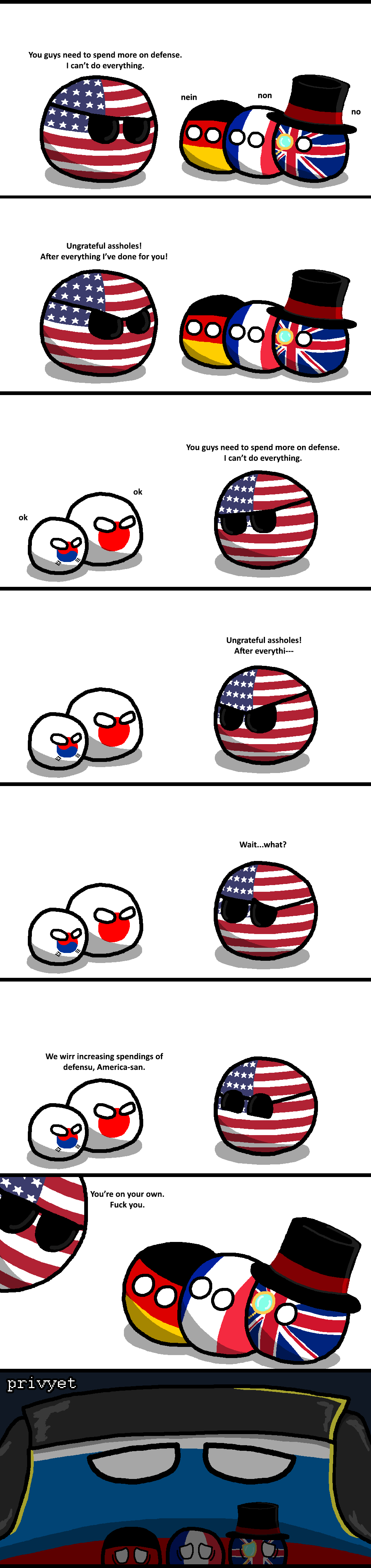
get your security shit together and take care of your own war.
The USA isn't going to help from Europe over any China conflicts
 
The German economic model was based on unrealistic assumptions about world politics and is unlikely to survive the current turmoil. German energy policy is a chaotic mess, a shining example to the rest of the world of what not to do.

Did the Germans learn nothing from the Siberian pipeline crisis of the 80's.

(shaking head)
 
.
Perfect example of how eco-fascists destroy everything in their wake, whilst remaining smug and self satisfied at the same time.

Germany is learning an incredibly bitter lesson as well.
Greenie energy is a farce. It’s not sustainable. Not even an advanced country like Germany can make it work.

Here is the an excellent description of the chaos left by incompetent fools by the inimitable Michael Shellenberger.

https://michaelshellenberger.substa...e=substack&utm_medium=email&utm_content=share

Sri Lanka has fallen. Protesters breached the official residences of Sri Lanka's Prime Minister and President, who have fled to undisclosed locations out of fear of death. The proximate reason is that the nation is bankrupt, suffering its worst financial crisis in decades. Millions are struggling to purchase food, medicine and fuel. Energy shortages and inflation were major factors behind the crisis. Inflation in June in Sri Lanka was over 50%. Food prices rose by 80%. And a half-million people fell into poverty over the last year.

But the underlying reason for the fall of Sri Lanka is that its leaders fell under the spell of Western green elites peddling organic agriculture and “ESG,” which refers to investments made following supposedly higher Environmental, Social, and Governance criteria. Sri Lanka has a near-perfect ESG score (98) which is higher than Sweden (96) or the United States (51).

To be sure, there were other factors behind Sri Lanka’s fall. Covid lockdowns and a 2019 bombing hurt tourism, a $3 billion to 5 billion-per-year industry. Sri Lanka’s leaders insisted on paying China back for various “Belt and Road” infrastructure projects when other nations refused to do so. Sri Lanka racked up a huge foreign debt. Growth had been declining since 2012. And higher oil prices meant transportation prices rose 128% since May.

But the biggest and main problem causing Sri Lanka’s fall was its ban on chemical fertilizers in April 2021. Many other developing nations had to deal with similar challenges, including covid and high foreign debt, but have not collapsed. Indonesia has suffered terrorist bombings, which harmed tourism, but managed to rebound, and tourism rebounded in Sri Lanka starting last year. And while economic growth declined after 2012 but from astronomical peaks of 8% and 9% and remained above 3% and 4% until 2020.

The numbers are shocking. One-third of Sri Lanka’s farm lands were dormant in 2021 due to the fertilizer ban. Over 90% of Sri Lanka’s farmers had used chemical fertilizers before they were banned. After they were banned, an astonishing 85% experienced crop losses. The numbers are shocking. After the fertilizer ban, rice production fell 20% and prices skyrocketed 50 percent in just six months. Sri Lanka had to import $450 million worth of rice despite having been self-sufficient in the grain just months earlier. The price of carrots and tomatoes rose five-fold. While there are 2 million farmers in Sri Lanka, 70% of the nation’s 22 million people are directly or indirectly dependent on farming.

Things were worse for smaller farmers. In the Rajanganaya region, where the majority farmers operate just a hectare (2.5 acres), families reported 50% to 60% reductions in crop harvest. “Before the ban, this was one of the biggest markets in the country, with tonnes and tonnes of rice and vegetables,” said one farmer earlier this year. “But after the ban, it became almost zero. If you talk to the rice mills, they don’t have any stock because people’s harvest dropped so much. The income of this whole community has dropped to an extremely low level.”

But the damage to tea was the key to Sri Lanka’s financial failure. Tea production had generated $1.3 billion in exports annually. Tea exports paid for 71% of the nation’s food imports before 2021. Then, tea production and exports crashed 18% between November 2021 and February 2022, reaching their lowest level in 23 years. The government’s devastating ban on fertilizer thus destroyed the ability of Sri Lanka to pay for food, fuel, and service its debt.

The crisis accelerated from that moment forward. At the end of August 2021, President Gotabaya Rajapaksa declared a state of emergency and two months later tried to reverse course. But it was too late. “We don’t have enough chemical fertilizers,” Rajapaksa said, “because we didn’t import them. There is a shortage.” In May 2022, Sri Lanka failed to pay $77 million on its foreign debt repayments. It seems like a small amount but the default made it hard for Sri Lanka to borrow money, and so it devalued its currency, inflation rose 30%, and the government ran out of the cash it needed to import fuel, food, and medicines.

What, exactly, were Rajapaksa and other Sri Lankan leaders thinking? Why did they engage in such a radical experiment?

https://michaelshellenberger.substa...e=substack&utm_medium=email&utm_content=share
Send AOC and Greta there to live.
 
Have you noticed how quiet the usual suspects have become on climate? It really looks like the penny has dropped at last.

Yep, the white Nazi CO2 globalists are ignoring the immense human suffering and starvation they are causing, especially to minorities.

AOC sounds exactly like a Nazi with hand movements and all.
 
.
There is a level of insanity in Germany that's truly hard to comprehend. Let's hope the Krauts end up freezing their tits off this winter.

Lawmakers, mainly from the Social Democratic and Green parties in the ruling coalition, nixed an effort to extend the lives of three nuclear reactors.

Those are the last three standing after former Chancellor Angela Merkel’s decision in 2011 to phase out nuclear power.

Killing them has become an article of faith for Germany’s eco-left even as Ms. Merkel’s center-right Christian Democratic Party (CDU) has thought better of the policy after her retirement. The CDU sponsored the pro-nuclear resolution that was defeated 249-393.

This is the same Germany that’s in the grip of an energy crisis threatening to cripple Europe’s largest economy this winter.

The paramount challenge is replacing energy imports from Russia, which supplied more than half of the natural gas Germany consumed before Vladimir Putin’s invasion of Ukraine.

Berlin is belatedly discovering that dependence on its own unreliable renewable energy and Russia for fossil fuels is a strategic vulnerability.

As if to emphasize the point, Nord Stream 1, Russia’s direct gas pipeline to Germany, shut down for “maintenance” on Monday, or so owner Gazprom says.

Nuclear power, which still accounts for 6% of German electricity, sure would help. The country needs alternative fuels for electricity generation to divert reduced gas supplies to industry. Germany will depend on natural gas for the foreseeable future for industrial uses.

Economy-and-Climate Minister Robert Habeck and his Green colleagues hope an accelerated build-out of renewables will do the trick, but those only work when the wind is blowing or the sun is shining.

The country also is far behind in building the transmission lines to carry this power from the places with the right weather to the spots with the factories and homes that need power.

Since gas is less available, renewables are less reliable, and nuclear remains undesirable, which leaves coal.

The same environmentalist lawmakers who eschewed nuclear last week gave their blessing to a ramp-up in coal-fired power production.

The hope may be that renewables (and the battery technology to make them suitable for an industrial economy) will develop quickly enough to make this a moot point soon. But that’s only a hope.

It’s more likely that coal will be needed for years as Berlin abandons the nuclear investment and know-how that could have served Germany for years to come.

The big lesson from this year’s energy crisis is that Europe’s vulnerabilities were a choice, not an inevitability. Rather than learning from that mistake, German politicians have chosen to repeat it.

Playing Russian roulette with a revolver that has every chamber loaded.

Good to see they are following the science, with all the CO2 that nuclear generated electricity produces…

https://www.wsj.com/articles/german...obert-habeck-energy-europe-russia-11657572926
 
Last edited:
.
This is the same Germany that’s in the grip of an energy crisis threatening to cripple Europe’s largest economy this winter.

This Winter is going to bring things to a head. The coming heating crisis is going to be brutal. And the food shortages will be exacerbated.
 
Back
Top