
signalmankenneth
Verified User
When Secretary of Defense Pete Hegseth invokes “no quarter, no mercy” and prays for "overwhelming violence of action" against those who "deserve no mercy" during a prayer service at the Pentagon, the country is hearing more than wartime bluster. It is hearing a dangerous view of power that confuses cruelty with strength, and risks replacing the language of disciplined force with the language of vengeance.
It’s even more concerning when the nation's commander in chief speaks of killing as an “honor,” and shares videos integrating the actual violence of war with fictional depictions pulled from popular culture films and video games.
That matters because in the United States, war is supposed to be an instrument of policy, constrained by law and guided by discipline, not a stage for bloodlust.
Americans have long accepted that military force may be necessary at times, but we have also insisted that force be used for a lawful purpose, under civilian control, and with professional restraint.
That is not softness. It is one of the things that has long distinguished a professional military from a mob, and a constitutional republic from the regimes it opposes.
The American military ethic does not teach service members to delight in killing or to treat mercy as weakness. It teaches them to perform difficult duties under the law, mission and discipline.
It demands self-control in the face of danger and obedience to standards that are meant to preserve both effectiveness and humanity. Service members are trained to understand that war is not an emotional outlet. It is a grave responsibility.
There is a profound difference between promising to defeat an adversary and speaking as though killing itself is a source of honor. There is a profound difference between resolve and rhetoric that dismisses mercy altogether.
One is the language of disciplined command. The other is the language of vengeance.
Defenders of such comments will say critics are overreacting. War is brutal, they will argue, and leaders sometimes need harsh language to project strength, intimidate enemies and reassure the public. No one expects a president or Defense secretary to sound delicate in a crisis.
Fair enough, but that defense misses the real issue.
The question is not whether leaders should sound strong. The question is whether they understand that true strength requires restraint.
https://www.yahoo.com/news/articles/navy-commander-trumps-approach-military-090527598.html

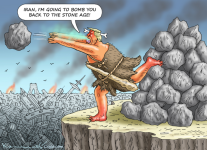
It’s even more concerning when the nation's commander in chief speaks of killing as an “honor,” and shares videos integrating the actual violence of war with fictional depictions pulled from popular culture films and video games.
That matters because in the United States, war is supposed to be an instrument of policy, constrained by law and guided by discipline, not a stage for bloodlust.
Americans have long accepted that military force may be necessary at times, but we have also insisted that force be used for a lawful purpose, under civilian control, and with professional restraint.
That is not softness. It is one of the things that has long distinguished a professional military from a mob, and a constitutional republic from the regimes it opposes.
The American military ethic does not teach service members to delight in killing or to treat mercy as weakness. It teaches them to perform difficult duties under the law, mission and discipline.
It demands self-control in the face of danger and obedience to standards that are meant to preserve both effectiveness and humanity. Service members are trained to understand that war is not an emotional outlet. It is a grave responsibility.
The military is no place for trash-talking
That is why Trump's and Hegseth's statements should trouble Americans across the political spectrum. They suggest not merely a hard line toward an enemy, but a philosophy of war untethered from restraint.There is a profound difference between promising to defeat an adversary and speaking as though killing itself is a source of honor. There is a profound difference between resolve and rhetoric that dismisses mercy altogether.
One is the language of disciplined command. The other is the language of vengeance.
Defenders of such comments will say critics are overreacting. War is brutal, they will argue, and leaders sometimes need harsh language to project strength, intimidate enemies and reassure the public. No one expects a president or Defense secretary to sound delicate in a crisis.
Fair enough, but that defense misses the real issue.
The question is not whether leaders should sound strong. The question is whether they understand that true strength requires restraint.
https://www.yahoo.com/news/articles/navy-commander-trumps-approach-military-090527598.html
IRAN SAVIOR TRUMP
Last edited:
