

Like Professor Chenowith, I too was skeptical that non-violent protests would succeed more often than violent ones. It's good to see we are both wrong. 
 www.hks.harvard.edu
Nonviolent protests are twice as likely to succeed as armed conflicts – and those engaging a threshold of 3.5% of the population have never failed to bring about change.
www.hks.harvard.edu
Nonviolent protests are twice as likely to succeed as armed conflicts – and those engaging a threshold of 3.5% of the population have never failed to bring about change.
"In 1986, millions of Filipinos took to the streets of Manila in peaceful protest and prayer in the People Power movement. The Marcos regime folded on the fourth day.
In 2003, the people of Georgia ousted Eduard Shevardnadze through the bloodless Rose Revolution, in which protestors stormed the parliament building holding the flowers in their hands."
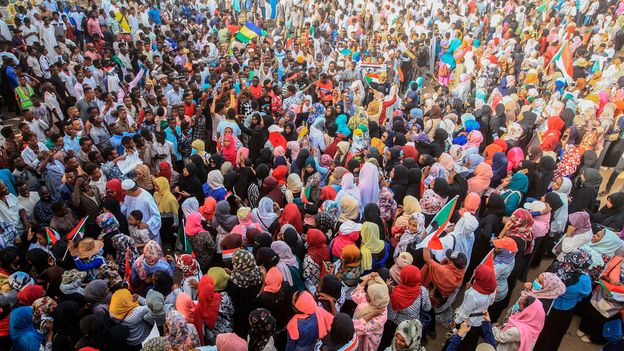
 www.bbc.com
Research by Erica Chenoweth, a political scientist at Harvard University, confirms that civil disobedience is not only the moral choice; it is also the most powerful way of shaping world politics – by a long way.
www.bbc.com
Research by Erica Chenoweth, a political scientist at Harvard University, confirms that civil disobedience is not only the moral choice; it is also the most powerful way of shaping world politics – by a long way.
Looking at hundreds of campaigns over the last century, Chenoweth found that nonviolent campaigns are twice as likely to achieve their goals as violent campaigns. And although the exact dynamics will depend on many factors, she has shown it takes around 3.5% of the population actively participating in the protests to ensure serious political change....
...Yet Chenoweth admits that when she first began her research in the mid-2000s, she was initially rather cynical of the idea that nonviolent actions could be more powerful than armed conflict in most situations....
...Working with Maria Stephan, a researcher at the ICNC, Chenoweth performed an extensive review of the literature on civil resistance and social movements from 1900 to 2006 – a data set then corroborated with other experts in the field. They primarily considered attempts to bring about regime change. A movement was considered a success if it fully achieved its goals both within a year of its peak engagement and as a direct result of its activities. A regime change resulting from foreign military intervention would not be considered a success, for instance. A campaign was considered violent, meanwhile, if it involved bombings, kidnappings, the destruction of infrastructure – or any other physical harm to people or property.
“We were trying to apply a pretty hard test to nonviolent resistance as a strategy,” Chenoweth says. (The criteria were so strict that India’s independence movement was not considered as evidence in favour of nonviolent protest in Chenoweth and Stephan’s analysis – since Britain’s dwindling military resources were considered to have been a deciding factor, even if the protests themselves were also a huge influence.)...
...Overall, nonviolent campaigns were twice as likely to succeed as violent campaigns: they led to political change 53% of the time compared to 26% for the violent protests.
View: https://www.youtube.com/watch?v=YJSehRlU34w
The '3.5% rule': How a small minority can change the world
Research featuring Carr Center's Erica Chenoweth. Nonviolent protests are twice as likely to succeed as armed conflicts – and those engaging a threshold of 3.5% of the population have never failed to bring about change. "In 1986, millions of Filipinos took to the streets of Manila in peaceful...
"In 1986, millions of Filipinos took to the streets of Manila in peaceful protest and prayer in the People Power movement. The Marcos regime folded on the fourth day.
In 2003, the people of Georgia ousted Eduard Shevardnadze through the bloodless Rose Revolution, in which protestors stormed the parliament building holding the flowers in their hands."
The '3.5% rule': How a small minority can change the world
Nonviolent protests are twice as likely to succeed as armed conflicts – and those engaging a threshold of 3.5% of the population have never failed to bring about change.
www.bbc.com
Looking at hundreds of campaigns over the last century, Chenoweth found that nonviolent campaigns are twice as likely to achieve their goals as violent campaigns. And although the exact dynamics will depend on many factors, she has shown it takes around 3.5% of the population actively participating in the protests to ensure serious political change....
...Yet Chenoweth admits that when she first began her research in the mid-2000s, she was initially rather cynical of the idea that nonviolent actions could be more powerful than armed conflict in most situations....
...Working with Maria Stephan, a researcher at the ICNC, Chenoweth performed an extensive review of the literature on civil resistance and social movements from 1900 to 2006 – a data set then corroborated with other experts in the field. They primarily considered attempts to bring about regime change. A movement was considered a success if it fully achieved its goals both within a year of its peak engagement and as a direct result of its activities. A regime change resulting from foreign military intervention would not be considered a success, for instance. A campaign was considered violent, meanwhile, if it involved bombings, kidnappings, the destruction of infrastructure – or any other physical harm to people or property.
“We were trying to apply a pretty hard test to nonviolent resistance as a strategy,” Chenoweth says. (The criteria were so strict that India’s independence movement was not considered as evidence in favour of nonviolent protest in Chenoweth and Stephan’s analysis – since Britain’s dwindling military resources were considered to have been a deciding factor, even if the protests themselves were also a huge influence.)...
...Overall, nonviolent campaigns were twice as likely to succeed as violent campaigns: they led to political change 53% of the time compared to 26% for the violent protests.
