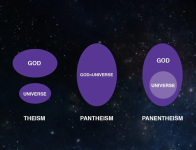
What god did Einstein believe in, anyway?
Einstein “was a pantheist who maintained certain Jewish traditions,” and he preferred to be called an agnostic and disliked militant atheists.
"I want to know God’s thoughts,” Albert Einstein once said. “The rest are mere details.” True quote. But what did Einstein mean by “God”?
He was raised a Jew, and likely believed in the God of Abraham . . . at least for a while. So folk like to claim him as one of their “own.” But then, so do atheists.
In truth, Einstein was likely at neither extreme, according to this new article at Big Think. The article cites a 1936 letter a sixth-grade girl wrote to Einstein, asking, “Do scientists pray, and what do they pray for?”
In his reply, Einstein wrote, “Everyone who is seriously involved in the pursuit of science becomes convinced that some spirit is manifest in the laws of the universe, one that is vastly superior to that of man. In this way the pursuit of science leads to a religious feeling of a special sort, which is surely quite different from the religiosity of someone more naive.”
Scholars generally agree that the theoretical physicist was an actual pantheist, believing that God is “in everything,” or that all is “at one with God.” In particular, as Einstein once told a rabbi, “I believe in Spinoza’s God, who reveals himself in the harmony of all that exists, not in a God who concerns himself with the fate and the doings of mankind.”
Big Think concludes that Einstein “was a pantheist who maintained certain Jewish traditions,” and that he “preferred to be called an agnostic and disliked militant atheists.
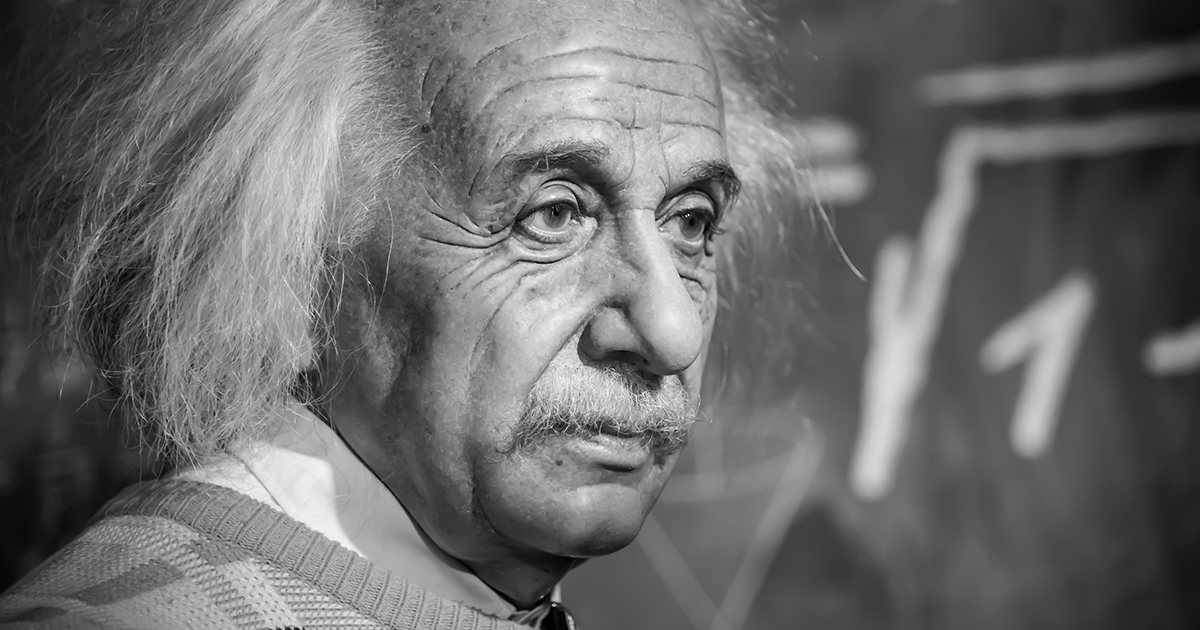
What god did Einstein believe in, anyway?
Einstein believed in the unseen—like gravitational waves, ripples in space and time. Now, we can see this, as shown by the 2017 Nobel Prize physics winners.
 bigthink.com