
You are using an out of date browser. It may not display this or other websites correctly.
You should upgrade or use an alternative browser.
You should upgrade or use an alternative browser.
Hospital Ship
- Thread starter domer76
- Start date

CBHype
Verified User
Main Challenges in Greenland's Healthcare System
1.
Greenland’s vast, remote terrain and scattered settlements make healthcare access difficult, especially in rural areas. Transport between towns relies on planes, helicopters, or boats, which can be costly and weather-dependent. Patients in isolated regions often require medically necessary evacuations to Nuuk, Denmark, or Iceland for specialized care.2.
There is a chronic shortage of medical professionals, particularly in sparsely populated areas. Recruitment is difficult due to harsh living conditions, isolation, and competition with Denmark. Some clinics rely on unskilled or undertrained healthcare workers, and even towns may experience periods without a doctor present.3.
Outside major towns like Nuuk, medical facilities are basic. Regional hospitals lack advanced equipment—no CT scanners are available outside the national hospital. Small clinics offer only minor consultations, and telemedicine is widely used to connect patients with specialists.4.
Healthcare quality varies significantly by population size:- Villages under 50 people: basic consultations, no telemedicine.
- Larger settlements: nurse-staffed stations with telemedical support.
- Towns over 1,200: access to doctors and specialists.
- Regional hubs: limited hospital care, but severe cases are transferred to Nuuk.

Brave Search
Search the Web. Privately. Truly useful results, AI-powered answers, & more. All from an independent index. No profiling, no bias, no Big Tech.
 search.brave.com
CBHype
Verified User
So it's not as you say. Chump.What the fuck is this demented moron doing now? Sending a hospital ship to Greenland? For what?
One sick crewman who was evacuated and treated on their FREE health care system?
What a fucking incompetent moron. Remove this fool from office.
signalmankenneth
Verified User
Both of the navies two hospital ships are in dry dock under going maintenance?!!What the fuck is this demented moron doing now? Sending a hospital ship to Greenland? For what?
One sick crewman who was evacuated and treated on their FREE health care system?
What a fucking incompetent moron. Remove this fool from office.
Then what the fuck is it, bitch? There are no reports of mass illness. Denmark is telling Trump to fuck off.So it's not as you say. Chump.
Let us know the emergency, cunt. We’ll wait
None of that explains Trump’s actions, you fucking cultist moron.Main Challenges in Greenland's Healthcare System
1.
Greenland’s vast, remote terrain and scattered settlements make healthcare access difficult, especially in rural areas. Transport between towns relies on planes, helicopters, or boats, which can be costly and weather-dependent. Patients in isolated regions often require medically necessary evacuations to Nuuk, Denmark, or Iceland for specialized care.
2.
There is a chronic shortage of medical professionals, particularly in sparsely populated areas. Recruitment is difficult due to harsh living conditions, isolation, and competition with Denmark. Some clinics rely on unskilled or undertrained healthcare workers, and even towns may experience periods without a doctor present.
3.
Outside major towns like Nuuk, medical facilities are basic. Regional hospitals lack advanced equipment—no CT scanners are available outside the national hospital. Small clinics offer only minor consultations, and telemedicine is widely used to connect patients with specialists.
4.
Healthcare quality varies significantly by population size:
- Villages under 50 people: basic consultations, no telemedicine.
- Larger settlements: nurse-staffed stations with telemedical support.
- Towns over 1,200: access to doctors and specialists.
- Regional hubs: limited hospital care, but severe cases are transferred to Nuuk.
Brave Search
Search the Web. Privately. Truly useful results, AI-powered answers, & more. All from an independent index. No profiling, no bias, no Big Tech.

There is no such thing as free healthcare.What the fuck is this demented moron doing now? Sending a hospital ship to Greenland? For what?
One sick crewman who was evacuated and treated on their FREE health care system?
What a fucking incompetent moron. Remove this fool from office.
CBHype
Verified User
Listen dumber76, Trump is seeking to win the hearts and minds of the people of Greenland..........YOU moron!None of that explains Trump’s actions, you fucking cultist moron.

Noking
Fight authoritarianism support Noking
That's a pity for you, seeing that you've got some serious mental issues.There is no such thing as free healthcare.
Noking
Fight authoritarianism support Noking
This is laughable, considering Crazy Trump threaten to take hostile military action.Listen dumber76, Trump is seeking to win the hearts and minds of the people of Greenland..........YOU moron!
signalmankenneth
Verified User
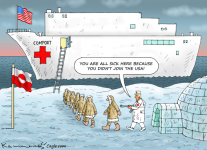
CARING DOCTOR TRUMP
View attachment 76044

Fuck you asshole. You supported the assassination of your president so, fuck you!
OSINTdefender
@sentdefender
The Pentagon has received no orders to deploy any medical vessels or other ships with the U.S. Navy to Greenland, despite President Trump’s claim Saturday that a hospital ship is “on its way” to the self-governing Danish territory in the Northern Atlantic, U.S. officials have told the Wall Street Journal. The U.S. Navy’s two hospital ships, the Norfolk-based USNS Comfort (T-AH-20) and the San Diego-based USNS Mercy (T-AH-19), which are designed as floating medical treatment facilities, are both currently in the yards in Mobile, Alabama. The Comfort is undergoing repairs that are expected to be completed in April, while the Mercy is in the middle of a one-year maintenance period that began last July.
@sentdefender
The Pentagon has received no orders to deploy any medical vessels or other ships with the U.S. Navy to Greenland, despite President Trump’s claim Saturday that a hospital ship is “on its way” to the self-governing Danish territory in the Northern Atlantic, U.S. officials have told the Wall Street Journal. The U.S. Navy’s two hospital ships, the Norfolk-based USNS Comfort (T-AH-20) and the San Diego-based USNS Mercy (T-AH-19), which are designed as floating medical treatment facilities, are both currently in the yards in Mobile, Alabama. The Comfort is undergoing repairs that are expected to be completed in April, while the Mercy is in the middle of a one-year maintenance period that began last July.

volsrocks
Verified User
Healthcare crisis looms over Greenland's isolated villages

Healthcare crisis looms over Greenland's isolated villages
The Greenlandic settlement of Kapisillit has no defibrillator -- which, given it is only accessible via a two-hour boat ride or by helicopter, means that if you go into cardiac arrest while there, you…
 www.france24.com
AI OverviewHealthcare crisis looms over Greenland's isolated villages
Healthcare crisis looms over Greenland's isolated villages
The Greenlandic settlement of Kapisillit has no defibrillator -- which, given it is only accessible via a two-hour boat ride or by helicopter, means that if you go into cardiac arrest while there, you…
As of January 2024, the population of the small Greenlandic settlement of Kapisillit is
43 inhabitants. Located in the Nuuk fjord system, it has experienced a population decline of nearly one-third since 2000,, with resident numbers often cited between 35 and 50 in recent years.
volsrocks
Verified User
And the country cant take care of themAI Overview
As of January 2024, the population of the small Greenlandic settlement of Kapisillit is
43 inhabitants. Located in the Nuuk fjord system, it has experienced a population decline of nearly one-third since 2000,, with resident numbers often cited between 35 and 50 in recent years.
And the country cant take care of them
Lars Fløe Nielsen
@ln_sitecore
Ha. Lousiana ranks amongst the worst health systems in US.US already have worse life expectancy than Denmark.US have higher child mortality than Denmark.Denmark have 0% healthcare bankrupts.Greenland are part of the Kingdom of Denmark thus enjoying same healthcare benefits.Yes Greenland suffers from infrastructural challenges that make their metrics worse than landfast societies. E.g. distance to Nuuk, the capital. Ultra dark periods with depression. But a hospital boat will not make the dark periods brighter. Nor will it eliminate the distances from small villages of perhaps 20 people to the capital.A hospital boat will only go to Nuuk, where one of the most modern hospitals in the Kingdom of Denmark are.Your hospital ship will not be able to move anywhere else, simply because you do not have the arctic capabilities.Why don’t you fix your broken state first? You, who have absolutely no merit in Arctic conditions. No merit with indigenous people. Your only merit is your failed state and your ability to kiss Trumps ass.

Instead of the "Love" boat it's the "Barf" boat! It has all the amenities of the "Love" boat, it's just that all passengers are leaning over the side puking the entire trip.What the fuck is this demented moron doing now? Sending a hospital ship to Greenland? For what?
One sick crewman who was evacuated and treated on their FREE health care system?
What a fucking incompetent moron. Remove this fool from office.
I even wrote a song about it:
(sung to the tune of "Love Boat")
Barf - Exciting and new - come aboard - the doctors are expecting you!
The BAAAAAAAAAAAAAAAAAAAARF Boat - we also are expecting some anal runs
The BAARRRRRRRRRRRRRRF boat - we won't stop 'till our launching's done!
Anyway - it's a work in progress.
We can't even fix our OWN healthcare system, trumptard. Now you want to lecture Greenland?Main Challenges in Greenland's Healthcare System
1.
Greenland’s vast, remote terrain and scattered settlements make healthcare access difficult, especially in rural areas. Transport between towns relies on planes, helicopters, or boats, which can be costly and weather-dependent. Patients in isolated regions often require medically necessary evacuations to Nuuk, Denmark, or Iceland for specialized care.
2.
There is a chronic shortage of medical professionals, particularly in sparsely populated areas. Recruitment is difficult due to harsh living conditions, isolation, and competition with Denmark. Some clinics rely on unskilled or undertrained healthcare workers, and even towns may experience periods without a doctor present.
3.
Outside major towns like Nuuk, medical facilities are basic. Regional hospitals lack advanced equipment—no CT scanners are available outside the national hospital. Small clinics offer only minor consultations, and telemedicine is widely used to connect patients with specialists.
4.
Healthcare quality varies significantly by population size:
- Villages under 50 people: basic consultations, no telemedicine.
- Larger settlements: nurse-staffed stations with telemedical support.
- Towns over 1,200: access to doctors and specialists.
- Regional hubs: limited hospital care, but severe cases are transferred to Nuuk.
Brave Search
Search the Web. Privately. Truly useful results, AI-powered answers, & more. All from an independent index. No profiling, no bias, no Big Tech.
LOL.
Loser.
Trump probably did not know that neither ship is operational, that the soonest one would be is in May, and that is not likely as the American shipyards are a clusterfuck.We can't even fix our OWN healthcare system, trumptard. Now you want to lecture Greenland?
LOL.
Loser.
Trump is not a details guy.