We’re now breaking global temperature records once every three years
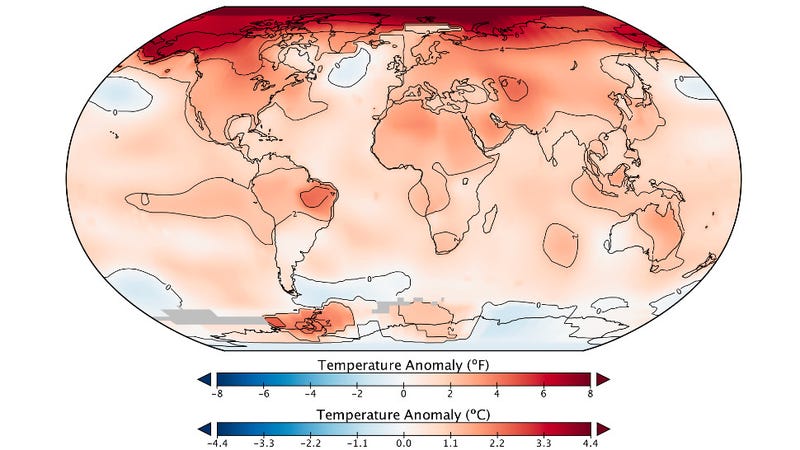
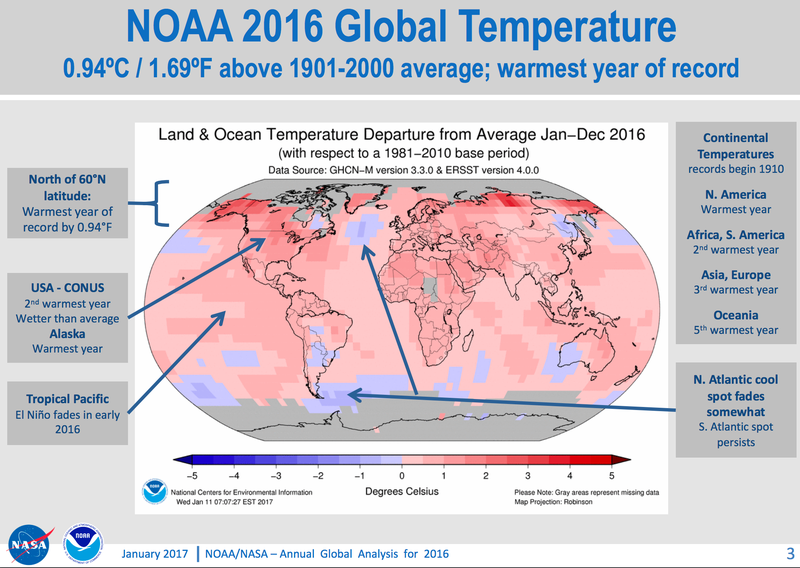
According to Nasa, in 2016 the Earth’s surface temperature shattered the previous record for hottest year by 0.12°C. That record was set in 2015, which broke the previous record by 0.13°C. That record had been set in 2014, beating out 2010, which in turn had broken the previous record set in 2005.
If you think that seems like a lot of record-breaking hot years, you’re right. The streak of three consecutive record hot years is unprecedented since measurements began in 1880. In the 35 years between 1945 and 1979, there were no record-breakers. In the 37 years since 1980, there have been 12. The video below illustrates all of the record-breaking years in the Nasa global surface temperature record since 1880.
These include a spate of five record hot years between 1937 and 1944; however, ongoing research is investigating whether some of those are artificial, due to changes in the way temperatures were measured during World War II.
Even including World War II, in the first 100 years of the Nasa data, the high temperature record was broken seven times. It’s been broken seven times in just the past 20 years.
This rapid rate of record-breaking heat (once every three years) is consistent with climate scientists’ expectations. A 2011 paper by Stefan Rahmstorf and Dim Coumou found that as global warming continues, we should expect to set new records about once every four years.
Indeed, if we only use the data of the past 30 y, these show an almost linear trend of 0.017°C/y, yielding an expected 2.5 new record hot temperatures in the last decade [1 per 4 years].
Rahmstorf told me that so far, the rate of record-setting temperatures is in line with a consistent human-caused global warming trend:
Global temperature wasn’t the only record-setter in 2016. Global warming causes climate change, and North America saw its highest number of storms and floods in over four decades. Globally, we saw over 1.5 times more extreme weather catastrophes in 2016 than the average over the past 30 years. Global sea ice cover plunged to a record low as well. California endured a fifth consecutive year of its worst drought in over a millennium. A drought also savaged the maize harvest in Southern Africa, causing a famine. The list of climate consequences goes on.
https://www.theguardian.com/environment/climate-consensus-97-per-cent/2017/jan/23/were-now-breaking-global-temperature-records-once-every-three-years


 As I said, it's hard for you to hide those old socialist kkk democrat beliefs