
Assumption of victory fallacy. Argument of the Stone fallacy.When they can only speak in memes, you won!

Assumption of victory fallacy. Argument of the Stone fallacy.When they can only speak in memes, you won!
Yer a little out of date. They used to (and occasional still try to), but submarines are slow and easily intercepted if found. Our sub finding equipment for this purpose has improved dramatically.I thought they used submarines now?
Yes apparently so, I've not kept up with technology.Yer a little out of date. They used to (and occasional still try to), but submarines are slow and easily intercepted if found. Our sub finding equipment for this purpose has improved dramatically.
The Cartels have.No
Yes apparently so, I've not kept up with technology.
 www.theguardian.com
See post 105.The Cartels have.
Indeed.Why do you support drug traffickers?

Why is Hegseth to chicken to let the American people see the tape?Indeed.
I've been wondering the same thing, Lf.Why do you support drug traffickers?
Did you ask for the tapes when Obama killed terrorists?Why is Hegseth to chicken to let the American people see the tape?
But... But... But... whatabout!Did you ask for the tapes when Obama killed terrorists?
I understand he would likely not be charged, they do not have the same constitution there as we have?What would Abrego Garcia be charged with if sent to Costa Rica?

Obama never did, did he?Release the tape, let the American people decide...

The TRUMP administration won’t release the video of the murder…
They released the first part of the video, so why hold back the second part?
Indeed.I'm just curious why you never criticized him for his Presidential actions when he tried to protect American by eliminating terrorists.
Yer still a bit out of date.More recently, crime bosses have become far more ambitious, commissioning fibreglass creations to ship huge hauls of cocaine thousands of miles to the coasts of Portugal and Spain.
Casarin said the eye-watering profits involved in cocaine trafficking explained why South American criminals continue to use subs, despite the risks.
A kilo of cocaine could be bought for $1,000-$2,000 (£740-£1,480) on Brazil’s border with Colombia, the world’s top cocaine producer. In Europe, where consumption is soaring, the same amount could be sold for about $60,000. A sub that successfully smuggled 5 or 6 tonnes of the drug to Europe could net its owners $200m-$250m. “The profits are astronomical,” Casarin said.
Javier Romero, a Spanish journalist who is one of the leading chroniclers of the narco-sub industry, suspected South American kingpins had inaugurated the subaquatic trafficking route in the late 90s.
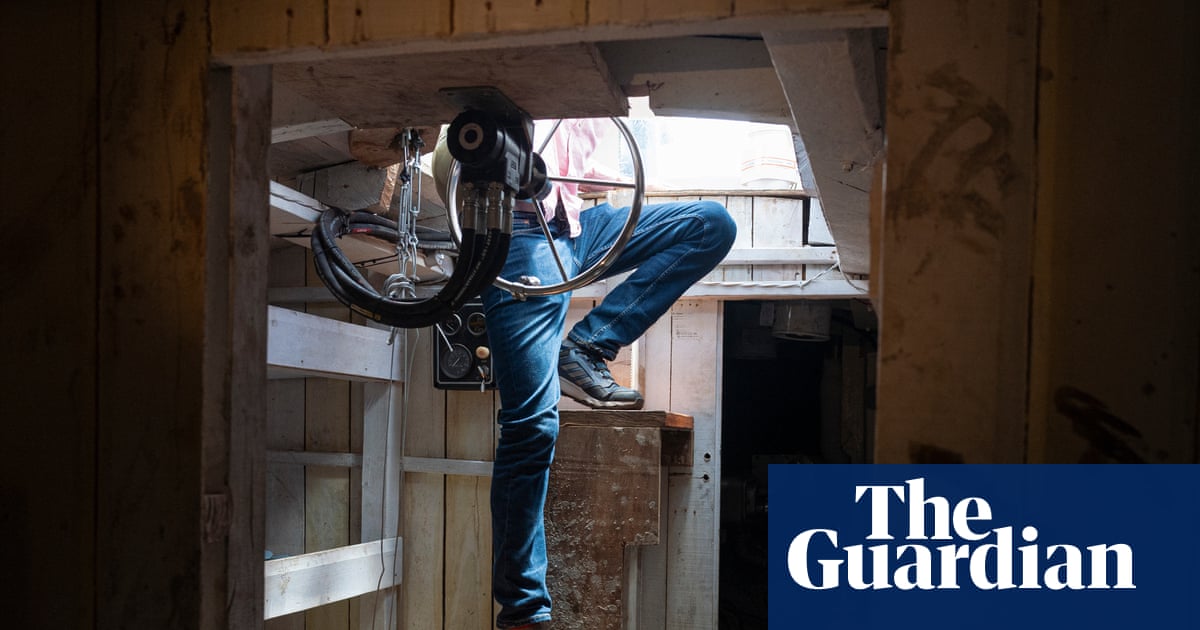
‘Insane journeys’: inside the narco-subs that cross oceans carrying hundreds of millions of pounds of cocaine
Poorly paid crews risk their lives on voyages in ‘propeller-driven coffins’ to smuggle drugs from Brazil to Europe
What 'tape'?Release the tape, let the American people decide...
What 'tape', Pretender?Why is Hegseth to chicken to let the American people see the tape?