
You are using an out of date browser. It may not display this or other websites correctly.
You should upgrade or use an alternative browser.
You should upgrade or use an alternative browser.
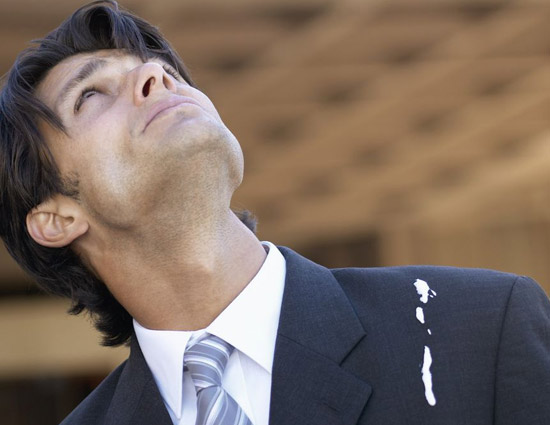
As Brandon tries to blame inflation on anyone but himself, bird poops on Brandon...
- Thread starter Damocles
- Start date

evince
Truthmatters
1. Demand-pull inflation
Demand-pull inflation happens when the demand for certain goods and services is greater than the economy's ability to meet those demands. When this demand outpaces supply, there's an upward pressure on prices — causing inflation.
A practical example of this would be tickets to see Hamilton live on Broadway. Because there were a limited number of seats and the demand for the live show was far greater than capacity, the price of tickets skyrocketed approaching $2,000 on third party sites, well above the standard ticket price of $139 and premium ticket price of $549 at the time.
Here’s number one again for you

Every one of us knows that inflation was an issue before Putin even staged the first soldier anywhere near the Ukraine by a factor of at least 9 months. And Snopes is never a valid source for anything, two leftists running a website are not trustworthy.
Here's the video:
https://www.ndtv.com/world-news/mov...n-during-his-inflation-speech-in-iowa-2883996
And in youtube:
16 seconds in...
Here's the video:
https://www.ndtv.com/world-news/mov...n-during-his-inflation-speech-in-iowa-2883996
And in youtube:
16 seconds in...
evince
Truthmatters
2. Cost-push inflation
Cost-push inflation is the increase of prices when the cost of wages and materials goes up. These costs are often passed down to consumers in the form of higher prices for those goods and services. An example of this would be lumber, as lumber is an input good for houses. When the cost of lumber spiked as much as 400% earlier in 2021 it had an impact on the increase in housing prices resulting in inflation.
This one for sure applies this go round
NOT CAUSED BY BIDEN HUH
this is caused by the pandemic recovery
Recovery is a good thing huh
The costs are also caused by this Russian made mess
Just like Biden stated
evince
Truthmatters
1. Demand-pull inflation
Demand-pull inflation happens when the demand for certain goods and services is greater than the economy's ability to meet those demands. When this demand outpaces supply, there's an upward pressure on prices — causing inflation.
A practical example of this would be tickets to see Hamilton live on Broadway. Because there were a limited number of seats and the demand for the live show was far greater than capacity, the price of tickets skyrocketed approaching $2,000 on third party sites, well above the standard ticket price of $139 and premium ticket price of $549 at the time.
This is definitely applicable here huh
NOT CAUSED BY BIDEN
evince
Truthmatters
3. Increased money supply
Increased money supply is defined as the total amount of money in circulation, which includes cash, coins, and balances and bank accounts according to the
Federal Reserve
The Federal Reserve is the central bank of the US — here's why it's so powerful and how it affects your financial life
The Federal Reserve ("the Fed") is the central banking system of the US and just about everything it carries out influences your financial decisions.
Read more
Image related to article
. If the money supply increases faster than the rate of production, this could result in inflation, particularly demand-pull inflation because there will be too many dollars chasing too few products. An increase in money supply is usually created by the Federal Reserve through a process called Open Market Operations (OMO).
This in fact is why we are raising interest rates to tame this inflation
So give this admin it’s due thanks
evince
Truthmatters
5. Rising wages
Rising wages is exactly what it sounds like — an increase in what's being paid to workers. "Wages are a cost of production," adds Baker. "If wages rise a large amount, businesses will either have to pass the cost on, or live with lower margins. The exception is if they can offset wage growth with higher productivity."
However, economists remain mixed on the impact of gradual increases in wages, like raising the minimum wage, compared to faster, more sudden wage growth seen in places like Silicon Valley. Some believe that an increase in wages could result in cost-push inflation due to the higher cost to businesses, while others believe that higher wages across the board (not just concentrated in certain sectors) will also increase demand enough to offset a spike in prices.
"Rising wages should allow consumers to combat inflation, especially if the wages are rising at the same or a faster rate than the inflation rate," adds Susane L. Toney, Ph.D, endowed chair of Business and Economics at Hampton University. "The rising wages allow consumers to pay higher prices without impacting their purchasing power."
This one huh
NOT CAUSED BY BIDEN
This is caused by the recovery from the pandemic
Remember
RECOVERY is a good thing
evince
Truthmatters
6. Policies and regulations
Certain policies can also result in either a cost-push or demand-pull inflation. When the government issues tax subsidies for certain products, it can increase demand. If that demand is higher than supply, costs could rise. Additionally, stringent building regulations and even rent stabilization policies could inadvertently increase costs and create an inflationary environment by passing those costs to residents or artificially reduce the supply of housing.
This is the one you are claiming maybe?
Make your case
evince
Truthmatters
Desh and Brandon's mother/wife are the only Americans who don't think that Brandon's policies are causing inflation. It's good though. The more he tries to pass the buck the more it seems to keep winding up on his desk.
Utter dumb ass bullshit
Say something real
Make a real case
evince
Truthmatters
Every one of us knows that inflation was an issue before Putin even staged the first soldier anywhere near the Ukraine by a factor of at least 9 months. And Snopes is never a valid source for anything, two leftists running a website are not trustworthy.
Here's the video:
https://www.ndtv.com/world-news/mov...n-during-his-inflation-speech-in-iowa-2883996
And in youtube:
16 seconds in...
I didntt quote snopes idiot liar
evince
Truthmatters
https://www.businessinsider.com/causes-of-inflation
What to know about the 6 main causes of inflation
Kevin L. Matthews II Updated Mar 16, 2022, 12:03 PM
BUSINESS INSIDER
evince
Truthmatters
6. Policies and regulations
Certain policies can also result in either a cost-push or demand-pull inflation. When the government issues tax subsidies for certain products, it can increase demand. If that demand is higher than supply, costs could rise. Additionally, stringent building regulations and even rent stabilization policies could inadvertently increase costs and create an inflationary environment by passing those costs to residents or artificially reduce the supply of housing.
Name the policy
You fucking can’t huh

This is what a bird poop looks like.
All that hatred is not good for you.
All that hatred is not good for you.

This in fact is why we are raising interest rates to tame this inflation
So give this admin it’s due thanks
LOOOOOOL...
Reluctantly recognizing that their "transitory inflation" is a monster that is tearing through the trust that voters had in their party notwithstanding.
the Brandon Administration spent valuable months ignoring the issue while trying to get folks like you to believe that inflation was transitory while they ignored economist warnings that spending trillions on stimulus while companies could not make stuff was going to cause prices to rise (inflation). They jumped right in giving more money away into an already flush with cash population and then tried to tell you that nothing they did could possibly be the cause.
Then when a war started a year after inflation began they tried to blame all of the inflation on the war...
Brandon's puppeteers are trying to manage an economy through a committee and failing.
https://www.cnbc.com/2022/02/04/how-the-biden-administration-misread-the-inflation-threat.html
Supply vs. demand
Hassett was part of a trio of former White House economists, including Clinton Treasury Secretary Larry Summers and Obama CEA chair Jason Furman, who warned early in Biden’s term that inflation was afoot, when the government was more concerned with Covid. They parsed different data but arrived at the same conclusions: Trillions in stimulus spending being plowed back into the economy when companies couldn’t produce enough of what consumers wanted would drive prices higher.
“It’s obvious to a person who does macroeconomic modeling of the modern variety that inflation was going to take off,” Hassett told CNBC. Last April, Hassett declared that the inflation “fire was on” and by June determined that inflation would reach 7% by the end of the year.
All of that was before Putin ever moved one single soldier near Ukraine. Brandon simply couldn't stop himself from insisting that more cowbell was the answer to too much cowbell.
BartenderElite
Verified User
Still all-in on the Brandon thing, eh?
BartenderElite
Verified User
Worldwide inflation is all on Biden.
Got it.
Got it.
Worldwide inflation is all on Biden.
Got it.
If US inflation wasn't more than twice what it was elsewhere I'd be more likely to believe you. Unfortunately, it is more than twice what it is elsewhere and the reality was it has been exacerbated by Brandon's policy. Brandon's policy is making lives in the USA worse.