Filibuster - A Dive into the Crazy Life of the Filibuster - Let's Be Honest - It Must Go

Tobytone

Well-known member
Contributor
A Dive into the Crazy Life of the Filibuster (Republicans and Democrats can both agree on this one)

I strongly believe the filibuster needs to go. This is not a new thought for me, I've been frustrated with the ridiculous filibuster for many years. It was never some sacred Founders' design or deliberate check on majority tyranny; it was pure accident born from a sloppy rule change in 1806, and later on when it was discovered, politicians being the same 'opportunistic' people then as now, latched onto it, tweaking the mechanics over time into the perfect coward's tool: talk tough on popular issues, blame the other side for blocking, and never actually deliver a vote that might force them to own the outcome. This is why establishment politicians on both sides of the isle get very squirely when anyone talks about getting rid of it.

Here's how this slow-motion betrayal unfolded, starting with the original screw-up that nobody saw coming.

In 1806, Vice President Burr (you remember, the duel with Hamilton) complained that the Senate rulebook was bloated with redundant junk. Senators agreed and deleted a bunch of old procedures, including the one that let a simple majority cut off debate. They forgot to replace it. Oops. Unlimited debate was accidentally baked in with no kill switch. For decades nobody noticed because actual filibusters stayed rare, used only a handful of times from 1806 to 1917, like in 1837 over expunging Andrew Jackson's censure, 1841 on Henry Clay's national bank recharter, the 1850s slavery debates where pro-slavery Democrats talked anti-slavery bills to death, and finally 1917's endless filibuster on arming merchant ships for WWI. One guy could talk forever, but holding the floor nonstop was exhausting, socially toxic, and politically suicidal. Obstruction happened, but it cost real political capital and because of that, it was still rare, with major legislation still passing when majorities muscled through and no easy excuses for hiding behind procedure.

1917-1975:

In 1917 Woodrow Wilson fumed after a filibuster killed arming merchant ships for WWI, so they added Rule 22. Cloture was born, (A threshold that must be hit to move to a vote in the Senate.) introduced at two-thirds (about 67 votes). A supermajority could finally end forever debates, (remember 2 or 3 Senators could hold up any bills. Think the squad. So, 67 seemed very doable at that time.) but it wasn't long before hitting that bar was near-impossible on divisive issues. Southern Democrats mastered the game, killing civil rights bills, anti-lynching measures, and voting rights expansions for decades despite majority support in the chamber. Cloture votes stayed infrequent, meaning nothing got through to an actual vote. But, like everything else, democrats could never accept was the majority wanted, so as time passed the real talking filibusters started to hurt, and visible obstruction carried a high political price. Getting big things done crawled, but the blame game wasn't as effortless as it was at first, so more tweaks were a must.

1975: cloture lowered to 60 votes with the added bonus that you no longer needed to debate at all. Reformers pitched it as the fix to speed things up and tame the beast. Epic backfire. Cloture motions exploded from a handful per year to dozens, then 50-plus annually in recent cycles. The silent filibuster and two-track system let the minority just threaten without ever opening their mouths; bills die quietly while the Senate pretends to move on other business. Productivity cratered. We went from passing thousands of bills in the mid-20th century to scraping by with under 5 percent of introduced legislation today, floor time devoured by procedural trench warfare. Everything became a de facto 60-vote threshold except budget gimmicks and nuked nominations.

Each 'reform' handed both party's better camouflage. The 1806 blunder created the vacuum. Early on, obstruction was raw and punishing. The two-thirds era formalized it but kept the pain visible. The 60-vote switch made it effortless: object, force the majority to scramble or fold, then campaign on 'I fought for it, but those obstructionists!'

Democrats used it, Republicans returned fire. The result isn't thoughtful debate. It's perfected cowardly governance where appearing to support popular laws trumps ever passing them. The filibuster didn't protect the Senate; it perfected the art of never having to stand for anything. Time to scrap the relic and force actual accountability. It's was a brilliant design. The house a group of 535 Americans spread across the country elected every two years must pass a bill. Then the Senate, two from every State must pass with a simple majority, elected every six years. Then the President must sign it (the only guy beside the VP elected by all the people every four years. It's brilliant, but the filibuster ruins accountability and hampers what the people voted for more times than not.

It's time to get rid of it. What is a good reason not to?

46d3ddeb-3107-41fa-a7fe-5a74aa190ead.jpg
 
I'm going to make a prediction that I don't like and the democrats will. The Save Act doesn't happen. Why? I've watched more than one of the 'strong supporters' put on really good shows about how hard they're fighting and how hard they will fight. They want to do the old pre-75 talking filibuster so they can really put on a show. Each time, they are sure to say, 'I don't know if we'll succeed, but I know this, if we don't fight and fight hard, I don't think we'll be forgiven. Wrong answer. We're sick of you 'trying really hard' kind of my whole point about the filibuster. We won't forgive you if you don't get it done. They somehow need to understand that.
 
I'm going to make a prediction that I don't like and the democrats will. The Save Act doesn't happen. Why? I've watched more than one of the 'strong supporters' put on really good shows about how hard they're fighting and how hard they will fight. They want to do the old pre-75 talking filibuster so they can really put on a show. Each time, they are sure to say, 'I don't know if we'll succeed, but I know this, if we don't fight and fight hard, I don't think we'll be forgiven. Wrong answer. We're sick of you 'trying really hard' kind of my whole point about the filibuster. We won't forgive you if you don't get it done. They somehow need to understand that.


You may be correct.
 
A Dive into the Crazy Life of the Filibuster (Republicans and Democrats can both agree on this one)

I strongly believe the filibuster needs to go. This is not a new thought for me, I've been frustrated with the ridiculous filibuster for many years. It was never some sacred Founders' design or deliberate check on majority tyranny; it was pure accident born from a sloppy rule change in 1806, and later on when it was discovered, politicians being the same 'opportunistic' people then as now, latched onto it, tweaking the mechanics over time into the perfect coward's tool: talk tough on popular issues, blame the other side for blocking, and never actually deliver a vote that might force them to own the outcome. This is why establishment politicians on both sides of the isle get very squirely when anyone talks about getting rid of it.

Here's how this slow-motion betrayal unfolded, starting with the original screw-up that nobody saw coming.

In 1806, Vice President Burr (you remember, the duel with Hamilton) complained that the Senate rulebook was bloated with redundant junk. Senators agreed and deleted a bunch of old procedures, including the one that let a simple majority cut off debate. They forgot to replace it. Oops. Unlimited debate was accidentally baked in with no kill switch. For decades nobody noticed because actual filibusters stayed rare, used only a handful of times from 1806 to 1917, like in 1837 over expunging Andrew Jackson's censure, 1841 on Henry Clay's national bank recharter, the 1850s slavery debates where pro-slavery Democrats talked anti-slavery bills to death, and finally 1917's endless filibuster on arming merchant ships for WWI. One guy could talk forever, but holding the floor nonstop was exhausting, socially toxic, and politically suicidal. Obstruction happened, but it cost real political capital and because of that, it was still rare, with major legislation still passing when majorities muscled through and no easy excuses for hiding behind procedure.

1917-1975:

In 1917 Woodrow Wilson fumed after a filibuster killed arming merchant ships for WWI, so they added Rule 22. Cloture was born, (A threshold that must be hit to move to a vote in the Senate.) introduced at two-thirds (about 67 votes). A supermajority could finally end forever debates, (remember 2 or 3 Senators could hold up any bills. Think the squad. So, 67 seemed very doable at that time.) but it wasn't long before hitting that bar was near-impossible on divisive issues. Southern Democrats mastered the game, killing civil rights bills, anti-lynching measures, and voting rights expansions for decades despite majority support in the chamber. Cloture votes stayed infrequent, meaning nothing got through to an actual vote. But, like everything else, democrats could never accept was the majority wanted, so as time passed the real talking filibusters started to hurt, and visible obstruction carried a high political price. Getting big things done crawled, but the blame game wasn't as effortless as it was at first, so more tweaks were a must.

1975: cloture lowered to 60 votes with the added bonus that you no longer needed to debate at all. Reformers pitched it as the fix to speed things up and tame the beast. Epic backfire. Cloture motions exploded from a handful per year to dozens, then 50-plus annually in recent cycles. The silent filibuster and two-track system let the minority just threaten without ever opening their mouths; bills die quietly while the Senate pretends to move on other business. Productivity cratered. We went from passing thousands of bills in the mid-20th century to scraping by with under 5 percent of introduced legislation today, floor time devoured by procedural trench warfare. Everything became a de facto 60-vote threshold except budget gimmicks and nuked nominations.

Each 'reform' handed both party's better camouflage. The 1806 blunder created the vacuum. Early on, obstruction was raw and punishing. The two-thirds era formalized it but kept the pain visible. The 60-vote switch made it effortless: object, force the majority to scramble or fold, then campaign on 'I fought for it, but those obstructionists!'

Democrats used it, Republicans returned fire. The result isn't thoughtful debate. It's perfected cowardly governance where appearing to support popular laws trumps ever passing them. The filibuster didn't protect the Senate; it perfected the art of never having to stand for anything. Time to scrap the relic and force actual accountability. It's was a brilliant design. The house a group of 535 Americans spread across the country elected every two years must pass a bill. Then the Senate, two from every State must pass with a simple majority, elected every six years. Then the President must sign it (the only guy beside the VP elected by all the people every four years. It's brilliant, but the filibuster ruins accountability and hampers what the people voted for more times than not.

It's time to get rid of it. What is a good reason not to?

View attachment 78572
Be honest (if you can, I know you tRumplings have issues with it) if it was a majority Democratic Senate you would be against it.
 
I doubt any Democrats will agree at this particular juncture.
Of course not, they won't agree until they have the Congress and The White House. I said they 'should' agree. That said, what is your thought? I'm already fully aware of what a libtard thinks, that's always easy. However, there are plenty on the right that have argued we need to keep it. As much as I appreciate your reply, I don't know where you stand.
 
Be honest (if you can, I know you tRumplings have issues with it) if it was a majority Democratic Senate you would be against it.
Did you read it? I would. Both parties use it as a shield. The filibuster gives them cover no politician deserves. Never think for a second I love republicans, I don't. I align with what they claim to want done, sure, but I hate how spineless many are. I especially dislike the establishment types who are just as transparent as any democrats.

Right now, for example, Establishment republicans are putting on a show, just as I've seen a hundred times before. They know how popular this one is so the show will be extra special. They will huff and puff and keep the house up. Like always, they think we'll give them a pass because they worked 'really hard' but those rascals on the left won't let them get done the most popular bill on both sides in modern history. Ah, shucks, do you see how hard we tried??

Look at what just happened. The republican's that have been against this, suddenly voted for it yesterday. Why? Did they just learn something that changed their minds? Did they explain why they were confused before or how they missed something on the first read? No. Thune assured them it wouldn't pass the 60-vote threshold, so they're clear to give those pesky voters a bone without any meat on it. To be completely honest, I'm not really sure why the republicans aren't going to get this done. It doesn't make sense, but that doesn't change what I'm seeing. My best guess is that a few of the establishment types have long standing 'operations' in place. Without them, some new guy full of piss and vinegar could make them have to work for the nominee each election. Those well establish in DC can't be expected to work for it anymore, right?

Again, the answer is yes. The founders created a brilliant system with checks and balances. That system works on majority rule in each house, they never wanted to give politicians (which they understood very well) a way to hide from the very issues that got them elected. It is nothing but a bullshit hiding place never intended and never even debated itself. It is a weaponized mistake sold as a really good thing for decades.
 
The establishment democrats are scared of the new crazy people that are calling the shots. If they got rid of the filibuster you might think that means really good things for the democrats. Schumer knows the crazy shit the party would insist on passing will mean certain doom in the Presidential election. Even with all the cheating, they couldn't overpower the wrath of the national voter if the democrats made crazy shit like men in girls locker rooms and men in women's sports the law of the land. How about making it against the law to tell the parents their child wants a sex change or if they actually passed the long list of taxes they want, to pay for universal healthcare. Chuck knows that if he didn't have a good excuse, they would hang him if he didn't pass their crazy shit. Crazy shit that would guarantee they never see the White House again. That's my opinion.
 
Right now, for example, Establishment republicans are putting on a show, just as I've seen a hundred times before. They know how popular this one is so the show will be extra special. They will huff and puff and keep the house up. Like always, they think we'll give them a pass because they worked 'really hard' but those rascals on the left won't let them get done the most popular bill on both sides in modern history. Ah, shucks, do you see how hard we tried??
Bingo. It's all kabuki theater. A show... an act... Team Elephant is effectively a subsidiary of Team Donkey.

Team Donkey wants power.
Team Elephant wants money.

Wanna piss off Team Donkey? Threaten their power.
Wanna piss off Team Elephant? Threaten their money.

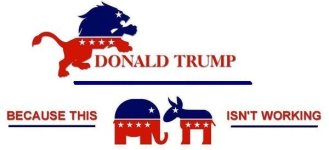
Team Lion actually gets shit done while Team Elephant just makes excuses for why they can't ever do anything useful. IOW, Team Elephant is Team Donkey's controlled opposition, meanwhile Team Lion actually opposes Team Donkey (and its Team Elephant subsidiary).
Look at what just happened. The republican's that have been against this, suddenly voted for it yesterday. Why? Did they just learn something that changed their minds? Did they explain why they were confused before or how they missed something on the first read? No. Thune assured them it wouldn't pass the 60-vote threshold, so they're clear to give those pesky voters a bone without any meat on it.
**ding ding ding** WE HAVE A WINNER!

lion-101.jpg
 
Did you read it? I would. Both parties use it as a shield. The filibuster gives them cover no politician deserves. Never think for a second I love republicans, I don't. I align with what they claim to want done, sure, but I hate how spineless many are. I especially dislike the establishment types who are just as transparent as any democrats.

Right now, for example, Establishment republicans are putting on a show, just as I've seen a hundred times before. They know how popular this one is so the show will be extra special. They will huff and puff and keep the house up. Like always, they think we'll give them a pass because they worked 'really hard' but those rascals on the left won't let them get done the most popular bill on both sides in modern history. Ah, shucks, do you see how hard we tried??

Look at what just happened. The republican's that have been against this, suddenly voted for it yesterday. Why? Did they just learn something that changed their minds? Did they explain why they were confused before or how they missed something on the first read? No. Thune assured them it wouldn't pass the 60-vote threshold, so they're clear to give those pesky voters a bone without any meat on it. To be completely honest, I'm not really sure why the republicans aren't going to get this done. It doesn't make sense, but that doesn't change what I'm seeing. My best guess is that a few of the establishment types have long standing 'operations' in place. Without them, some new guy full of piss and vinegar could make them have to work for the nominee each election. Those well establish in DC can't be expected to work for it anymore, right?

Again, the answer is yes. The founders created a brilliant system with checks and balances. That system works on majority rule in each house, they never wanted to give politicians (which they understood very well) a way to hide from the very issues that got them elected. It is nothing but a bullshit hiding place never intended and never even debated itself. It is a weaponized mistake sold as a really good thing for decades.
Yes I read it.

No, I don't believe you would.
 
Be honest (if you can, I know you tRumplings have issues with it) if it was a majority Democratic Senate you would be against it.
If the MAGAts get rid of it, they'll learn to regret is when things go back around. Both sides, even in this century alone, have tossed the idea around but were never stupid enough to actually do it.

Maybe the MAGAt Congress is stupid enough to pass it.

“It must go” because it is frustrating Republicans. When it frustrated Democrats “it must stay”.
Agreed!
 
A Dive into the Crazy Life of the Filibuster (Republicans and Democrats can both agree on this one)

I strongly believe the filibuster needs to go. This is not a new thought for me, I've been frustrated with the ridiculous filibuster for many years. It was never some sacred Founders' design or deliberate check on majority tyranny; it was pure accident born from a sloppy rule change in 1806, and later on when it was discovered, politicians being the same 'opportunistic' people then as now, latched onto it, tweaking the mechanics over time into the perfect coward's tool: talk tough on popular issues, blame the other side for blocking, and never actually deliver a vote that might force them to own the outcome. This is why establishment politicians on both sides of the isle get very squirely when anyone talks about getting rid of it.

Here's how this slow-motion betrayal unfolded, starting with the original screw-up that nobody saw coming.

In 1806, Vice President Burr (you remember, the duel with Hamilton) complained that the Senate rulebook was bloated with redundant junk. Senators agreed and deleted a bunch of old procedures, including the one that let a simple majority cut off debate. They forgot to replace it. Oops. Unlimited debate was accidentally baked in with no kill switch. For decades nobody noticed because actual filibusters stayed rare, used only a handful of times from 1806 to 1917, like in 1837 over expunging Andrew Jackson's censure, 1841 on Henry Clay's national bank recharter, the 1850s slavery debates where pro-slavery Democrats talked anti-slavery bills to death, and finally 1917's endless filibuster on arming merchant ships for WWI. One guy could talk forever, but holding the floor nonstop was exhausting, socially toxic, and politically suicidal. Obstruction happened, but it cost real political capital and because of that, it was still rare, with major legislation still passing when majorities muscled through and no easy excuses for hiding behind procedure.

1917-1975:

In 1917 Woodrow Wilson fumed after a filibuster killed arming merchant ships for WWI, so they added Rule 22. Cloture was born, (A threshold that must be hit to move to a vote in the Senate.) introduced at two-thirds (about 67 votes). A supermajority could finally end forever debates, (remember 2 or 3 Senators could hold up any bills. Think the squad. So, 67 seemed very doable at that time.) but it wasn't long before hitting that bar was near-impossible on divisive issues. Southern Democrats mastered the game, killing civil rights bills, anti-lynching measures, and voting rights expansions for decades despite majority support in the chamber. Cloture votes stayed infrequent, meaning nothing got through to an actual vote. But, like everything else, democrats could never accept was the majority wanted, so as time passed the real talking filibusters started to hurt, and visible obstruction carried a high political price. Getting big things done crawled, but the blame game wasn't as effortless as it was at first, so more tweaks were a must.

1975: cloture lowered to 60 votes with the added bonus that you no longer needed to debate at all. Reformers pitched it as the fix to speed things up and tame the beast. Epic backfire. Cloture motions exploded from a handful per year to dozens, then 50-plus annually in recent cycles. The silent filibuster and two-track system let the minority just threaten without ever opening their mouths; bills die quietly while the Senate pretends to move on other business. Productivity cratered. We went from passing thousands of bills in the mid-20th century to scraping by with under 5 percent of introduced legislation today, floor time devoured by procedural trench warfare. Everything became a de facto 60-vote threshold except budget gimmicks and nuked nominations.

Each 'reform' handed both party's better camouflage. The 1806 blunder created the vacuum. Early on, obstruction was raw and punishing. The two-thirds era formalized it but kept the pain visible. The 60-vote switch made it effortless: object, force the majority to scramble or fold, then campaign on 'I fought for it, but those obstructionists!'

Democrats used it, Republicans returned fire. The result isn't thoughtful debate. It's perfected cowardly governance where appearing to support popular laws trumps ever passing them. The filibuster didn't protect the Senate; it perfected the art of never having to stand for anything. Time to scrap the relic and force actual accountability. It's was a brilliant design. The house a group of 535 Americans spread across the country elected every two years must pass a bill. Then the Senate, two from every State must pass with a simple majority, elected every six years. Then the President must sign it (the only guy beside the VP elected by all the people every four years. It's brilliant, but the filibuster ruins accountability and hampers what the people voted for more times than not.

It's time to get rid of it. What is a good reason not to?

View attachment 78572
1. Puerto Rico Statehood 2. DC statehood. 3.Citizenship for tens of millions of illegals. 4. Five more liberal Supreme Court justices.
 
1. Puerto Rico Statehood 2. DC statehood. 3.Citizenship for tens of millions of illegals. 4. Five more liberal Supreme Court justices.
Proof that Ms. Fat Lame:
1. Doesn't like brown people even when they are American citizens.
2. Is an idiot who believes DC can ever become a state.
3. Really, really doesn't like brown people.
4. Too fucking stupid to believe it would stop at 14 (note the even number).
 
Bingo. It's all kabuki theater. A show... an act... Team Elephant is effectively a subsidiary of Team Donkey.

Team Donkey wants power.
Team Elephant wants money.

Wanna piss off Team Donkey? Threaten their power.
Wanna piss off Team Elephant? Threaten their money.

Team Lion actually gets shit done while Team Elephant just makes excuses for why they can't ever do anything useful. IOW, Team Elephant is Team Donkey's controlled opposition, meanwhile Team Lion actually opposes Team Donkey (and its Team Elephant subsidiary).

**ding ding ding** WE HAVE A WINNER!

View attachment 78615
Enter Trump: Everything changes. One man exposes how incompetent 'leadership' has been for more than a half a century. Both sides are left looking like the incompetent leaders they've been since forever, lol.
 
Proof that Ms. Fat Lame:
1. Doesn't like brown people even when they are American citizens.
2. Is an idiot who believes DC can ever become a state.
3. Really, really doesn't like brown people.
4. Too fucking stupid to believe it would stop at 14 (note the even number).
^^^^^Dumbass

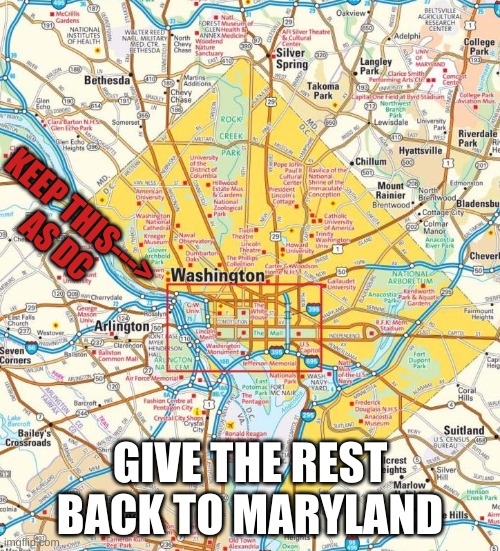
The easiest way: The proposed "Douglass Commonwealth" would create a new, smaller federal district for government buildings while granting statehood to the remaining residential areas.
The hardest way : Yes, Washington, D.C. can technically become a state, but it requires a major legal and political process, likely a constitutional amendment to overcome constitutional, federal, and partisan hurdles.

We don't need another welfare dependent state. I don't care what color they are.

I never said we would stop at 14 I just mention the same number that the Democrats have kicked around. BY the way dumbass the Supreme Court has had an even number of justices multiple times. Even during the Civil War.
 
^^^^^Dumbass

The easiest way: The proposed "Douglass Commonwealth" would create a new, smaller federal district for government buildings while granting statehood to the remaining residential areas.
The hardest way : Yes, Washington, D.C. can technically become a state, but it requires a major legal and political process, likely a constitutional amendment to overcome constitutional, federal, and partisan hurdles.

We don't need another welfare dependent state. I don't care what color they are.

I never said we would stop at 14 I just mention the same number that the Democrats have kicked around. BY the way dumbass the Supreme Court has had an even number of justices multiple times. Even during the Civil War.
^^^
Drug addicted moron doesn't know that land originally belonged to Maryland. Give it back to them. Easy Peasy.

4x3lf5.jpg

 
Back
Top