So, the FDA is letting companies sell a dangerous product are they?
Hell, you probably use this stuff yourself...

Both contain iodine. Maybe you shouldn't get your science from idiots on social media...


So, the FDA is letting companies sell a dangerous product are they?
Hell, you probably use this stuff yourself...
Both contain iodine. Maybe you shouldn't get your science from idiots on social media...
ROFLYup. He was saying it should be ready to distribute before end of year. It's just the same horse, different color (pardon the pun). I put up a post about it
yesterday. I'll find it and put it here. It's what we all knew already. Ivervectin with a new name (for the $$$$$$$ of course). People are jokingly calling it 'Pfizermectin'. LOL Love it!
 He took credit for OpWarp Speed too
Madwitch has a degree in dogfish dissection, that's pretty powerful JuJu.Hey ... lay off the facts ... yer konfus'n da dimlibs.
ROFL
Fauci will take credit for it after damning it.

Well Grumpy, I wish I was still a kid....psssst! by the way.....I'm a 'her'... not a 'his'. LOL No worries.
So, the FDA is letting companies sell a dangerous product are they?
Hell, you probably use this stuff yourself...
Both contain iodine. Maybe you shouldn't get your science from idiots on social media...


Instead of just getting vaccinated, anti-vaxxers are drinking iodine antiseptic
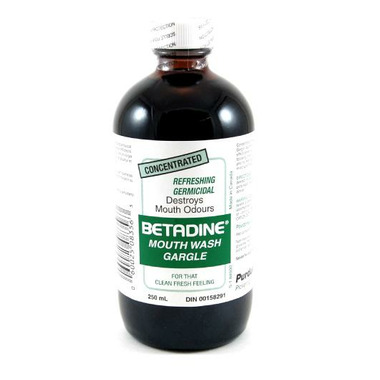
First there was hydroxychloroquine, then ivermectin; now, according to multiple reports, some Americans are gargling and/or ingesting the iodine-based liquid Betadine to prevent COVID-19 — instead of getting vaccinated.
Betadine is the brand name for povidone-iodine, an amber-colored liquid typically sold as a 10% solution as an antiseptic for cleaning wounds and skin. A 0.5% solution is sold as a gargle for sore throats, but the manufacturer cautions people not to swallow it. Recently, the manufacturer warned consumers not to consume Betadine to treat COVID-19, or rely on it as a form of treatment.
https://www.rawstory.com/anti-vaxxers-iodine/
I bet at least one JPP Conservative has done this.


Well at least ya can't accuse me of sexual harassment ... and Stone is still correct in what he (I hope it's HE) said ... ya done good.

.You are correct ... but Stretch is a big kid and the dimlib slime will roll off his back.
lol..cute. melatonin i heard as well the zinc. D3 (etc) regimen .. and probiotics,HAH!!!! Yeah he did.
Here's what I posted...............
New 'Pfizermectin'.

I make sure to eat at least some fruit and lots of veggies; but for othrs who's diet is lacking -would these help?
They are suppose to be cold processed in the dark (no heat drying) -then the water is pressed out of the fruit/vegie ground and put in capsules
...Challacombe appreciates this reliance on the normal high standards of scientific proof, but he also thinks that these are extraordinary times. Given the strength of the test tube evidence, and
"the low risk, minimal cost and global applicability”, Challacombe says, “we feel that there is little to lose and potentially much to gain [to use it] while we get that information”
Professor Valerie O’Donnell is the co-director of Cardiff University’s Systems Immunity Research Institute, and she views
mouthwash as being of “great interest”. When I contact her, she says it may be
comparable to the situation “with vitamin D, where randomised trials don’t exist for this virus, but other suggestive evidence is there.
Stretch is an extremely good looking woman who used to be a bunny girl. That truly pisses off the likes of Madwitch. Lousy Vagina is an nasty hateful Jewess who ought to be put out of her misery, humanely of course. That others would follow along with her bullshit truly amazes me, they ought to be ashamed of themselves!
Could a cheap iodine mouthwash really help to beat Covid?
In an article published in The Times, a leading authority on infection from King's College London thinks iodine could combat the virus.
We all probably have a sense-memory of iodine: the blood-like drop to purify a camping can of stream-water or the inky dab with which your grandmother stained your grazed knee. It feels like an old-fashioned, primitive home remedy, yet could it also be an intriguing new weapon against our most modern threat: coronavirus?
One of the world’s leading authorities on infection in the mouth and nose believes the answer is yes. Stephen Challacombe is a professor of oral medicine at King’s College London, with a specialism in the immunology of the mucous membranes. His decades of experience meant that when the pandemic hit, his mind went immediately to one — literal — solution. Iodine mouthwash. “Yes. I have no doubt that this should be used,” Challacombe says, “and had it been, it would have saved lives.”
Bottles of this form of iodine, called povidone-iodine, also known by the most common brand Betadine, used to be on sale in British chemists, before the public began to favour fluoride rinses. It is still popular as a sore-throat gargle in many European countries, America, Australia and Far East countries such as Japan. When the pandemic struck, Challacombe and his colleagues wrote to the British Dental Journal reminding the scientific world of its potential.
There followed a flurry of studies showing the effectiveness of iodine mouthwash on Covid-19 in test tubes. They repeatedly concluded that after 15 seconds in contact with a weak solution of this kind of iodine 99.99 per cent of the virus was killed. There soon followed several tests on humans with Covid-19, but in numbers too small to draw conclusions. They indicated that iodine mouthwash pretty much wiped out the Covid-19 for a time. What is needed is larger studies, especially into how long iodine keeps Covid-19 at bay. Sceptics say that the effect could last just a few useless minutes, and point to a mixed bag of results for iodine mouthwash against viruses such as colds.
However, Challacombe suspects the effect lasts longer. What if a quick gargle by a Covid hospital patient made them safe for long enough to protect healthcare workers getting near them? That’s before the truly big dreams — of iodine as part of an anti-Covid-19 self-help regimen.
In the meantime, given that this mouthwash is safe, cheap and easy, should we be using it before we have robust evidence that it kills the virus in humans? This story becomes in a way a test case of how to balance risk and responsibility. On the one hand the government’s scientific advisers and the British Dental Association’s verdict is a conservative and cautious no. This mouthwash is well tolerated, but there may be unforeseen risks and little gain. As Ian Jones, a virology professor at the University of Reading, tells me, the mouthwash may kill the virus, but it may be back in no time; it’s “the constant replacement of the virus that is the issue”.
Challacombe appreciates this reliance on the normal high standards of scientific proof, but he also thinks that these are extraordinary times. Given the strength of the test tube evidence, and “the low risk, minimal cost and global applicability”, Challacombe says, “we feel that there is little to lose and potentially much to gain [to use it] while we get that information”.
Professor Valerie O’Donnell is the co-director of Cardiff University’s Systems Immunity Research Institute, and she views mouthwash as being of “great interest”. When I contact her, she says it may be comparable to the situation “with vitamin D, where randomised trials don’t exist for this virus, but other suggestive evidence is there.
“We take the view that policy-makers could consider whether the in vitro data is strong enough to make a recommendation around wider use of this as a potential preventative intervention for transmission,” O’Donnell says.
Iodine has a historic pedigree. In the 4th century, before iodine had been isolated, Theophrastus, a pupil of Aristotle, recorded that iodine-rich seaweed could treat sunburn. The element was discovered accidentally in 1811, during the Napoleonic Wars, by a man hoping to find a cheap way to make gunpowder. He instead found a way of treating seaweed to produce beautiful and curious purple crystals. Within decades it was used on battle wounds during the American Civil War, and during the First World War Alexander Fleming found iodine better than its rivals to prevent gangrene. By the 1960s iodine was made safer by bonding it with other chemicals; this is the modern form called povidone-iodine. A study in the journal Dermatology in 1997 called this “the most potent antiseptic available”.
“The big game-changer was earlier this year when it was realised just how high the virus loads in the mouth and nose are,” Challacombe tells me over the phone. “As an example, just lick your lips”. He pauses. “You will have put about 10 to 15 microlitres of saliva on your lips right now.”
A study has shown that in the first week of infection a typical Covid-19 carrier may have 10,000 viral particles per microlitre of saliva. It is suggested, Challacombe says, that you need only 1,000 viral particles to get infected.
“And you have just put 100,000 viral particles on your lips, many, many times the dose,” he says. If I then touch my mouth — I can’t help doing it as he mentions it — speak loudly, cough or sneeze, my saliva will be spreading about me, he says. “I think people have underestimated the power of transmission.”
We think of Covid-19 as a coughing illness and assume that the well of infection is in the lungs. However, a study in the Journal of Dental Research in April found that actually it is more active in the salivary glands. This was a key shift in understanding: the mouth wasn’t just being contaminated by the lungs, it was likely to be the main swampy breeding ground of the disease. “The virus replicates in the salivary glands in the mouth, of which you have hundreds,” Challacombe says.
Test-tube studies comparing different common mouthwashes, such as chlorhexidine, show that the iodine mouthwash performs better. The other benefit is that it is gentle enough to use as a spray up the nose. “If you put those things together, you can see if you’ve got people with these extremely high values of Covid in the mouth, that if you give them an iodine mouthwash you will reduce that risk immediately,” Challacombe says. “And I think it’s an entirely reasonable question to ask: what is the downside of everybody using it?”
Challacombe says that the priority are healthcare workers, especially those working with a lot of saliva, such as anaesthetists and dentists. The American Dental Association, and equivalent bodies in Australia and South Africa, have recommended that dentists ask their patients to mouthwash with iodine or chlorhexidine before procedures. The British Dental Association has refused to follow suit; Professor Damien Walmsley, its scientific adviser, says it is waiting to see results of larger trials.
“This advice that I have just told you did go out to Nervtag [the New and Emerging Respiratory Virus Threats Advisory Group], which is the scientific committee below Sage,” Challacombe says. “The question they asked is: how long did it last? And of course we didn’t have that evidence. That’s what has held it back.”
In response, Challacombe has begun a study, endorsed by the National Institute for Health Research, to investigate that point, but the low numbers of Covid hospital admissions over the summer stalled progress.
“It’s perhaps one of the most frustrating things I’ve been involved in,” Challacombe tells me. “Having set up a clinical trial to prove this, with anaesthetists at the Royal Surrey Hospital, we ran out of patients and had to pause. Now this is not good news for patients in the short term, but it may be better from a clinical-trial point of view that it looks like the patients are coming in again now.
“So that’s the big unknown. Meanwhile, we put out a very conservative estimate that it would last at least 20 minutes. And we thought this would be long enough for anaesthetists to get a tube down and a dentist to do a treatment.”
In September another joint American and German study, published in the Journal of Medical Virology, tested mouthwashes against test tube coronavirus. It led the study’s author, Craig Meyers, professor of microbiology at Penn State College of Medicine, to conclude: “I would say wear your mask, do your social distancing. Do what you’re supposed to be doing, but this could just be an extra help.”
What is the responsible course of action? In August the governor of Osaka in Japan looked at the limited but encouraging human studies of iodine mouthwash on Covid-19 and told the public: “It’s worth giving a try.” Japan already has an established culture of using iodine mouthwash against common infections, but within hours there was panic-buying across the country, leaving the shelves bare. The Osaka governor’s comments got a slap from the World Health Organisation Centre for Health Development, which responded: “There’s no scientific evidence that gargling medicine prevents the coronavirus.”
Could it be the same for iodine mouthwash? Quite possibly. If you want to give it a go, this mouthwash is not sold commercially in the UK. Instead look for solutions of 10 per cent povidone-iodine specifically designed to be taken orally. In both cases, Challacombe says the test-tube evidence shows that the most effective dilution against Covid-19 is 1:200 or 0.5 per cent. So if you get your hands on an iodine mouthwash, which is made of 1 per cent povidone-iodine, you dilute it 50:50 with water. Or if you use a 10 per cent solution of oral iodine, you dilute it 1:20 with water. Gargle for 30 seconds or so, and not more than two or three times a day.
Martin Rushton Professor of Oral Medicine
https://www.kcl.ac.uk/news/could-a-cheap-iodine-mouthwash-really-help-to-beat-covid
ROFL
Fauci will take credit for it after damning it.
Madwitch has a degree in dogfish dissection, that's pretty powerful JuJu.
Sure does. Sad though that it didn't save HER Best Immune System on the Planet from getting the covid cooties.
Exactly. Thx for posting that.
You're more than welcome, Madwitch and her coven need to put back in their box.
Stretch is an extremely good looking woman who used to be a bunny girl. That truly pisses off the likes of Madwitch. Lousy Vagina is an nasty hateful Jewess, cut from the same cloth as Guano, who ought to be put out of her misery, humanely of course. That others would follow along with her bullshit truly amazes me, they ought to be ashamed of themselves!
Could a cheap iodine mouthwash really help to beat Covid?
In an article published in The Times, a leading authority on infection from King's College London thinks iodine could combat the virus.
We all probably have a sense-memory of iodine: the blood-like drop to purify a camping can of stream-water or the inky dab with which your grandmother stained your grazed knee. It feels like an old-fashioned, primitive home remedy, yet could it also be an intriguing new weapon against our most modern threat: coronavirus?
One of the world’s leading authorities on infection in the mouth and nose believes the answer is yes. Stephen Challacombe is a professor of oral medicine at King’s College London, with a specialism in the immunology of the mucous membranes. His decades of experience meant that when the pandemic hit, his mind went immediately to one — literal — solution. Iodine mouthwash. “Yes. I have no doubt that this should be used,” Challacombe says, “and had it been, it would have saved lives.”
Bottles of this form of iodine, called povidone-iodine, also known by the most common brand Betadine, used to be on sale in British chemists, before the public began to favour fluoride rinses. It is still popular as a sore-throat gargle in many European countries, America, Australia and Far East countries such as Japan. When the pandemic struck, Challacombe and his colleagues wrote to the British Dental Journal reminding the scientific world of its potential.
There followed a flurry of studies showing the effectiveness of iodine mouthwash on Covid-19 in test tubes. They repeatedly concluded that after 15 seconds in contact with a weak solution of this kind of iodine 99.99 per cent of the virus was killed. There soon followed several tests on humans with Covid-19, but in numbers too small to draw conclusions. They indicated that iodine mouthwash pretty much wiped out the Covid-19 for a time. What is needed is larger studies, especially into how long iodine keeps Covid-19 at bay. Sceptics say that the effect could last just a few useless minutes, and point to a mixed bag of results for iodine mouthwash against viruses such as colds.
However, Challacombe suspects the effect lasts longer. What if a quick gargle by a Covid hospital patient made them safe for long enough to protect healthcare workers getting near them? That’s before the truly big dreams — of iodine as part of an anti-Covid-19 self-help regimen.
In the meantime, given that this mouthwash is safe, cheap and easy, should we be using it before we have robust evidence that it kills the virus in humans? This story becomes in a way a test case of how to balance risk and responsibility. On the one hand the government’s scientific advisers and the British Dental Association’s verdict is a conservative and cautious no. This mouthwash is well tolerated, but there may be unforeseen risks and little gain. As Ian Jones, a virology professor at the University of Reading, tells me, the mouthwash may kill the virus, but it may be back in no time; it’s “the constant replacement of the virus that is the issue”.
Challacombe appreciates this reliance on the normal high standards of scientific proof, but he also thinks that these are extraordinary times. Given the strength of the test tube evidence, and “the low risk, minimal cost and global applicability”, Challacombe says, “we feel that there is little to lose and potentially much to gain [to use it] while we get that information”.
Professor Valerie O’Donnell is the co-director of Cardiff University’s Systems Immunity Research Institute, and she views mouthwash as being of “great interest”. When I contact her, she says it may be comparable to the situation “with vitamin D, where randomised trials don’t exist for this virus, but other suggestive evidence is there.
“We take the view that policy-makers could consider whether the in vitro data is strong enough to make a recommendation around wider use of this as a potential preventative intervention for transmission,” O’Donnell says.
Iodine has a historic pedigree. In the 4th century, before iodine had been isolated, Theophrastus, a pupil of Aristotle, recorded that iodine-rich seaweed could treat sunburn. The element was discovered accidentally in 1811, during the Napoleonic Wars, by a man hoping to find a cheap way to make gunpowder. He instead found a way of treating seaweed to produce beautiful and curious purple crystals. Within decades it was used on battle wounds during the American Civil War, and during the First World War Alexander Fleming found iodine better than its rivals to prevent gangrene. By the 1960s iodine was made safer by bonding it with other chemicals; this is the modern form called povidone-iodine. A study in the journal Dermatology in 1997 called this “the most potent antiseptic available”.
“The big game-changer was earlier this year when it was realised just how high the virus loads in the mouth and nose are,” Challacombe tells me over the phone. “As an example, just lick your lips”. He pauses. “You will have put about 10 to 15 microlitres of saliva on your lips right now.”
A study has shown that in the first week of infection a typical Covid-19 carrier may have 10,000 viral particles per microlitre of saliva. It is suggested, Challacombe says, that you need only 1,000 viral particles to get infected.
“And you have just put 100,000 viral particles on your lips, many, many times the dose,” he says. If I then touch my mouth — I can’t help doing it as he mentions it — speak loudly, cough or sneeze, my saliva will be spreading about me, he says. “I think people have underestimated the power of transmission.”
We think of Covid-19 as a coughing illness and assume that the well of infection is in the lungs. However, a study in the Journal of Dental Research in April found that actually it is more active in the salivary glands. This was a key shift in understanding: the mouth wasn’t just being contaminated by the lungs, it was likely to be the main swampy breeding ground of the disease. “The virus replicates in the salivary glands in the mouth, of which you have hundreds,” Challacombe says.
Test-tube studies comparing different common mouthwashes, such as chlorhexidine, show that the iodine mouthwash performs better. The other benefit is that it is gentle enough to use as a spray up the nose. “If you put those things together, you can see if you’ve got people with these extremely high values of Covid in the mouth, that if you give them an iodine mouthwash you will reduce that risk immediately,” Challacombe says. “And I think it’s an entirely reasonable question to ask: what is the downside of everybody using it?”
Challacombe says that the priority are healthcare workers, especially those working with a lot of saliva, such as anaesthetists and dentists. The American Dental Association, and equivalent bodies in Australia and South Africa, have recommended that dentists ask their patients to mouthwash with iodine or chlorhexidine before procedures. The British Dental Association has refused to follow suit; Professor Damien Walmsley, its scientific adviser, says it is waiting to see results of larger trials.
“This advice that I have just told you did go out to Nervtag [the New and Emerging Respiratory Virus Threats Advisory Group], which is the scientific committee below Sage,” Challacombe says. “The question they asked is: how long did it last? And of course we didn’t have that evidence. That’s what has held it back.”
In response, Challacombe has begun a study, endorsed by the National Institute for Health Research, to investigate that point, but the low numbers of Covid hospital admissions over the summer stalled progress.
“It’s perhaps one of the most frustrating things I’ve been involved in,” Challacombe tells me. “Having set up a clinical trial to prove this, with anaesthetists at the Royal Surrey Hospital, we ran out of patients and had to pause. Now this is not good news for patients in the short term, but it may be better from a clinical-trial point of view that it looks like the patients are coming in again now.
“So that’s the big unknown. Meanwhile, we put out a very conservative estimate that it would last at least 20 minutes. And we thought this would be long enough for anaesthetists to get a tube down and a dentist to do a treatment.”
In September another joint American and German study, published in the Journal of Medical Virology, tested mouthwashes against test tube coronavirus. It led the study’s author, Craig Meyers, professor of microbiology at Penn State College of Medicine, to conclude: “I would say wear your mask, do your social distancing. Do what you’re supposed to be doing, but this could just be an extra help.”
What is the responsible course of action? In August the governor of Osaka in Japan looked at the limited but encouraging human studies of iodine mouthwash on Covid-19 and told the public: “It’s worth giving a try.” Japan already has an established culture of using iodine mouthwash against common infections, but within hours there was panic-buying across the country, leaving the shelves bare. The Osaka governor’s comments got a slap from the World Health Organisation Centre for Health Development, which responded: “There’s no scientific evidence that gargling medicine prevents the coronavirus.”
Could it be the same for iodine mouthwash? Quite possibly. If you want to give it a go, this mouthwash is not sold commercially in the UK. Instead look for solutions of 10 per cent povidone-iodine specifically designed to be taken orally. In both cases, Challacombe says the test-tube evidence shows that the most effective dilution against Covid-19 is 1:200 or 0.5 per cent. So if you get your hands on an iodine mouthwash, which is made of 1 per cent povidone-iodine, you dilute it 50:50 with water. Or if you use a 10 per cent solution of oral iodine, you dilute it 1:20 with water. Gargle for 30 seconds or so, and not more than two or three times a day.
Martin Rushton Professor of Oral Medicine
https://www.kcl.ac.uk/news/could-a-cheap-iodine-mouthwash-really-help-to-beat-covid