I guess you would have to have a decent working knowledge of physics and astronomy to realize how improbable it all is.
Nope. One needs an understanding of probability to calculate probability. How did you compute this probability?
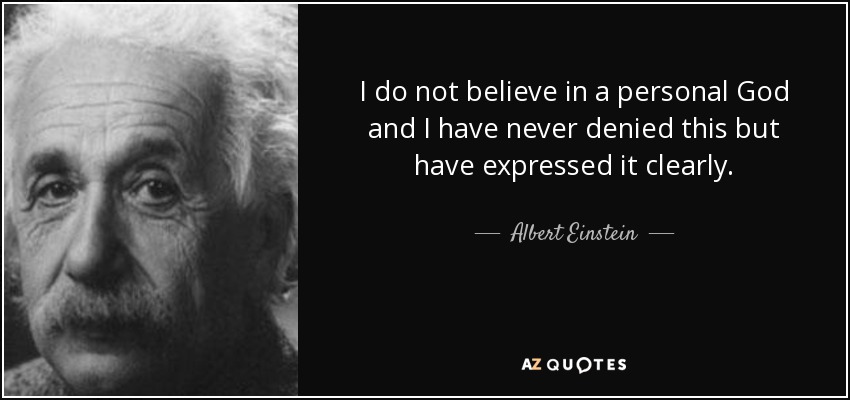
Einstein, who was no atheist,
Einstein was an atheist. He used the term "God" a great deal, but what he meant by it was not any sort of religious deity. He was simply referring to the forces of nature that we don't fully understand, and doing so in a colloquial sense.
... and yes, Albert Einstein was uneasy about using the term "atheist" due to social stigma of the term and his upbringing.
It's not just Newton. At least half of the Nobel Prize winners in physics in the 20th century were religious.
Scientists who turn to science for their answers tend to not turn to religion so much for their answers. As such, of the roughly 400 Nobel Prize in science, the only Nobel Prize winning scientists who have publicly stated a religious faith are the following seven:
- William D. Phillips (Physics, 1997), practicing Christian. Has spoken openly about his faith and how it coexists with his scientific work.
- Arthur Schawlow (Physics, 1981), laser pioneer. Publicly identified as a Christian and discussed religion in relation to science.
- Charles Townes (Physics, 1964), co-inventor of the laser. Outspoken about belief in God, wrote essays on science and religion.
- John Bardeen (Physics, 1956 & 1972), practicing Christian, though less outspoken in scientific contexts.
- George Wald (Medicine, 1967), jewish background. Later in life spoke about spirituality and the intersection of science and philosophy.
- Werner Arber (Medicine, 1978), Swiss microbiologist. Publicly identified as Christian and has spoken about faith.
- Peter Medawar (Medicine, 1960), identified as Christian while being an outspoken opponent of organized religion.
I really don't think you are more rational than these scientists.
... and you wouldn't know.
We've been studying gravity for 500 years (2,500 if you count Aristotle),
Humanity has been studying gravity for as long as there has been humanity.
and while we have made progress describing how it behaves
Gravity doesn't "behave." Gravity is.
Gravity doesn't express anything.
we still really do not know what it is
... but we know exactly what it is.
and why it exists at the level of fundamental reality.
You have just fallen back on the Cypress fallacy, i.e. of asking "why?" without first showing that there even is a "why?"
There are many questions science does not answer.
... because science is not an almanac. Science is a toolbox.
Science is an empirical method
Science is not a method.
that makes accurate predictions of velocity, momentum, and the motion and exchange of energy.
OK, I'll grant you that.
It's not something you need to put on a pedestal and glorify as the ultimate answer to life, the universe, and everything.
... because you realize that science is not an almanac. Kudos.