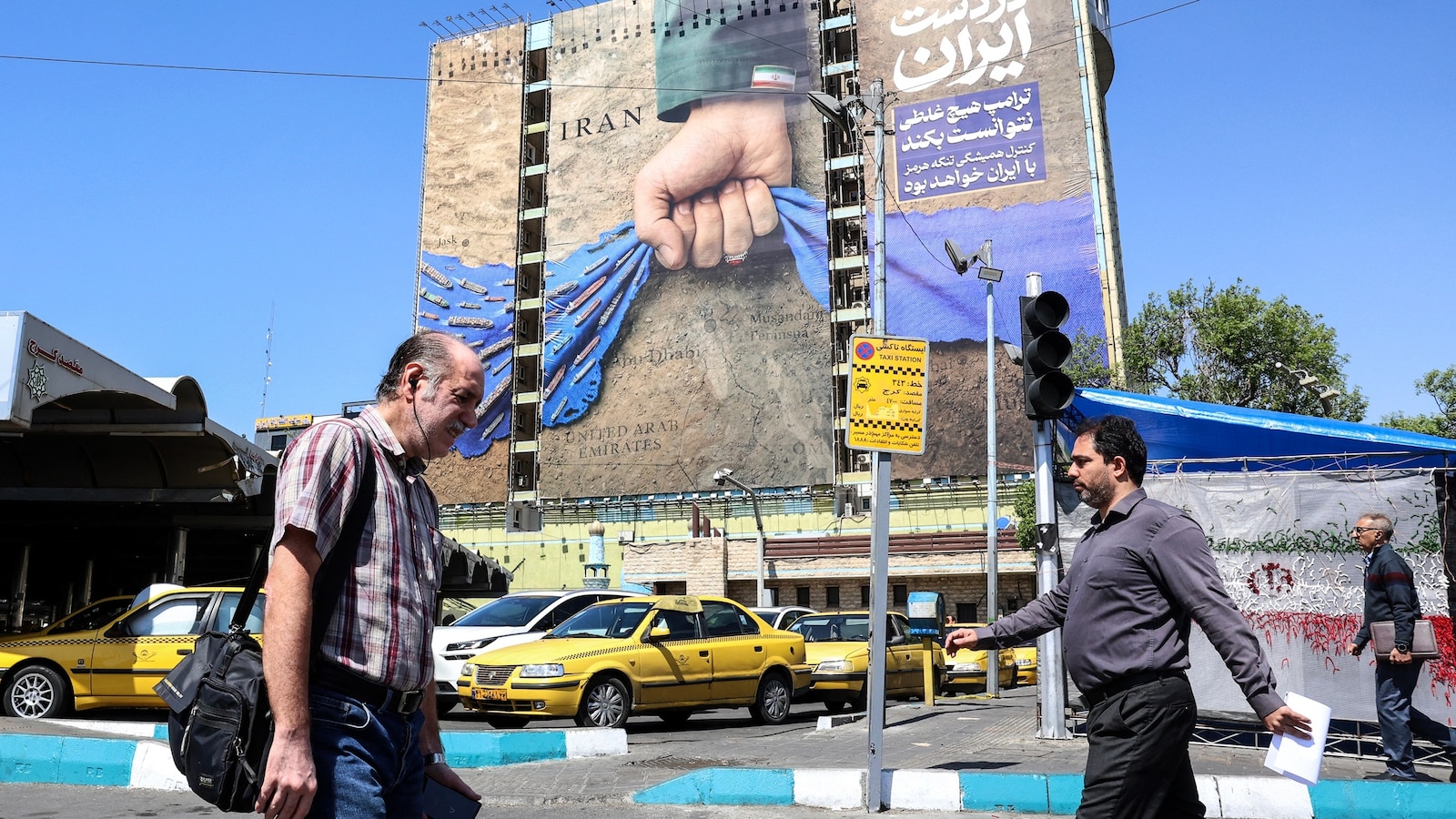
Saudi Arabia Is Pressing U.S. to Drop Its Hormuz Blockade

Crepitus

Well-known member
Contributor
Saudi Arabia recently has been able to get its oil exports back up to their prewar level of around seven million barrels a day despite the blockage in the strategic strait by piping its crude across the desert to the Red Sea. Those supplies would be at risk if the Red Sea’s exit route were closed as well. Iran’s Houthi allies in Yemen control a long stretch of coastline near the Bab al-Mandeb and severely disrupted the waterway for much of the war in the Gaza Strip. Iran is putting pressure on the group to close the chokepoint again, Arab officials said.

 
Saudi Arabia recently has been able to get its oil exports back up to their prewar level of around seven million barrels a day despite the blockage in the strategic strait by piping its crude across the desert to the Red Sea. Those supplies would be at risk if the Red Sea’s exit route were closed as well. Iran’s Houthi allies in Yemen control a long stretch of coastline near the Bab al-Mandeb and severely disrupted the waterway for much of the war in the Gaza Strip. Iran is putting pressure on the group to close the chokepoint again, Arab officials said.



We have already hit one of their pumping stations, and we are prepared to do it again if we must.

The pipeline to the Red Sea has nowhere near enough capacity to carry the Kingdom's output, in any case. Trump's insane actions are imperilling the whole Gulf region.

It is our hope that the KSA will leave the US camp and help us defend our sovereignty, inshallah!
 
Saudi Arabia recently has been able to get its oil exports back up to their prewar level of around seven million barrels a day despite the blockage in the strategic strait by piping its crude across the desert to the Red Sea. Those supplies would be at risk if the Red Sea’s exit route were closed as well. Iran’s Houthi allies in Yemen control a long stretch of coastline near the Bab al-Mandeb and severely disrupted the waterway for much of the war in the Gaza Strip. Iran is putting pressure on the group to close the chokepoint again, Arab officials said.

Wouldn't affect oil being delivered through the Saudi pipeline, Stooge.
Yemen would get blown off the map if they did attack shipping.
 
We have already hit one of their pumping stations, and we are prepared to do it again if we must.
You are not in Iran. You are not Iran. No pumping station is damaged.
The pipeline to the Red Sea has nowhere near enough capacity to carry the Kingdom's output, in any case. Trump's insane actions are imperilling the whole Gulf region.
Iran is not the whole gulf region.
It is our hope that the KSA will leave the US camp and help us defend our sovereignty, inshallah!
Suffering from schizophrenia again. You are only one person.
 
Saudi Arabia recently has been able to get its oil exports back up to their prewar level of around seven million barrels a day despite the blockage in the strategic strait by piping its crude across the desert to the Red Sea. Those supplies would be at risk if the Red Sea’s exit route were closed as well. Iran’s Houthi allies in Yemen control a long stretch of coastline near the Bab al-Mandeb and severely disrupted the waterway for much of the war in the Gaza Strip. Iran is putting pressure on the group to close the chokepoint again, Arab officials said.


It would work, but prices would skyrocket.

The pipeline exists primarily as a strategic security backup (originally built in the 1980s during the Iran-Iraq War to hedge against Hormuz risks), not as the lowest-cost option. Here’s why switching would raise costs and reduce net profits for Saudi Aramco:
  • Pipeline transportation costs: Moving oil 1,200 km across the country requires significant pumping energy, maintenance, and operations (including drag-reducing agents to boost flow). These are internal costs to Aramco but add to the overall expense compared to loading directly at Gulf terminals right next to the fields.
  • Longer and more expensive shipping routes to key markets: Saudi Arabia’s primary customers are in Asia (China, India, etc., taking the bulk of exports).
    • From Gulf ports (e.g., Ras Tanura): Tankers exit directly through Hormuz into the Indian Ocean — the shortest, cheapest route.
    • From Yanbu (Red Sea): Tankers must sail south through the Bab el-Mandeb Strait (or Suez north, which doesn’t help Asia-bound shipments), adding distance, time, fuel, and potential fees. This increases tanker charter rates and voyage costs.
  • Historical and economic behavior confirms this: In peacetime (pre-2026 disruptions), the pipeline operated well below capacity — often ~0.8–2 million bpd total flow, with Yanbu exports around 0.77–1.4 million bpd. Aramco only ramps it up when the Gulf route is unavailable (as seen in early 2026, when Yanbu exports quadrupled to ~4 million bpd). They do not voluntarily shift volumes despite having the infrastructure, because the Gulf route delivers higher netback prices (oil sale price minus transport costs).
  • During recent Hormuz disruptions, Yanbu shipping rates doubled or more (e.g., tanker fees surged to $28 million per voyage or higher daily charter equivalents), insurance spiked, demurrage rose from port congestion, and Aramco even hiked crude price premiums to Asian buyers to offset logistics. These are not sustainable for routine operations.
 
Saudi Arabia recently has been able to get its oil exports back up to their prewar level of around seven million barrels a day despite the blockage in the strategic strait by piping its crude across the desert to the Red Sea. Those supplies would be at risk if the Red Sea’s exit route were closed as well. Iran’s Houthi allies in Yemen control a long stretch of coastline near the Bab al-Mandeb and severely disrupted the waterway for much of the war in the Gaza Strip. Iran is putting pressure on the group to close the chokepoint again, Arab officials said.

This just gets better and better!

The Saudis, in concert with the Israelis, are responsible for pushing Trump to start the war in Iran. Now they get to own the results. LOL
 
It would work, but prices would skyrocket.
Oil prices are fairly steady or dropping, dope. Current price is $88.82.
The pipeline exists primarily as a strategic security backup (originally built in the 1980s during the Iran-Iraq War to hedge against Hormuz risks), not as the lowest-cost option. Here’s why switching would raise costs and reduce net profits for Saudi Aramco:
Nothing to 'switch', dope. The pipeline is already in operation.

  • Pipeline transportation costs: Moving oil 1,200 km across the country requires significant pumping energy, maintenance, and operations (including drag-reducing agents to boost flow). These are internal costs to Aramco but add to the overall expense compared to loading directly at Gulf terminals right next to the fields.
Pipelines are cheaper than ships.
  • Longer and more expensive shipping routes to key markets: Saudi Arabia’s primary customers are in Asia (China, India, etc., taking the bulk of exports).
    • From Gulf ports (e.g., Ras Tanura): Tankers exit directly through Hormuz into the Indian Ocean — the shortest, cheapest route.
    • From Yanbu (Red Sea): Tankers must sail south through the Bab el-Mandeb Strait (or Suez north, which doesn’t help Asia-bound shipments), adding distance, time, fuel, and potential fees. This increases tanker charter rates and voyage costs.
Pipelines are cheaper than ships.
  • Historical and economic behavior confirms this: In peacetime (pre-2026 disruptions), the pipeline operated well below capacity — often ~0.8–2 million bpd total flow, with Yanbu exports around 0.77–1.4 million bpd. Aramco only ramps it up when the Gulf route is unavailable (as seen in early 2026, when Yanbu exports quadrupled to ~4 million bpd). They do not voluntarily shift volumes despite having the infrastructure, because the Gulf route delivers higher netback prices (oil sale price minus transport costs).
Stop making shit up, dope. Argument from randU fallacy.
  • During recent Hormuz disruptions, Yanbu shipping rates doubled or more (e.g., tanker fees surged to $28 million per voyage or higher daily charter equivalents), insurance spiked, demurrage rose from port congestion, and Aramco even hiked crude price premiums to Asian buyers to offset logistics. These are not sustainable for routine operations.
Pipelines are quite sustainable, since they are cheaper than ships.
 

Iran attacks on crucial Saudi pipeline and production facilities slash kingdom’s oil output​


Fiction. Common with NBC. The attack didn't affect pipeline flow at all, and it was yet another example of Iran attacking its neighbors.

Iran stands alone and isolated.
 

Iran Threatens Retaliation Over U.S. Blockade​


The operational command for Iran’s armed forces has warned that Tehran will attempt to expand its authority over critical shipping routes beyond the Strait of Hormuz if the U.S. blockade of the strategic waterway continues. If the blockade “creates insecurity” for Iran’s commercial and oil vessels, Iran will consider it “a prelude to violating the cease-fire,” according to a statement from Maj. Gen. Ali Abdollahi, the commander overseeing Iran’s army and Revolutionary Guards. In that case, “Iran will not allow any exports or imports to continue in the Persian Gulf, the Sea of Oman and the Red Sea,” he said.

 
Back
Top