
Jake Starkey
Verified User
What is funny about the examples the marxists used is that the pyramids were built by SLAVES
Oh this is too rich
We are all aware you often have trouble making sense.
This is one of your top three.

What is funny about the examples the marxists used is that the pyramids were built by SLAVES
Oh this is too rich
 1.
1. 2.
2. 3.
3. 4.
4. 5.
5. 6. 7. 8.
Oh you silly little girl. First of all don't misquote me. I never said "just". You are adding that in to be a squirrel. But, here are your three quotes
Joe Biden - June 19, 2020
“African Americans built this nation. They built it with their hands, their sweat, their backs, their blood.”
B. Hussein Obama - Sep 24, 2016
“The African American story is the story of America. Much of our wealth and infrastructure was built by slaves.”
Michelle Obama - July 25, 2016
“I wake up every morning in a house that was built by slaves.”
Hillary Clinton
“African Americans built this country.”
Raphael Warnock
“Our ancestors built this nation — often with unpaid labor.”
I provided you five. I am sure you will try to find a way to weasel out of this.
Like I said, you will only prove my point

I humbly accept your concessionYour point is that you deny reality.
I see nothing of greatness. Keep proving my point. Maybe the pyramids but they were built by slaves so........
- Royal necropolis of the Kingdom of Kush.
- Over 200 pyramids, steep‑sided and distinct from Egyptian forms.
- Built c. 800 BCE–350 CE.
- UNESCO World Heritage Site.
- Massive stone city built 11th–15th century.
- Features the Great Enclosure, the largest ancient stone structure in sub‑Saharan Africa.
- Dry‑stone walls up to 36 feet high and hundreds of feet long.
- Entire churches carved downward from solid bedrock in the 12th–13th centuries.
- Includes the famous Bete Giyorgis (St. George), carved in a perfect cross shape.
- Still an active pilgrimage site.
- Home to the Great Mosque of Djenné, the world’s largest mud‑brick structure.
- Built in its current form in 1907 but on foundations dating back to the 13th century.
- Entire city built with Sudano‑Sahelian monumental mud architecture.
- Capital of the Phoenician/Punic empire in North Africa.
- Featured massive harbors, temples, and fortifications.
- Later rebuilt by Rome; archaeological remains span 1st millennium BCE onward.
- Monumental prehistoric engravings and paintings across the central Sahara.
- Sites like Tassili n’Ajjer contain thousands of large-scale artworks dating back 10,000+ years.
Africa’s most famous ancient monuments include:
- Pyramids of Giza (Great Pyramid was the tallest human-made structure for ~4,000 years).
- Valley of the Kings (massive royal necropolis).
- Karnak & Luxor temples (among the largest religious complexes ever built).
- Temples, palaces, and pyramids of Napata and Meroë.
- Distinctive architectural styles integrating religious symbolism and royal authority.
I can map these sites by:
- North Africa
- West Africa
- East Africa
- Central Africa
- Southern Africa

The African continent has vastly different building materials and they used paper early on. The building materials they used rotted over the thousands of years, and the paper is no longer, much of their history is lost.We are always to,d that blacks built America. If that is true then where are the ancient structures in Africa? I mean you have the Coliseum in Rome. The Parthenon on Greece. Surely Africa is as ancient. Where is the technological marvels from that time in Africa?
I am sure that instead of coming up with an answer the JPP Marxists will just scream “RACIST”
But that will only prove my point.

Really? Egypt is in Africa and they're pretty well known for their ancient structures. And then there's this:

Top 20 Architectural Heritage Sites in Africa: A Journey Through History and Design - Africans Column
Africa’s architectural heritage is a testament to the continent’s rich cultural, historical, and artistic traditions. From ancient civilizations to colonial periods and indigenous styles, the architectural marvels of Africa span millennia, reflecting diverse influences and innovations. Some of...africanscolumn.com

How piss poor is this ^, ask for proof and this one ^ girls to three book titles off of Amazon, and guarantee he doesn’t know the difference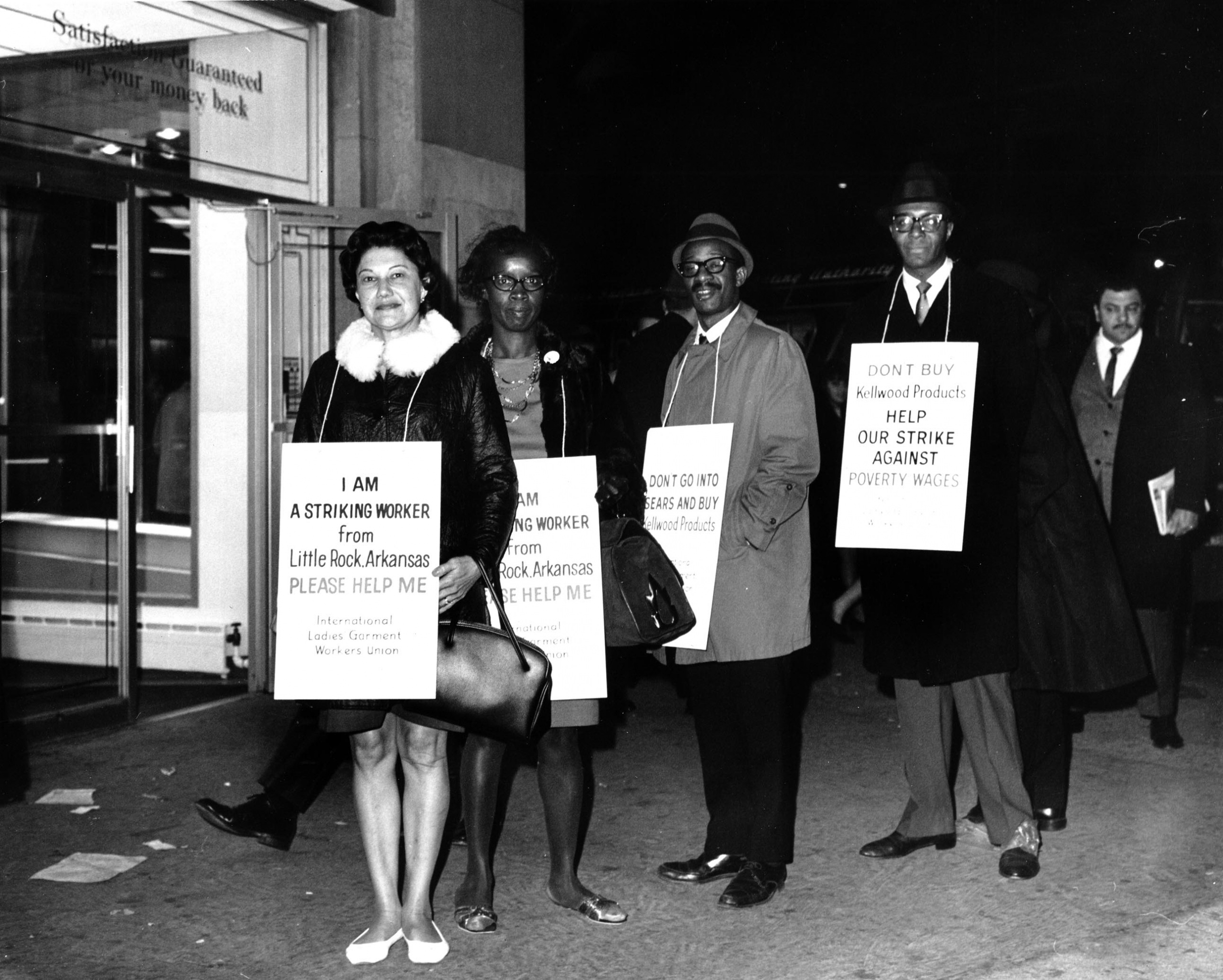
African American Workers Built America | CLASP
Black labor has been foundational to the growth of America and our economy.www.clasp.org
How Blacks Built America: Feagin, Joe R.: 9780415703291: Amazon.com: Books
How Blacks Built America [Feagin, Joe R.] on Amazon.com. *FREE* shipping on qualifying offers. How Blacks Built Americawww.amazon.com
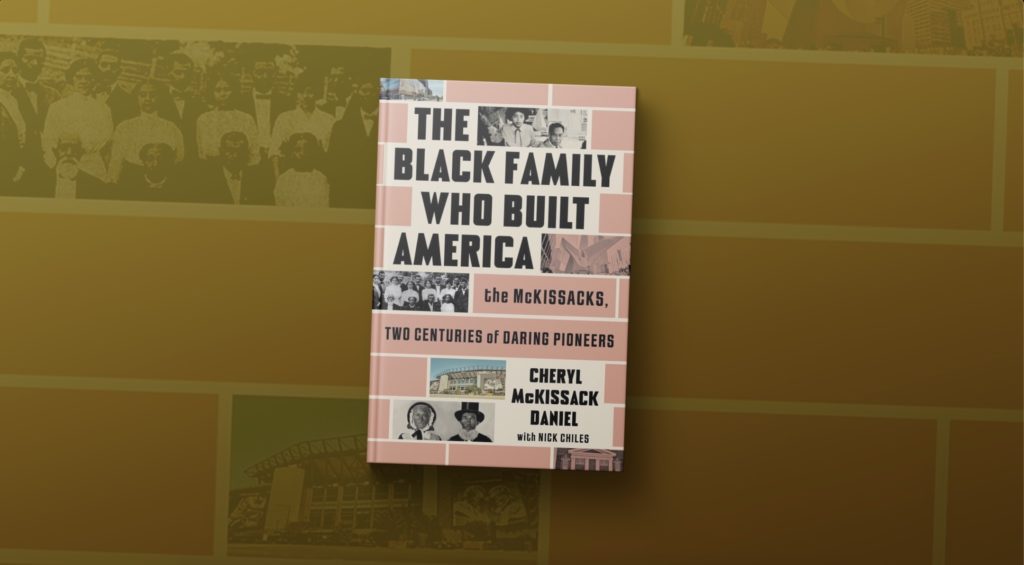
‘The Black Family Who Built America’ chronicles the McKissacks’ design legacy
For centuries, Black Americans’ significant contributions to architecture and design have often been overlooked. A new book chronicles the indelible mark one family has left on American construction since the mid-1800s. Ali Rogin speaks with Cheryl McKissack Daniel, author of “The Black Family...www.pbs.org
Poor Anchovies.

 www.penguinrandomhouse.com
Oh you silly little girl. First of all don't misquote me. I never said "just". You are adding that in to be a squirrel. But, here are your three quotes
Joe Biden - June 19, 2020
“African Americans built this nation. They built it with their hands, their sweat, their backs, their blood.”
B. Hussein Obama - Sep 24, 2016
“The African American story is the story of America. Much of our wealth and infrastructure was built by slaves.”
Michelle Obama - July 25, 2016
“I wake up every morning in a house that was built by slaves.”
Hillary Clinton
“African Americans built this country.”
Raphael Warnock
“Our ancestors built this nation — often with unpaid labor.”
I provided you five. I am sure you will try to find a way to weasel out of this.
Like I said, you will only prove my point
How piss poor is this ^, ask for proof and this one ^ girls to three book titles off of Amazon, and guarantee he doesn’t know the difference
Guess then Trump is the looser most recognize him as:
Lucky Loser by Russ Buettner, Susanne Craig: 9780593298664 | PenguinRandomHouse.com: Books
An Instant New York Times Bestseller • A Washington Post Notable Book • A Financial Times Best Business Book of the Year “A first-rate financial thriller . . . Lucky Loser is one of those...
And they are all correct, just as Italians, Germans, Irish, Wasps, etc., built this country, none of which implied only Blacks did suchOh you silly little girl. First of all don't misquote me. I never said "just". You are adding that in to be a squirrel. But, here are your three quotes
Joe Biden - June 19, 2020
“African Americans built this nation. They built it with their hands, their sweat, their backs, their blood.”
B. Hussein Obama - Sep 24, 2016
“The African American story is the story of America. Much of our wealth and infrastructure was built by slaves.”
Michelle Obama - July 25, 2016
“I wake up every morning in a house that was built by slaves.”
Hillary Clinton
“African Americans built this country.”
Raphael Warnock
“Our ancestors built this nation — often with unpaid labor.”
I provided you five. I am sure you will try to find a way to weasel out of this.
Like I said, you will only prove my point
And they are all correct, just as Italians, Germans, Irish, Wasps, etc., built this country, none of which implied only Blacks did such

IOW you (pl.) are taking into account the skin color of the builders.The claim overlooks key distinctions in both ethnicity and historical context. Ancient Egyptians were an indigenous North African population with genetic affinities closer to Near Eastern and Levantine groups than to sub-Saharan Africans, based on genome analysis of mummies from the New Kingdom to Roman periods (roughly 1400 BCE to 400 CE). These ancient samples showed only 6-15% sub-Saharan African ancestry—lower than the 14-21% observed in modern Egyptians, with the increase in sub-Saharan admixture occurring primarily after the Roman era, likely due to later migrations or trade.
This supports depictions in ancient Egyptian art, where they portrayed themselves with olive to reddish-brown skin tones (darker for men, lighter for women), distinct from the darker-skinned Nubians to their south, whom they often showed as conquered peoples or tributaries.
While Egypt is geographically in Africa and had cultural exchanges with Nubia (a transitional region along the Nile in modern Sudan), ancient Egyptians were not "black" in the sub-Saharan sense; claims to the contrary often conflate the later 25th Dynasty (circa 750-650 BCE), when Nubian (Kushite) rulers from the south briefly controlled Egypt and were indeed darker-skinned sub-Saharan Africans.
Regarding architectural achievements, ancient Egypt and contemporaneous sub-Saharan Africa (south of the Sahara Desert) diverged significantly in scale, materials, organization, and purpose during the key period of pyramid construction (Old Kingdom, circa 2686-2181 BCE). Ancient Egyptians, benefiting from a centralized state, abundant Nile resources, and access to quarried stone, pioneered monumental stone architecture on an unprecedented level. This included the Great Pyramids at Giza—massive structures covering up to 13 acres, built with over 2 million limestone blocks each, engineered as royal tombs with precise alignments, internal chambers, and external causeways.
They also constructed vast temple complexes like Karnak, with hypostyle halls supported by massive columns, obelisks, and sphinx-lined avenues, all symbolizing divine kingship and eternity. These feats required advanced engineering, mathematics, and labor organization, drawing on influences from earlier Mesopotamian ziggurats but adapted with superior stone durability.
In contrast, sub-Saharan African societies during 3000-1000 BCE were more decentralized, often pastoral or agropastoral, and focused on functional, adaptive structures using local materials like dry stone, mudbrick, thatch, and wood.
In Nubia (often a cultural bridge but geographically sub-Saharan in parts of Sudan), mudbrick towns like Kerma (circa 2400 BCE) included walled enclosures, palaces, and the massive Deffufa temple, showing Egyptian influence but on a smaller scale.
Overall, sub-Saharan architecture emphasized communal, fractal designs (e.g., circular villages mirroring house layouts) lacking the Egyptians' grand, symbolic scale.
Sub-Saharan Africa's more impressive stone architecture emerged later, such as the smaller Nubian pyramids at Meroë (starting circa 800 BCE, influenced by Egypt) or the medieval dry-stone walls of Great Zimbabwe (11th-15th centuries CE).
The pyramids specifically reflect ancient Egyptian innovation, not a broader "black African" achievement in the sub-Saharan context.
@Grok

IOW you (pl.) are taking into account the skin color of the builders.
Looks like grok's argument. I don't think skin color has anything to do with building skills.That's your argument?
Looks like grok's argument. I don't think skin color has anything to do with building skills.
Sorry about your reading error. The OP wrote "surely Africa is as ancient. Where is the technological marvels from that time in Africa?"Y O U tried to lump Egyptians in with sub-Saharans.
Y O U attempted cultural appropriation of Egyptian heritage on behalf of sub-Saharans.

The thread was about Africans, Egyptians are Africans.Sorry about your reading error. The OP wrote "surely Africa is as ancient. Where is the technological marvels from that time in Africa?"
There was no differentiation according to location.
Exactly. Nothing about where the Africans lived, just the continent as a whole.The thread was about Africans, Egyptians are Africans.