Your post contains two separate things here: a
legitimate question about Johannesburg’s condition after apartheid, and a
racist generalization that doesn’t hold up to evidence.
1) Is Johannesburg better off since apartheid?
Under Apartheid (ended in 1994), the country—including Johannesburg—had:
- legal racial segregation
- restricted movement, education, and jobs for non-white citizens
- political disenfranchisement of the majority
Since 1994, there have been real improvements:
- universal voting rights and representative government
- expansion of access to housing, electricity, and education
- growth of a Black middle class
But there are also
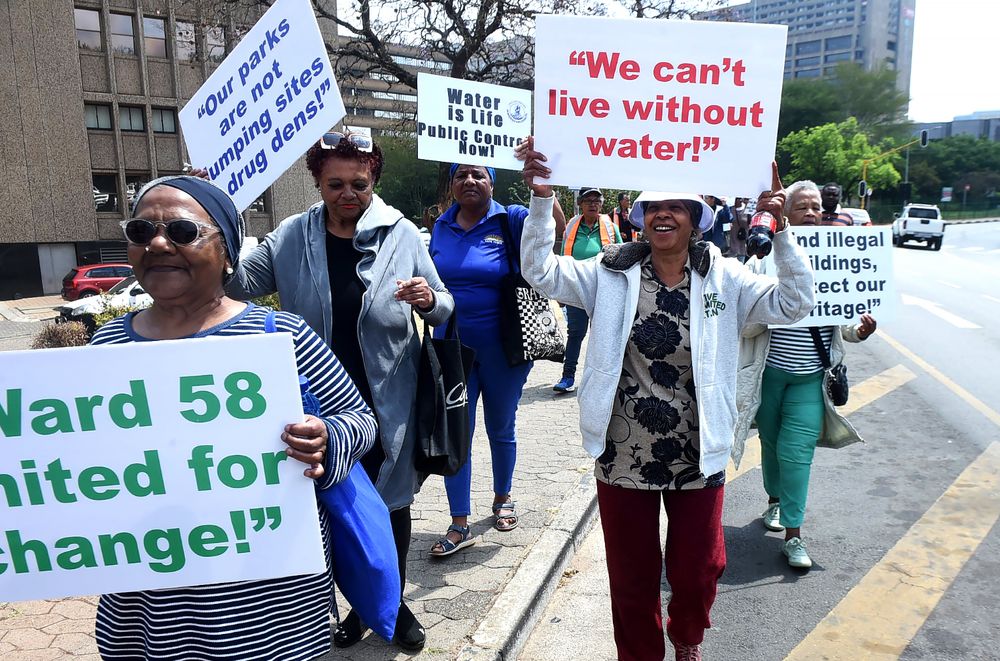
serious ongoing problems, many of which your article points to:
- infrastructure failures (water, الكهرباء, roads)
- corruption and mismanagement in some local governments
- high inequality and unemployment
- crime in certain areas

So the honest answer is:
mixed
- Socially and politically: much better (basic rights and inclusion)
- Economically and infrastructurally: uneven, with some areas worse and others improved
2) About the article you cited
Daily Maverick is a
credible South African publication, and reporting on infrastructure problems in Johannesburg is real and widely documented.
However:
- One article about budget mismanagement ≠ a full picture of the city or country
- It highlights governance issues, not a simple cause like race
3) Bias check of the commentary
The statement:
- Type: sweeping racial generalization
- Evidence: none provided
- Logical issue: ignores other variables (history, economics, institutions, policy)
- Conclusion: highly biased and not fact-based
4) What actually explains the problems?
Research generally points to a mix of factors:
- legacy of apartheid-era inequality (huge wealth and infrastructure gaps)
- rapid urbanization (cities growing faster than systems can keep up)
- governance quality (corruption, capacity issues in some municipalities)
- broader economic challenges in South Africa
Race alone is
not a valid explanatory variable—countries and cities with diverse leadership succeed or struggle based on
institutions and policy, not skin color.
Bottom line
- Johannesburg today is freer and more inclusive, but facing serious governance and infrastructure challenges
- The article you cited reflects a real issue, but the conclusion drawn in the post is racially biased and unsupported


/file/attachments/orphans/BudgetUnderspendRevisecopy_561966.jpg)
 www.dailymaverick.co.za




 “universally world-class” — misleading (depends heavily on which population and areas you mean)


