The world is thirsty for oil. Can America replace the oil that Trump has bottled up?

Ignorant blustering.

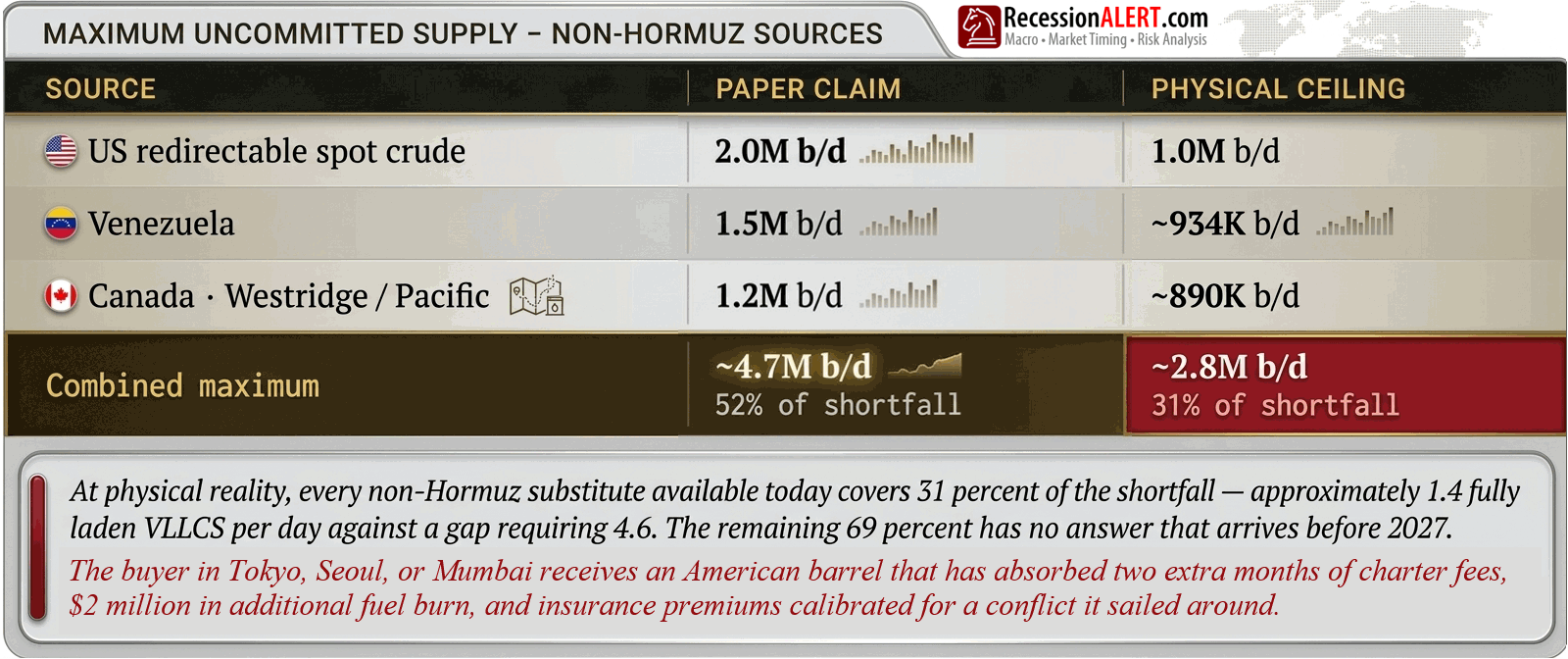
Venezuelan production stands at approximately 934,000 barrels per day against a historical peak of 3.5 million barrels per day in the late 1990s.

Restoring output to 2.5 million barrels per day would cost $58 billion and require 7 to 10 years, according to Rystad Energy; a path to 3 million barrels per day would cost approximately $180 billion through 2040.

JPMorgan estimates that with political stability, unrestricted operations, and new licensing deals, Venezuela could reach ~ 1.4 million barrels per day within two years.

Since you appear to be "thick", I'll explain. That means that Venezuela, at best, might make up thirteen to fifteen percent of the current shortfall, at maximum optimism, on the far side of an investment cycle that nobody has yet made.

No major pipeline or processing facility in Venezuela has been materially updated in 50 years.

Your silly pronouncements have run aground on the shoals of reality.

The entire world relies on the Strait (note the correct spelling) of Hormuz, as already explained above.

Iran is still unbowed. Tyrant Trump has miscalculated.
The current petroleum pinch is temporary; everything you post is ignorant blustering.


You don't think Iran has been bitch slapped ??


Ask the Gayatollah....if you can find him....
 
Last edited:
Seven Gulf countries consistently export oil besides Iran: Bahrain, Iraq, Kuwait, Oman, Qatar, Saudi Arabia, and the UAE.

They are all suffering because of tyrant Trump and butcher Bibi's attack on Iran.

I wonder if the US will have a single friend left in the region after this.
the problem with allies is they are friends in need of validating the one in charge of economic tomorrows, daily here as I ran controls the channel to the suex canal.

Blaming Trump is a distraction and deflection of the thugocracy governing Iran since 1979. lets be honest about the evolving process sustaining the numbers of humans existing in series parallel space occupying time as genetically positioned daily here.

This species is destroying itself with symbolism over substance governance in every reality present as it has since dawn of civilization creating civic minded people as saved souls protecting children cradle to grave regardless they evolve into 64 dead great great great grandparents 200 years ago.

doing the same social governance every generation ancestors are never duplicated twice in current situations in this atmosphere manifests an physical eternal hell for every offspring added daily forward now.
 
the problem with allies is they are friends in need of validating the one in charge of economic tomorrows, daily here as I ran controls the channel to the suex canal.

Blaming Trump is a distraction and deflection of the thugocracy governing Iran since 1979. lets be honest about the evolving process sustaining the numbers of humans existing in series parallel space occupying time as genetically positioned daily here.

This species is destroying itself with symbolism over substance governance in every reality present as it has since dawn of civilization creating civic minded people as saved souls protecting children cradle to grave regardless they evolve into 64 dead great great great grandparents 200 years ago.

doing the same social governance every generation ancestors are never duplicated twice in current situations in this atmosphere manifests an physical eternal hell for every offspring added daily forward now.
Ignorant of geograhy, too, we see.

The "channel to the Suez Canal " is the Red Sea, imbecile...and Iran is nowhere near it.

Your blithering stupidity is impressive.
 
HF9pKB2bEAMMCuD


Not quickly.

Not easily.

Not inexpensively.
Easily. We already have it, and cheaper than getting shot at by Iran.
It is true, as Trump boasted, that an unusually large number of oil tankers have been booked to load U.S. crude oil since America forcibly seized control of the world's primary oil shipping route.
The Strait of Hormuz is not the world's primary oil shipping route.
Despite his ill-informed braggadocio, the US is not equipped to process the scores of VLCC (very large crude carriers) headed toward America. The backlog will take months to clear.
We already have the oil, dope.
The logistical challenges of loading empty supertankers with oil include increased operational costs due to longer empty voyages and capacity constraints that force the use of smaller vessels or multiple shipments.
The ports are already constructed, dope.
Trump's simple-minded supporters with no knowledge of the challenges of transhipping petroleum and LNG (liquid natural gas) clap like seals, anticipating an economic bonanza from Trump's pritatical activities in the Persian Gulf.

They are doomed to disappointment.
It's already happening, dope.
Filling a 2 million gallon supertanker, (let alone dozens of them) is not as easy as gassing up a pickup at the local convenience store.
It pretty much is. Just takes a little longer, and you have to fill the hold in a balanced manner, and the tankers are loaded with oil, not gasoline or diesel fuel.
Each VLCC can carry roughly 2 million barrels of oil, so the group represents massive potential export volume (over 120 million barrels from the VLCCs alone).

The influx stems from a sharp disruption in Persian Gulf oil flows (exports through the Strait of Hormuz aredown ~92%, from 20 million to just 1.5 million barrels per day due to the American blockade).
Nope. Far more than that travels out of the Mid-East, despite Iran or the blockade.
Trump and others may view this “swarm” as a huge boon; proof of surging global demand for American oil, an export windfall, and a geopolitical win for U.S. energy dominance.
It is.
However, the facts (backed by current EIA export data, port logistics, and global inventory trends) is that it is not the straightforward economic victory it may appear to be.
It is.
 
Boastful bully Trump recently posted a satellite image of 68 supertankers assembled in the Gulf of Mexico, bound for American ports to load crude oil.

Behind the image lay a claim that had been building for weeks: the United States is the world's largest producer, and whatever the Strait of Hormuz removes from global circulation, American wells can replace.

The production number is accurate.

Every conclusion drawn from it is not.

The United States imports 6.2 million barrels per day of crude while exporting 4.9 million; America is a structural net importer of the commodity it produces in record volume.

The water's edge is where Trump's boast dies.

“GREAT!!!” read the caption. Behind the image lay an argument that had been building for weeks across cable television and social media: the United States is the world’s largest crude producer, at 13.6 million barrels per day, and whatever the Strait of Hormuz — the 21-mile chokepoint between Iran and Oman through which approximately 20 million barrels per day of oil and petroleum products transit — removes from global circulation, American wells and terminals can replace. The argument is wrong: not at the level of the production number, which is accurate, but at every step between the wellhead and the water’s edge.

The Strait of Hormuz was effectively closed in early March 2026 following the outbreak of US-Israeli air operations against Iran.

On April 12, after Iran’s refusal to surrender, the nraged tyrant Trump effectively closed the Strait by announcing a US Navy blockade. He gave orders to intercept any vessel that had paid Iran’s $2 million transit fee.

Now Trump has bottled up Iraq, Saudi Arabia, Kuwait, the United Arab Emirates, Qatar, and Bahrain. These oil producers have together lost approximately 9.1 million barrels per day of production, according to the EIA’s April 2026 Short-Term Energy Outlook.

The question is not whether he United States can make up the shortfall. It cannot.

Not in any timeframe measured in months, or even years.

Trump's idle boasting rests on four conflations that do not match the limits of the physical infrastructure: US production volume against net exportable crude surplus; the country’s net crude position against its net total petroleum position; total commercial petroleum stocks against genuinely exportable crude above minimum operating levels; and the Strategic Petroleum Reserve against a freely deployable export buffer.

Strip away each conflation, and the United States has approximately 1 million barrels per day of redirectable spot crude. That's only eleven percent of the gap, available for new buyers, deliverable late, insured at 25 times the pre-war rate, routed 30 days the long way around Africa.

The water’s edge is where the Trump's daydream dies.

The world’s largest crude producer imports 6.2 million barrels per day of crude oil and exports 4.9 million.

These facts are not contradictory. They describe a refinery system built before the shale era for a grade of crude the Permian Basin does not produce.

The United States is simultaneously the world’s largest crude producer and a structural net importer of crude oil, and the distinction matters more right now than at any point since the 1970s.

Not only is Trump's reckless act starving his purported allies in the Middle East, Europe, and Asia of a precious commodity and wrecking their economies, he is making everything Americans buy (or produce) more expensive.

He's a failure.
Argument from randU fallacies. Random numbers are not data, dope.
 
VLCCs cannot transit the Canal fully laden.
Irrelevant to your utter ignorance about the location of the Suez Canal.


As for the depth of the canal...the world's been handling it fine for decades: der...

Lightering​

The standard procedure for VLCCs that cannot transit fully-laden involves:
  1. Partial discharge at Ain Sukhna into storage tanks or medium-size tankers.
  2. Transit through the Suez Canal with reduced draft.
  3. Re-loading at Sidi Kerir terminal on the Mediterranean side to continue the voyage.

    2

    This ensures safe navigation while maintaining cargo efficiency.
 
For much of the world, the delivery costs compound what the loading problem already established.

A VLCC departing the Gulf of America for Tokyo Bay travels approximately 14,000 nautical miles via the Cape of Good Hope, which takes 40 to 45 days. The same vessel traveling from Ras Tanura to Tokyo covers 6,500 nautical miles in 18 to 20 days. That difference halves the annual delivery frequency of each vessel: a VLCC on the US-Asia run completes four to five round trips per year; on the Middle East-Asia run, eight to nine.

Do I need to explain which route makes more sense for Asian consumers?

I warn you: this next concept may be beyond the intellectual capabilities of many Americans to grasp. I will try to simplify matters.

Because a cargo from the Middle East ports take roughly half the time from start to finish, delivering the same annual volume of oil from the Gulf of America therefore requires approximately twice the number of VLCCs.

These huge vessels do not exist in abundance and cannot be built on a crisis timeline.

Fuel burn compounds the fleet problem: at 80 to 100 tonnes per day, an extra 50 to 60 days at sea per round trip adds approximately $1.5 to $2 million in "bunker" (fuel) costs per voyage. That adds roughly $1 per barrel on a cargo already repriced upward by record VLCC charter rates of $423,736 per day.

War risk insurance premiums, which tyrant Trump's attack has already increased to ~ 25 times the pre-war rate, must be paid regardless of routing.

A buyer in Tokyo, Seoul, or Mumbai would therefore receive an American barrel of oil that has absorbed two extra months of charter fees, $2 million in additional fuel burn, and insurance premiums based upon a conflict it sailed around Africa )twice) to avoid.

That barrel is not price-competitive with the Middle East barrel it is supposed to replace.

How do you suppose Asians feel about tyrant Trump's war when faced with economic ruin?
You sure like to make shit up, dope.

Supertankers already exist. They have for quite a while now.
 
Irrelevant to your utter ignorance about the location of the Suez Canal.


As for the depth of the canal...the world's been handling it fine for decades: der...

Lightering​

The standard procedure for VLCCs that cannot transit fully-laden involves:
  1. Partial discharge at Ain Sukhna into storage tanks or medium-size tankers.
  2. Transit through the Suez Canal with reduced draft.
  3. Re-loading at Sidi Kerir terminal on the Mediterranean side to continue the voyage.

    2

    This ensures safe navigation while maintaining cargo efficiency.


I wasn't the one your reply was directed to.

I know where the Suez Canal is, and I also know that a VLCC in ballast or partially laden isn't a viable economic proposition. Neither is lightering.
 
Irrelevant to your utter ignorance about the location of the Suez Canal.


As for the depth of the canal...the world's been handling it fine for decades: der...

Lightering​

The standard procedure for VLCCs that cannot transit fully-laden involves:
  1. Partial discharge at Ain Sukhna into storage tanks or medium-size tankers.
  2. Transit through the Suez Canal with reduced draft.
  3. Re-loading at Sidi Kerir terminal on the Mediterranean side to continue the voyage.

    2

    This ensures safe navigation while maintaining cargo efficiency.


I wasn't the one your reply was directed to.

I know where the Suez Canal is, and I also know that a VLCC in ballast or partially laden isn't a viable economic proposition. Neither is lightering.
 
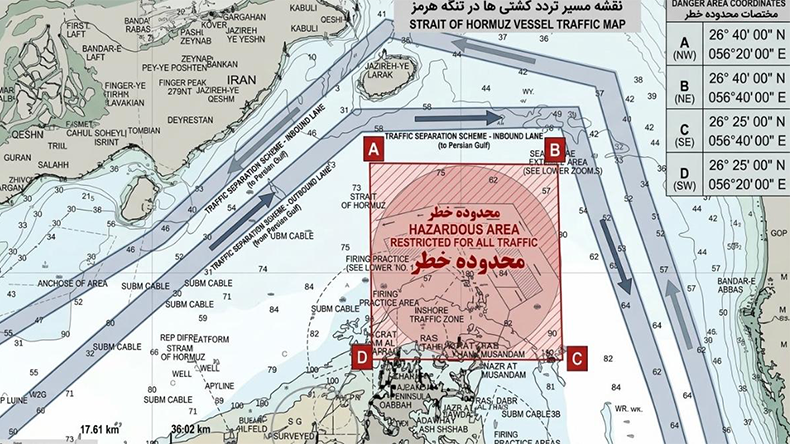
  • There are at present no practical alternatives to the Strait of Hormuz for Persian Gulf producers. Closure generally forces rerouting around the Cape of Good Hope, adding ~2–3 weeks and massive costs.
  • Geopolitical flashpoint: The Strait is partially inside Iranian territorial waters, and tyrant Trump's temper tantrum has spiked global oil prices instantly.
  • Tankers: Deep/wide enough for VLCCs (very large crude carriers).
  • Lightering crude oil from VLCCs (via ship-to-ship transfer to lighters or Suezmax tankers that then transit the Suez Canal, followed by reloading the VLCC in the Mediterranean) is not considered an economically viable or standard means of moving oil through the Suez Canal. This specific multi-vessel, ship-to-ship (STS) transshipment approach adds significant costs, time, operational complexity, and risks that make it impractical.
  • Extra vessel chartering and operations: Hiring additional Suezmax tankers (or lighters) incurs daily hire rates (often $20,000–$70,000+ depending on market conditions) plus fuel, crew, and positioning costs. STS transfers require specialized equipment (hoses, fenders), trained personnel, and calm weather windows—adding 1–2+ days of downtime and demurrage.
  • Multiple canal transits and tolls: Suez Canal dues (based on SCNT) plus pilotage/tugs for two (or more) vessels, rather than one. Even with SCA incentives or rebates, this doubles handling fees.
  • Time delays and risks: Lightering operations, coordination, and potential weather/sea-state interruptions increase total voyage time vs. a single-vessel option. Cargo transfer risks (spills, contamination) raise insurance and environmental compliance costs.
  • Inefficiency vs. economies of scale: VLCCs exist for ultra-long-haul cost savings. Splitting cargo negates much of that advantage on a relatively short Gulf-to-Med route.
  • Neither does the SUMED pipelines' daily maximum capacity of 2.5 million barrels per day (mb/d) provide an economically viable means of moving enough Saudi crude oil to Europe to fully offset the supply deficits caused by tyrant Trump's Strait of Hormuz blockade. Negatives include capacity constraints, shared use, and the need for tanker loadings at Yanbu/Ain Sokhna add logistics costs. It cannot scale to replace the lost volume that caused Europe’s energy deficits.

 
strait-of-hormuz.jpg


There are no scalable short-term alternatives for most Persian Gulf producers:
  • Land pipelines (e.g., Saudi Arabia’s East-West line to the Red Sea or UAE’s Habshan-Fujairah line) have limited capacity and cannot fully replace sea exports.
  • Rerouting around the Cape of Good Hope adds 2–3 weeks, higher fuel costs, and insurance premiums.
  • Iraq, Kuwait, and others have virtually no bypass options.
This concentration of supply makes the strait indispensable for global energy security.

Disruption here does not stay regional. It immediately affects:
  • Oil and energy prices worldwide, driving inflation, higher shipping/fuel costs, and reduced growth forecasts.
  • Supply chains for petrochemicals, fertilizers, plastics, and transport fuels.
  • Major importers (especially Asia) and exporters (Gulf states), but also indirect impacts on Europe, the U.S., and developing economies.
Even partial closures or heightened insurance “war-risk” premiums force rerouting and inventory builds, amplifying volatility.
 
For much of the world, the delivery costs compound what the loading problem already established.

A VLCC departing the Gulf of America for Tokyo Bay travels approximately 14,000 nautical miles via the Cape of Good Hope, which takes 40 to 45 days. The same vessel traveling from Ras Tanura to Tokyo covers 6,500 nautical miles in 18 to 20 days. That difference halves the annual delivery frequency of each vessel: a VLCC on the US-Asia run completes four to five round trips per year; on the Middle East-Asia run, eight to nine.

Do I need to explain which route makes more sense for Asian consumers?

I warn you: this next concept may be beyond the intellectual capabilities of many Americans to grasp. I will try to simplify matters.

Because a cargo from the Middle East ports take roughly half the time from start to finish, delivering the same annual volume of oil from the Gulf of America therefore requires approximately twice the number of VLCCs.

These huge vessels do not exist in abundance and cannot be built on a crisis timeline.

Fuel burn compounds the fleet problem: at 80 to 100 tonnes per day, an extra 50 to 60 days at sea per round trip adds approximately $1.5 to $2 million in "bunker" (fuel) costs per voyage. That adds roughly $1 per barrel on a cargo already repriced upward by record VLCC charter rates of $423,736 per day.

War risk insurance premiums, which tyrant Trump's attack has already increased to ~ 25 times the pre-war rate, must be paid regardless of routing.

A buyer in Tokyo, Seoul, or Mumbai would therefore receive an American barrel of oil that has absorbed two extra months of charter fees, $2 million in additional fuel burn, and insurance premiums based upon a conflict it sailed around Africa )twice) to avoid.

That barrel is not price-competitive with the Middle East barrel it is supposed to replace.

How do you suppose Asians feel about tyrant Trump's war when faced with economic ruin?
What time is it regardless location in this atmosphere regardless longitude and latitude, ancestral lineage, generation gap, male female ancestor, God, Country, economic status, living in plain sight by heart beats forward here?

Equally alive living physically eternally separated as genetically living, now. logistics time tables do not define time adapting in plain sight. and everyone arguing social discourse of outcomes is denying how existing actually occurs.

don't play intellectually superior than my brain nvigating space equally alive or I don't recognize what any ancestor faces each heartbeat added next.

I grew up being told I am worth less than those directing tomorrows outcomes evolving daily here equally displaced regardless location, location, location.

people obey context, not follow natural process.
 
Back
Top