

QP!
Verified User
Not really a partisan issue as both parties have piled in debts. Republicans tend to be the one who shout about debt being bad while adding the most to it, so that is an issue.
The biggest issue i see currently will be met as a partisan issue but i am not pushing it for that reason, but it is Trump pushing much of the world away from holding the US dollar and debt and them moving to other currencies and debt. that will end up repricing all US debt and making it more expensive which is worse than the impact of simply adding more debt.
US public debt has reached 100 percent of GDP (gross domestic product) for the first time since the aftermath of World War II. Just because we have been here before, and we managed, doesn’t mean we will do so again. This time is different in important ways that are underappreciated by both policymakers and the public.
In 1946, the United States emerged from a global war with high debt, but also with a young population, strong growth prospects, and a political commitment to fiscal restraint. Today, America faces the opposite: an aging population, structurally rising entitlement spending, and persistent deficits with no credible plan to rein them in....
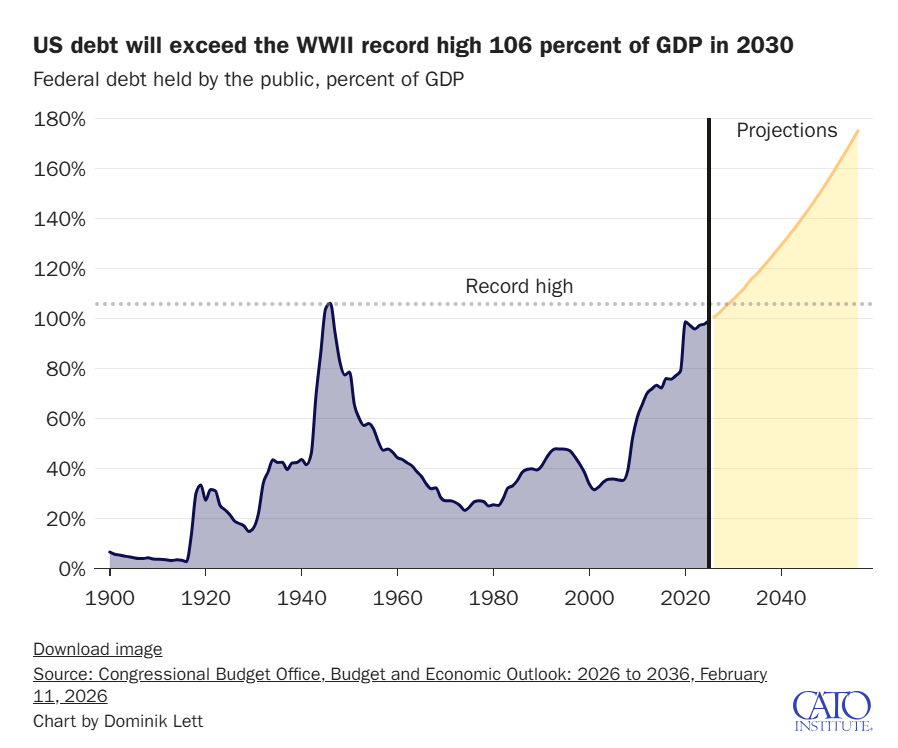
The United States has now moved well beyond the range where research suggests debt begins to weigh on growth. High debt levels gradually erode economic performance through crowding out private investment, increasing borrowing costs, and limiting the government’s ability to respond to future crises.
The United States is also different from other advanced economies due to the unique role that the US dollar plays in global financial markets. As the issuer of the world’s dominant reserve currency and a primary supplier of safe assets, the US benefits from what economists call an “exorbitant privilege.” This enables the US government to sustain higher debt levels than other countries.
Even this privilege is not without limits, however. Estimates suggest that the dollar’s status may expand the US government’s debt capacity by roughly 20 percent of GDP, putting the US threshold where debt begins to weigh on growth closer to 100 percent of GDP than 80.
And “exorbitant privilege” is not a permanent entitlement, either. It depends on investor confidence, the depth and liquidity of US financial markets, and the absence of credible alternatives to US dollar dominance. Should that confidence weaken, because of political dysfunction, fiscal irresponsibility, and the rise of competing safe assets, the US advantage could erode.
--------------------------
The biggest issue i see currently will be met as a partisan issue but i am not pushing it for that reason, but it is Trump pushing much of the world away from holding the US dollar and debt and them moving to other currencies and debt. that will end up repricing all US debt and making it more expensive which is worse than the impact of simply adding more debt.
US Debt Crosses 100% of GDP for First Time Since 1946—And This Time Is Different
US public debt has reached 100 percent of GDP (gross domestic product) for the first time since the aftermath of World War II. Just because we have been here before, and we managed, doesn’t mean we will do so again. This time is different in important ways that are underappreciated by both policymakers and the public.
In 1946, the United States emerged from a global war with high debt, but also with a young population, strong growth prospects, and a political commitment to fiscal restraint. Today, America faces the opposite: an aging population, structurally rising entitlement spending, and persistent deficits with no credible plan to rein them in....
Do Debt Thresholds Matter?
Economists have long debated whether there is a specific tipping point at which public debt begins to harm economic growth. While estimates vary, a broad body of research suggests that the risks become more pronounced as debt rises beyond roughly 80 percent of GDP for advanced economies. Sustained debt levels above this range are associated with slower economic growth, reduced investment, and diminished fiscal flexibility.The United States has now moved well beyond the range where research suggests debt begins to weigh on growth. High debt levels gradually erode economic performance through crowding out private investment, increasing borrowing costs, and limiting the government’s ability to respond to future crises.
The United States is also different from other advanced economies due to the unique role that the US dollar plays in global financial markets. As the issuer of the world’s dominant reserve currency and a primary supplier of safe assets, the US benefits from what economists call an “exorbitant privilege.” This enables the US government to sustain higher debt levels than other countries.
Even this privilege is not without limits, however. Estimates suggest that the dollar’s status may expand the US government’s debt capacity by roughly 20 percent of GDP, putting the US threshold where debt begins to weigh on growth closer to 100 percent of GDP than 80.
And “exorbitant privilege” is not a permanent entitlement, either. It depends on investor confidence, the depth and liquidity of US financial markets, and the absence of credible alternatives to US dollar dominance. Should that confidence weaken, because of political dysfunction, fiscal irresponsibility, and the rise of competing safe assets, the US advantage could erode.
--------------------------


