QP!
Verified User
More than 50% of the federal budget today is on social-welfare spending that is locked in. That is, it can't be altered to reduce it nor can it be ended.
Tax cuts or hikes have little impact on the federal budget compared to profligate spending on welfare.
“Tax cuts or hikes have little impact compared to welfare spending”
This is flatly misleading.
 Reality: Both sides matter
The deficit is driven by two sides of the ledger:
- Spending
- Revenue (taxes)
Even small % changes in either can mean trillions over time.
3) Impact of Trump tax cuts (first term + extensions)
Key facts
- The 2017 Tax Cuts and Jobs Act (TCJA) significantly reduced federal revenue.
- Extending those cuts (a major policy goal) is projected to:
- Add trillions to the deficit over time.
Examples:
- CBO-type projections:
- ~$4–5 trillion added to deficits over a decade from extending tax cuts
- Other analyses:
- ~$3.8 trillion revenue loss from extensions
And importantly:
- Tax cuts directly increase deficits if not offset
4) Relative scale: spending vs tax policy
Here’s the key misunderstanding in the original claim:
Spending side
- Mandatory spending ≈ 60% of budget
Revenue side
- Total revenue ≈ $4.9 trillion/year
 If you cut taxes by even ~10–15%:
- That’s hundreds of billions per year
- Which compounds to trillions over a decade
So:
- Tax policy changes are absolutely large enough to materially affect debt
5) The real picture economists agree on
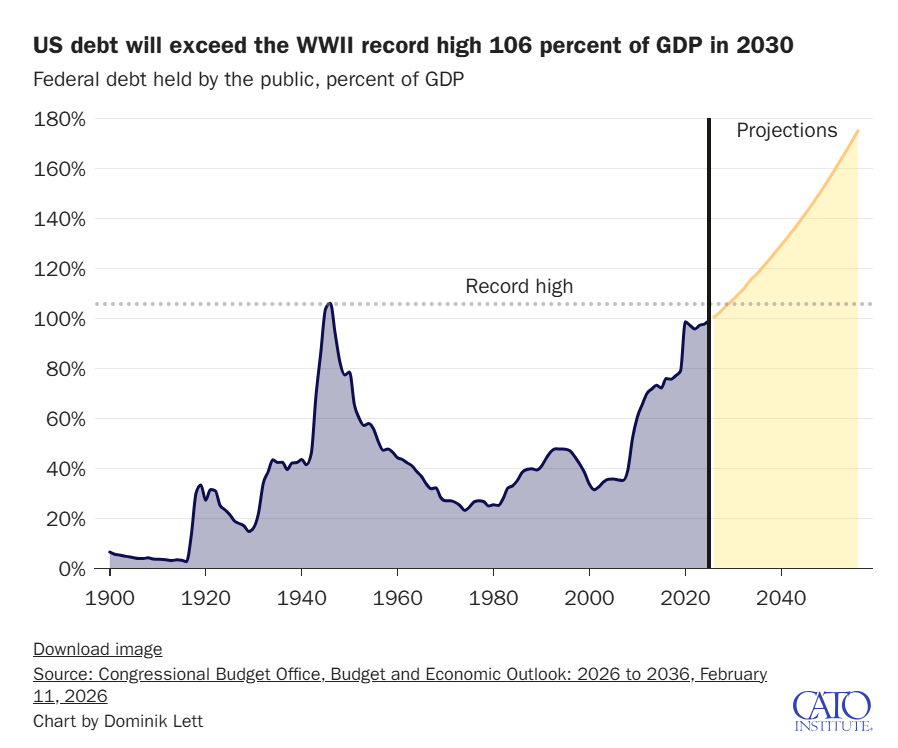
The U.S. debt problem is driven by both:
Structural spending growth
- Aging population → Social Security + Medicare rising
- Healthcare costs
Structural revenue choices
- Tax cuts (especially if not offset)
- Tax base erosion
Most serious analyses conclude:- You cannot stabilize debt without addressing BOTH spending and revenue
6) Clean verdict on the original statement
Claim:
“More than 50% is social welfare and can’t be changed”
- Half true / half false
- Large share
 Not unchangeable
Claim:
“Tax cuts or hikes have little impact”
- False
- Tax policy changes have multi-trillion-dollar impacts
- Trump-era tax cuts are a major contributor to projected deficits
7) The blunt reality
If you strip away ideology:
- You could eliminate all non-defense discretionary spending and still not balance the budget
- You could raise taxes modestly and significantly reduce deficits
- You could reform entitlements and significantly reduce deficits
The math forces this conclusion:The debt problem is too big to solve with only one lever.