
You are using an out of date browser. It may not display this or other websites correctly.
You should upgrade or use an alternative browser.
You should upgrade or use an alternative browser.
When is CO2 long range IR wavelengths maxed out in the atmosphere
- Thread starter serendipity
- Start date
serendipity
Verified User
serendipity
Verified User
Carbon dioxide (CO2) absorbs and re-emits infrared (IR) radiation, which is a key factor in the greenhouse effect and climate change. This absorption occurs because the vibrational modes of the CO2 molecule can be excited by the energy of infrared photons, causing the molecule to vibrate and re-emit the energy, some of which returns to Earth's surface as heat.
Here's a more detailed explanation:
Infrared Absorption:
CO2 molecules, unlike the major atmospheric gases like nitrogen and oxygen, have a molecular structure that allows them to absorb infrared radiation. Specifically, the bonds within the CO2 molecule can vibrate in ways that match the energy of infrared photons, leading to absorption.
Re-emission:
When a CO2 molecule absorbs infrared radiation, it becomes energized and starts to vibrate more intensely. This energized state is unstable, and the molecule will eventually release the absorbed energy by emitting infrared radiation in random directions.
Greenhouse Effect:
Because CO2 molecules re-emit the absorbed infrared radiation in all directions, some of it is directed back towards the Earth's surface, contributing to the warming of the planet. This process is a major component of the greenhouse effect, which helps maintain a habitable temperature on Earth.
Wavelength Specificity:
CO2 doesn't absorb all infrared wavelengths equally. It has specific absorption bands where it is most effective at absorbing infrared radiation. For instance, it strongly absorbs radiation around 15 micrometers.
Impact on Climate:
Because CO2 is a relatively long-lived greenhouse gas, its increasing concentration in the atmosphere due to human activities is a significant factor in the observed warming trend. While other factors also play a role, the increased absorption and re-emission of infrared radiation by CO2 is a crucial part of understanding climate change.
Here's a more detailed explanation:
Infrared Absorption:
CO2 molecules, unlike the major atmospheric gases like nitrogen and oxygen, have a molecular structure that allows them to absorb infrared radiation. Specifically, the bonds within the CO2 molecule can vibrate in ways that match the energy of infrared photons, leading to absorption.
Re-emission:
When a CO2 molecule absorbs infrared radiation, it becomes energized and starts to vibrate more intensely. This energized state is unstable, and the molecule will eventually release the absorbed energy by emitting infrared radiation in random directions.
Greenhouse Effect:
Because CO2 molecules re-emit the absorbed infrared radiation in all directions, some of it is directed back towards the Earth's surface, contributing to the warming of the planet. This process is a major component of the greenhouse effect, which helps maintain a habitable temperature on Earth.
Wavelength Specificity:
CO2 doesn't absorb all infrared wavelengths equally. It has specific absorption bands where it is most effective at absorbing infrared radiation. For instance, it strongly absorbs radiation around 15 micrometers.
Impact on Climate:
Because CO2 is a relatively long-lived greenhouse gas, its increasing concentration in the atmosphere due to human activities is a significant factor in the observed warming trend. While other factors also play a role, the increased absorption and re-emission of infrared radiation by CO2 is a crucial part of understanding climate change.
serendipity
Verified User

42K views · 1.1K reactions | 🌍 More CO₂ = more warming? Not anymore! The atmosphere’s warming effect from CO₂ is maxed out — adding more doesn’t change the game. Linnea breaks it down with a window tape analogy you’ll never forget 👇 #ClimateCheck #C
🌍 More CO₂ = more warming? Not anymore! The atmosphere’s warming effect from CO₂ is maxed out — adding more doesn’t change the game. Linnea breaks it down with a window tape analogy you’ll never...
 www.facebook.com

gfm7175
Jesus is LORD!
There is no concentration point; CO2 does not trap thermal energy. It is not possible to trap thermal energy. (There is no such thing as a perfect insulator).At what concentration point does atmospheric carbon dioxide 'max out' in terms of trapping thermal energy? Is there a point where a raise in levels would make no real difference?
gfm7175
Jesus is LORD!
ChatGPT, Grok, et al. are wrong. There is no such thing as "re-emits infrared (IR) radiation". Photons, upon absorption, are completely and utterly DESTROYED. There is no such thing as "greenhouse effect"; the described mechanism for it violates physics.Carbon dioxide (CO2) absorbs and re-emits infrared (IR) radiation, which is a key factor in the greenhouse effect and climate change. This absorption occurs because the vibrational modes of the CO2 molecule can be excited by the energy of infrared photons, causing the molecule to vibrate and re-emit the energy, some of which returns to Earth's surface as heat.
IOW, the entirely of "climate change" "science" (a physics-denying religion) is complete and utter BULLSHIT that's being peddled to the gullible masses in order to siphon more money and power from the plebs (and to the elites who gain from it).
There is one thing missing in the explanation. When a molecule vibrates more intensely it registers as an increase in temperature. The capture of energy in the atmosphere heats up the atmosphere. This increase in atmospheric temperature is part of the earth's warming.Carbon dioxide (CO2) absorbs and re-emits infrared (IR) radiation, which is a key factor in the greenhouse effect and climate change. This absorption occurs because the vibrational modes of the CO2 molecule can be excited by the energy of infrared photons, causing the molecule to vibrate and re-emit the energy, some of which returns to Earth's surface as heat.
Here's a more detailed explanation:
Infrared Absorption:
CO2 molecules, unlike the major atmospheric gases like nitrogen and oxygen, have a molecular structure that allows them to absorb infrared radiation. Specifically, the bonds within the CO2 molecule can vibrate in ways that match the energy of infrared photons, leading to absorption.
Re-emission:
When a CO2 molecule absorbs infrared radiation, it becomes energized and starts to vibrate more intensely. This energized state is unstable, and the molecule will eventually release the absorbed energy by emitting infrared radiation in random directions.
Greenhouse Effect:
Because CO2 molecules re-emit the absorbed infrared radiation in all directions, some of it is directed back towards the Earth's surface, contributing to the warming of the planet. This process is a major component of the greenhouse effect, which helps maintain a habitable temperature on Earth.
Wavelength Specificity:
CO2 doesn't absorb all infrared wavelengths equally. It has specific absorption bands where it is most effective at absorbing infrared radiation. For instance, it strongly absorbs radiation around 15 micrometers.
Impact on Climate:
Because CO2 is a relatively long-lived greenhouse gas, its increasing concentration in the atmosphere due to human activities is a significant factor in the observed warming trend. While other factors also play a role, the increased absorption and re-emission of infrared radiation by CO2 is a crucial part of understanding climate change.
ROFLMAO.ChatGPT, Grok, et al. are wrong. There is no such thing as "re-emits infrared (IR) radiation". Photons, upon absorption, are completely and utterly DESTROYED. There is no such thing as "greenhouse effect"; the described mechanism for it violates physics.
IOW, the entirely of "climate change" "science" (a physics-denying religion) is complete and utter BULLSHIT that's being peddled to the gullible masses in order to siphon more money and power from the plebs (and to the elites who gain from it).
You are always good for a laugh. I love your claim that molecules can't emit infrared radiation. It's funny because there is this big thing in the sky every day that emits radiation from molecules.

Noking
Fight authoritarianism support Noking
OMG, more pseudo science.
Noking
Fight authoritarianism support Noking
What is your expertise that qualifies you to say this?????????There is no concentration point; CO2 does not trap thermal energy. It is not possible to trap thermal energy. (There is no such thing as a perfect insulator).
gfm7175
Jesus is LORD!
RMFLMAO.ROFLMAO.
You are always good for a laugh. I love your claim that molecules can't emit infrared radiation. It's funny because there is this big thing in the sky every day that emits radiation from molecules.
You are always good for a laugh. I love your claim that the words emit and re-emit are identical to each other. It's funny because there is a blatantly obvious prefix in front of the word emit that changes the definition of the word.
gfm7175
Jesus is LORD!
Basic physics.What is your expertise that qualifies you to say this?????????
Noking
Fight authoritarianism support Noking

It absorbs a photon and then later emits a photon. That you wanted to argue that it doesn't re-emit a photon shows you are relying on semantics instead of physics.RMFLMAO.
You are always good for a laugh. I love your claim that the words emit and re-emit are identical to each other. It's funny because there is a blatantly obvious prefix in front of the word emit that changes the definition of the word.
You do know what the Heartland Institute is correct? And who funds them?At what concentration point does atmospheric carbon dioxide 'max out' in terms of trapping thermal energy? Is there a point where a raise in levels would make no real difference?
And it is always humorous how the Flat Earthers upend some obscure individual, I’ve seen everything from weatherman to contrarians, and yes, Linnea Lueken is obscure, and then echo their “findings” as game changers in the Climate change debate. It is all a weak attempt to establish a false paradigm, as if the other overwhelming majority of scientists are lying and conspiratorially hiding data
And no, I don’t want to waste my time debating particulars I’d have to research to argue, I’ll just go with NASA, if they can do what they do and have done over the last sixty years I’ll go with their opinion over “Linnea Lueken’s”

Climate Change - NASA Science
NASA is a global leader in studying Earth’s changing climate.
 science.nasa.gov

Evidence - NASA Science
Earth's climate has changed throughout history. Just in the last 800,000 years, there have been eight cycles of ice ages and warmer periods, with the end of
science.nasa.gov

Effects - NASA Science
Global climate change is not a future problem. Changes to Earth’s climate driven by increased human emissions of heat-trapping greenhouse gases are already
science.nasa.gov
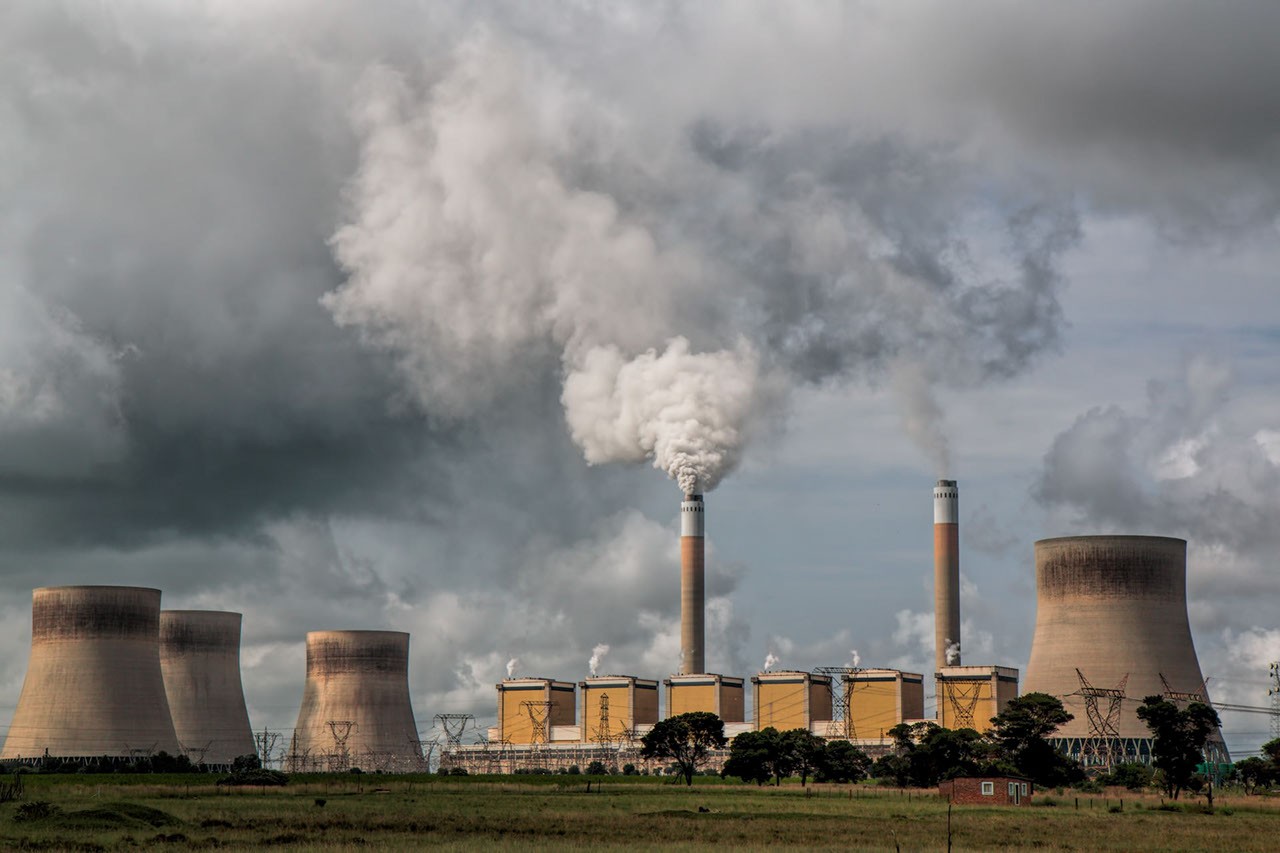
Causes - NASA Science
Scientists attribute the global warming trend observed since the mid-20th century to the human expansion of the "greenhouse effect"1 — warming that results
science.nasa.gov
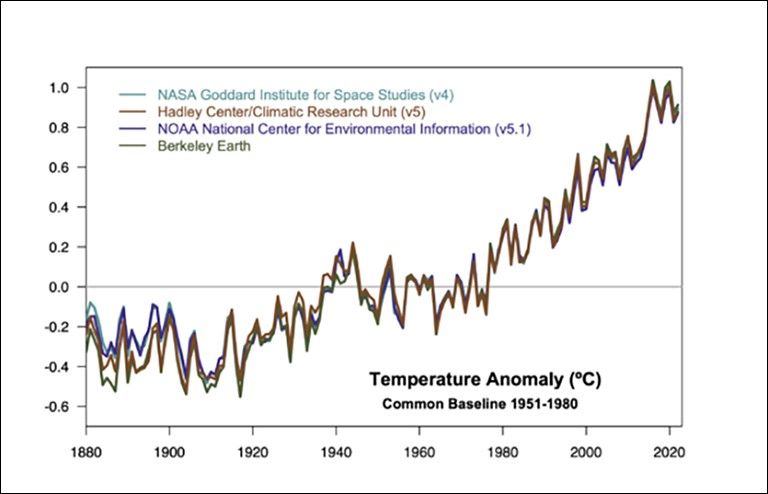
Scientific Consensus - NASA Science
It’s important to remember that scientists always focus on the evidence, not on opinions. Scientific evidence continues to show that human activities
science.nasa.gov

Extreme Weather - NASA Science
As Earth’s climate changes, it is impacting extreme weather across the planet. Record-breaking heat waves on land and in the ocean, drenching rains, severe
science.nasa.gov
Climate Change - NASA Science
NASA is a global leader in studying Earth’s changing climate.
climate.nasa.gov
gfm7175
Jesus is LORD!
Yes.It absorbs a photon
FTFY. --- Precisely.and then later emits a [different] photon.
Precisely. See above. There was no "re-emit" involved. One photon was absorbed (and destroyed) and then another entirely new photon was emitted.That you wanted to argue that it doesn't re-emit a photon
No, it shows that you don't understand the English language (in addition to your lack of physics knowledge).shows you are relying on semantics instead of physics.
How do you know it isn't the same photon? The "new photon" could simply be the old photon recreated. In fact there is no way to tell if the photons are the same because physics doesn't allow you to compare them.Yes.
FTFY. --- Precisely.
Precisely. See above. There was no "re-emit" involved. One photon was absorbed (and destroyed) and then another entirely new photon was emitted.
No, it shows that you don't understand the English language (in addition to your lack of physics knowledge).
gfm7175
Jesus is LORD!
Because B ≠ A.How do you know it isn't the same photon?
A recreated photon is NOT the original photon, even if it were indistinguishably similar to the original photon. Replicas are NOT originals, Richard...The "new photon" could simply be the old photon recreated.
Hmmmm, let's see what Google's AI overview has to say about this....In fact there is no way to tell if the photons are the same because physics doesn't allow you to compare them.
"Yes, photons are generally considered to be destroyed upon absorption. When a photon is absorbed, its energy is transferred to the absorbing particle (like an electron), and the photon ceases to exist as a distinct entity. The energy of the photon is then used to excite the particle, change its energy level, or cause some other interaction."
Hmmmmm, "destroyed upon absorption"...... interesting.... that sounds exactly like what I just got done claiming happens to photons upon absorption......

Denial of physics. You have not tested the photons to see if they are the same. Shroedinger.Because B ≠ A.
Recreated? I see you are now saying it isn't created but only recreated?A recreated photon is NOT the original photon, even if it were indistinguishably similar to the original photon. Replicas are NOT originals, Richard...
Google's AI is not a valid source for answers on physics since it is nothing more than a LLM.Hmmmm, let's see what Google's AI overview has to say about this....
"Yes, photons are generally considered to be destroyed upon absorption. When a photon is absorbed, its energy is transferred to the absorbing particle (like an electron), and the photon ceases to exist as a distinct entity. The energy of the photon is then used to excite the particle, change its energy level, or cause some other interaction."
Hmmmmm, "destroyed upon absorption"...... interesting.... that sounds exactly like what I just got done claiming happens to photons upon absorption......
gfm7175
Jesus is LORD!
Denial of logic. It's impossible to test a photon that has already been destroyed.Denial of physics. You have not tested the photons to see if they are the same. Shroedinger.
YOU are the one who introduced that word and made that claim, Richard... Try to keep up.Recreated? I see you are now saying it isn't created but only recreated?
Never said that it was, Richard. I just figured that I'd purposely use a leftist-approved source to avoid having a leftist complain about the source. I see that it, once again, didn't work. @Damocles is quite familiar with this phenomena.Google's AI is not a valid source for answers on physics since it is nothing more than a LLM.