Last time Earth hit these CO2 levels there were trees at the South Pole

The slower the rate of change, the easier it will be to adapt to it. If by "appropriate" you're asking what rate of change we could adapt to with relatively little hardship, I'd say an historically normal rate of change -- something in line with what we've seen in natural cycles at other points in human history. Even that will impose some challenges (the same way that natural climate change was tough on some humans and ecosystems in the past), but most people and ecosystems would take it in stride.

Past periods of emergence from ice ages tended to have a rate of warming around 0.08-0.14 degrees (C) of warming per century. The problem now is we've had more like 0.7 degrees in the last century (5 times the top of that natural range), and all evidence points to an acceleration of the warming. See here for the monthly temperature anomaly:

https://www.ncdc.noaa.gov/cag/global/time-series/globe/land_ocean/p12/12/1880-2019.csv

If you do a polynomial trendline on that, you see that it's a curve that rises upward (it's a much better fit for the data, with an R-squared value of 0.8754, than you'd get for a linear trend-line, with an R-squared of 0.7586). We've got an accelerating problem on our hands.

If you use that data to create a twelve-month moving average, you'll see the current anomaly is 0.82, and that ten years ago it was 0.57. That's an increase of 2.5 degrees (C) per century -- eighteen times the top speed of natural warming in the past. Will things keep going at the current break-neck speed? Hopefully not. But even if it slowed to a tenth the current pace, that would still be about twice the natural rate of post-ice-age warming. And, since we've been looking at an accelerating problem up to this point, there's a risk that it will actually accelerate still more.

So, what's an "appropriate" rate of change. I wouldn't be alarmed if we saw a sustained rate of change about a twentieth what we had over the course of the last decade. That would still be fast enough that, long-term, it could result in a slew of extinctions and major disruptions to human society, but we wouldn't expect to be left with radically impoverished biodiversity and centuries of seriously depressed quality of life for most humans.

So what is that "historical rate of change"? What kind of standard deviation is acceptable? Surely you have studied all of this being the expert climatologist that you are. Or maybe the expert climatologists have told you.

I think these are important pieces of information to know because after all, isn't it important to know if the actions you wish to take are successful? Shouldn't there be a target to shoot for? That just makes scientific sense doesn't it?

Let me use a medical analogy for you. Let's say there is a patient with a blood sugar of 250 mg/dL. Now "normal" is less than 100 mg/dL. It doesn't make sense to try to get them down do 100 mg/dL too quickly otherwise they will experience symptoms of hypoglycemia. So a much higher initial target will be set by the treating physician. See what I am getting at?

We need to know what the defined endpoint is. Do you have a defined endpoint? I mean something very specific and precise. Not generalities. I can wait
 
Oh look, the little coward has run away again. It couldn't answer the challenge to explain what made it think the statement was true, so it just reiterated that it was true and fled. Well, at least your retreats are comically inept, so we get the consolation of laughing at your ass waggling away.

did someone leave?....
 
What do you mean by "worse"? If you mean they were longer, that's certainly true, since the current one just started.

three degrees higher than the one that "just started" 30,000 years ago......shame you can't read a fucking graph or we could have an intelligent discussion.......
 
Yes, it definitely is .

no.....only a few virulent hold outs still pretend mankind caused the cycle of global warming that began 30,000 years ago and capped out three degrees cooler than the three previous cycles......(look at the ice core graph).....
 
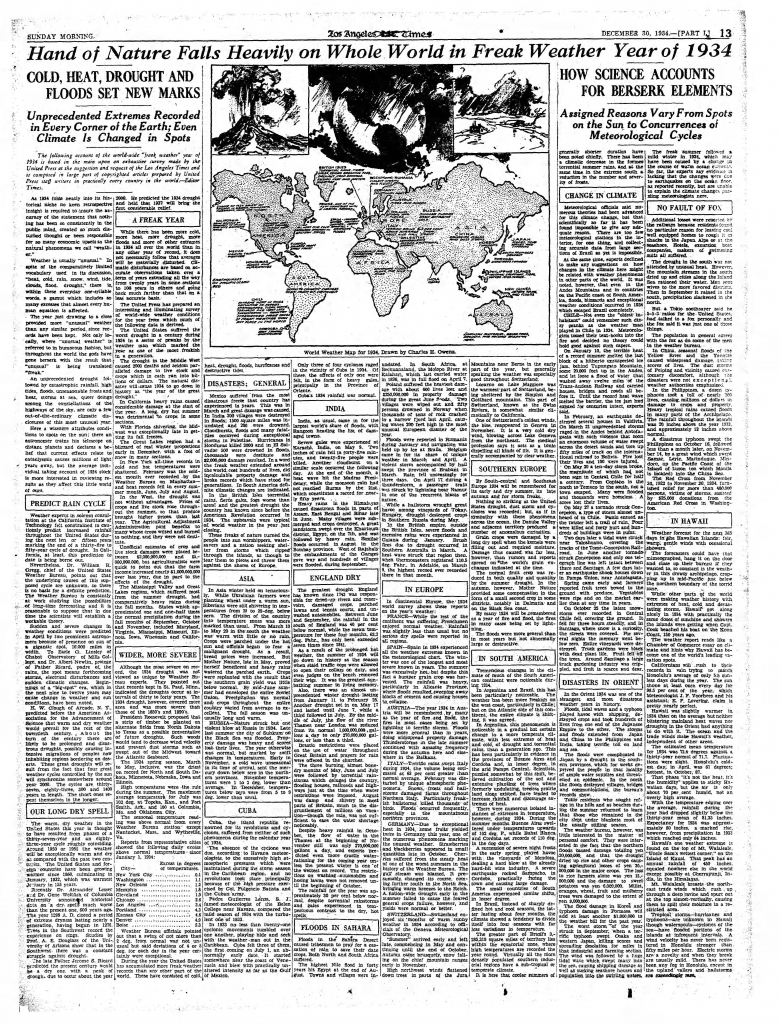
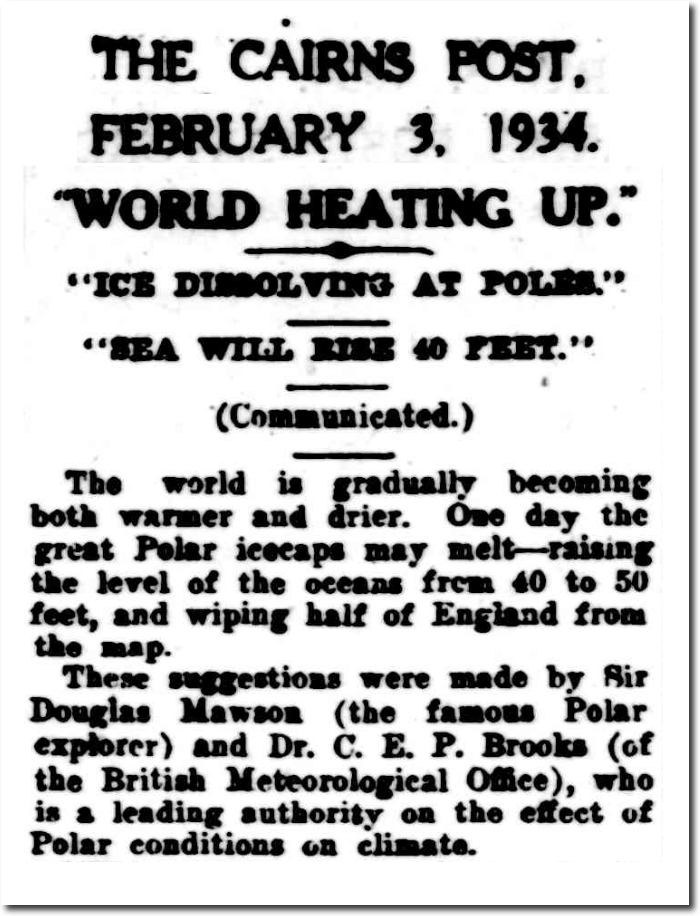
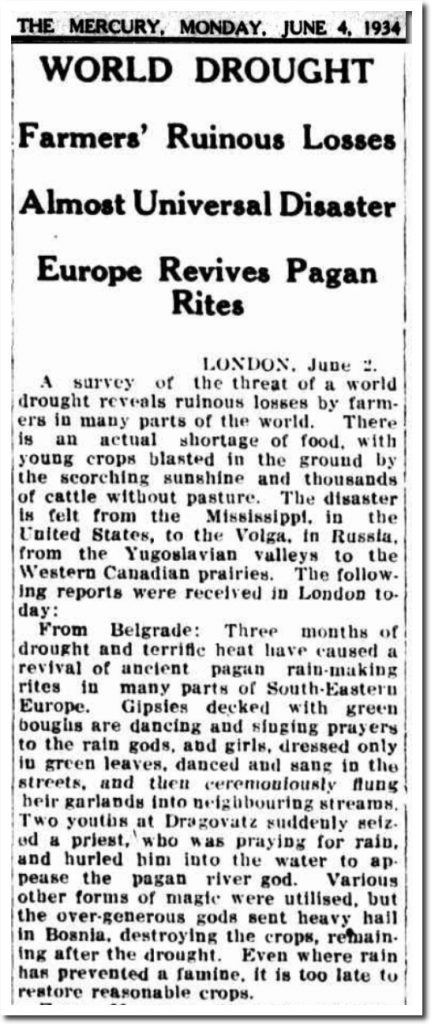
We've been here before, climate alarmism is nothing new.


The_Los_Angeles_Times_Sun__Dec_30__1934_-780x1024.jpg


2018-07-27074859_shadow.png


WorldDroughtLondon_shadow-431x1024.png
 
Hahaha! The low comedy just doesn't stop. You really think it was "referencing" my comment that was amusing?! That's a riot. Of course not. It was your absolutely braindead misinterpretation of it that was so funny.


The reason I brought it up will be obvious to absolutely any person with an average or better IQ who reads the thread. I'd been challenged with the supposed impossibility of a person melting an iceberg. I lay out a simple procedure that would allow a person to harness the sun's energy more effectively to greatly accelerate the melting. That procedure was also particularly relevant since, in terms of Physics, it has a great deal in common with the way that extra greenhouse gases in the atmosphere are greatly accelerating global warming.

Got it now? Nah, I didn't think so.

I'd welcome a challenge. Since your'e utterly incapable of providing one, though, I also welcome the opportunity to ridicule you. What else are you good for?

But you are the one who wanted to use the coal dust, even though the bergs aren't covered in it, and then you get all upset when your comment is addressed.!! :dunno:
 
Switching from fossil fuels to alternative sources will cause energy prices to skyrocket, and energy shortages. The peasants will starve and the rich libs will still be able to affort their jetsetter lifestyle. Warm periods in human history are prosperous periods. The Year without a Summer, 1916, was a disaster for humans.

Let me add, conversely, if the planet starts to cool, you will also See mass starvation. If CO2 starts to drop below 200 ppm, plant species will start to die off.

Historical climate data is "smoothed" and does not show every minute temperature spike like satellite data. Contrasting instrument data with prozy data breaks a cardinal rule of "scientific methodology". It is inexcusable. Yet that is exactly what the Al Gorians have done.

The only good thing, is that the cost of solar cells and their installation is becoming cheaper.

We've been thinking about them; but I would rather have them ground mounted, then on the roof.

Plus our back yard is large enough and gets plenty of sunlight to do it.
 
The only good thing, is that the cost of solar cells and their installation is becoming cheaper.

We've been thinking about them; but I would rather have them ground mounted, then on the roof.

Plus our back yard is large enough and gets plenty of sunlight to do it.

It sure is nice not to be 100% dependent on the grid.

Yeah, gov'ts subsidize the heck out of them. Get'em cheap while you can. :0)
 
It sure is nice not to be 100% dependent on the grid.

Yeah, gov'ts subsidize the heck out of them. Get'em cheap while you can. :0)

The extra cost that I'll have to ask about, is the battery back up; unless I go with daisy chained car batteries.
 
The impact of runaway emissions is already upon us. Several cities in the northern U.S., such as Buffalo, Cincinnati and Duluth, are already preparing to receive migrants from states like Florida, where residents are beset with increasing flooding, brutal heat waves, more severe and frequent hurricanes, sea level rise, and a worse allergy season. City planners in the aforementioned cities are already preparing by trying to figure out how to create jobs and housing for an influx of new residents.

Indications of the climate disruption refugee crisis are even more glaring in some other countries.

Large numbers of Guatemalan farmers already have to leave their land due to drought, flooding, and increasingly severe extreme weather events.

In low-lying Bangladesh, hundreds of thousands of people are already in the process of being displaced from coastal homes, and are moving into poverty-stricken areas of cities that are already unprepared to receive the influx of people. Given that 80 percent of the population of the country already lives in a flood plain, the crisis can only escalate with time as sea level rise continues to accelerate.


much more, great links:

https://truthout.org/articles/the-last-time-there-was-this-much-co2-trees-grew-at-the-south-pole/

You got to love these liberal hypocrites who talk about climate control but they have a carbon footprint 20 times more than the average citizen. Al Gore is going to tell us how we should live while he is in one of his mansions or his jet plane.
 
Al Gore warned in his Oscar-winning documentary, back in 2006, that sea levels would rise by 20 feet "in the near future." The producers even offered chilling depictions of cities underwater. Gore was only off by 20 feet or so.

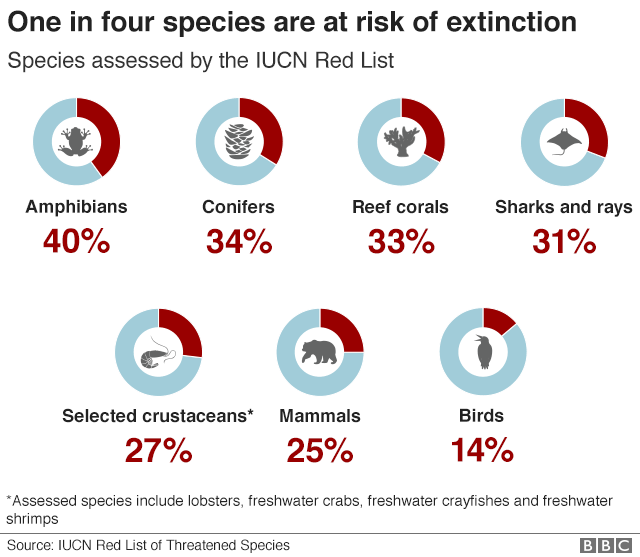
Anyway, South Beach and Sydney Harbour are still with us. If you want to stop extinctions then start by slowing down population increases. I'd start a cull as well, naturally arseholes like Moonatic and McSquawker would be top of the list.

DJxPh2zVAAIZy3O_shadow.jpg

DJxPifyVwAE4DD7_shadow.jpgv
 
Last edited:
Al Gore warned in his Oscar-winning documentary, back in 2006, that sea levels would rise by 20 feet "in the near future." The producers even offered chilling depictions of cities underwater. Gore was only off by 20 feet or so.

Anyway, South Beach and Sydney Harbour are still with us. If you want to stop extinctions then start by slowing down population increases. I'd start a cull as well, naturally arseholes like Moonatic and McSquawker would be top of the list.

View attachment 9821

View attachment 9822v


At a big 2005 conference of concerned climate scientists and politicians in London, attendees warned that the world had as little as 10 years before it would reach "the point of no return on global warming." They warned that humans would soon be grappling with "widespread agricultural failure," "major droughts," "increased disease," "the death of forests" and the "switching-off of the North Atlantic Gulf Stream," among many other terrible calamities.
 
At a big 2005 conference of concerned climate scientists and politicians in London, attendees warned that the world had as little as 10 years before it would reach "the point of no return on global warming." They warned that humans would soon be grappling with "widespread agricultural failure," "major droughts," "increased disease," "the death of forests" and the "switching-off of the North Atlantic Gulf Stream," among many other terrible calamities.

But you just kept on a-pollutin' anyway, eh maggot.
 
Back
Top