cancel2 2022
Canceled
It is easy to fool someone, but it is almost impossible to convince them that they have been fooled. That is the fraudsters staple psychological tool used by the likes of Al Gore and many others. Case in point, this paper was just published by the American Meteorological Society.
https://journals.ametsoc.org/doi/abs/10.1175/JCLI-D-17-0502.1
Sent from my Lenovo K8 using Tapatalk
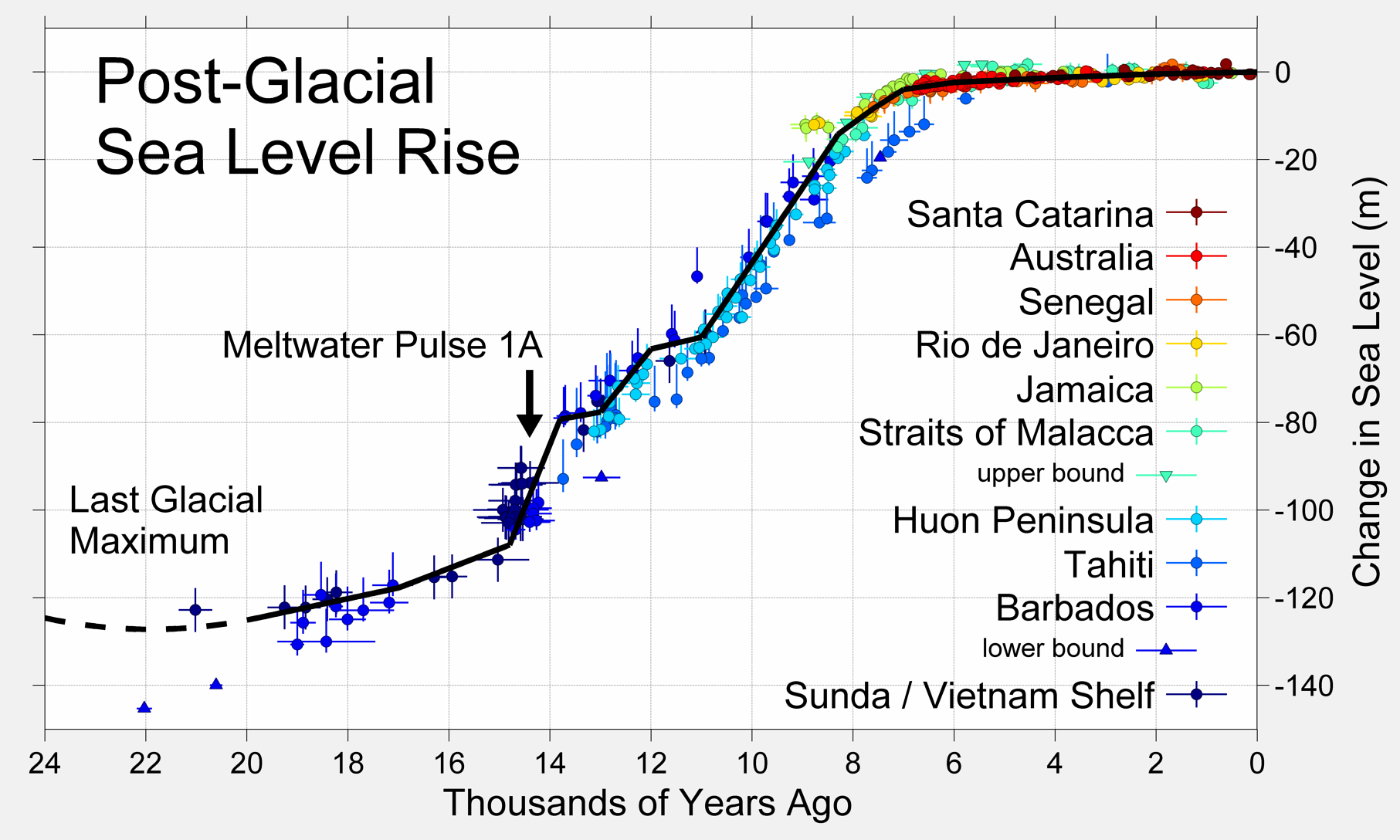
In another newly published paper by Frederiske et al. 2018 just this year, oceanographers estimate that global sea levels rose at a rate of only 1.42 mm per year between 1958 and 2014. That figure closely coincides with the results of Dr. Simon Holgate from 2007. According to the Holgate study: “The rate of sea level change was found to be larger in the early part of last century (2.03 ± 0.35 mm/yr 1904–1953), in comparison with the latter part (1.45 ± 0.34 mm/yr 1954–2003).”
A Consistent Sea-Level Reconstruction and Its Budget on Basin and Global Scales over 1958–2014
Thomas Frederikse
Department of Geoscience and Remote Sensing, Delft University of Technology, Delft, Netherlands
Svetlana Jevrejeva
National Oceanography Centre, Liverpool, United Kingdom
Riccardo E. M. Riva
Department of Geoscience and Remote Sensing, Delft University of Technology, Netherlands
Sönke Dangendorf
Research Institute for Water and Environment, University of Siegen, Siegen, Germany
Supplemental information related to this paper is available at the Journals Online website: https://doi.org/10.1175/JCLI-D-17-0502.s1.
[emoji767] 2018 American Meteorological Society. For information regarding reuse of this content and general copyright information, consult the AMS Copyright Policy (www.ametsoc.org/PUBSReuseLicenses).
Corresponding author: Thomas Frederikse, t.frederikse@tudelft.nl
Journal of Climate
Vol. 31: , Issue. 3, : Pages. 1267-1280
(Issue publication date: February 2018)
Received Date: July 27, 2017
Final Form: October 31, 2017
https://doi.org/10.1175/JCLI-D-17-0502.1
Abstract
Different sea level reconstructions show a spread in sea level rise over the last six decades and it is not yet certain whether the sum of contributors explains the reconstructed rise. Possible causes for this spread are, among others, vertical land motion at tide-gauge locations and the sparse sampling of the spatially variable ocean. To assess these open questions, reconstructed sea level and the role of the contributors are investigated on a local, basin, and global scale. High-latitude seas are excluded. Tide-gauge records are combined with observations of vertical land motion, independent estimates of ice-mass loss, terrestrial water storage, and barotropic atmospheric forcing in a self-consistent framework to reconstruct sea level changes on basin and global scales, which are compared to the estimated sum of contributing processes. For the first time, it is shown that for most basins the reconstructed sea level trend and acceleration can be explained by the sum of contributors, as well as a large part of the decadal variability. The sparsely sampled South Atlantic Ocean forms an exception. The global-mean sea level reconstruction shows a trend of 1.5 ± 0.2 mm yr−1 over 1958–2014 (1σ), compared to 1.3 ± 0.1 mm yr−1 for the sum of contributors. Over the same period, the reconstruction shows a positive acceleration of 0.07 ± 0.02 mm yr−2, which is also in agreement with the sum of contributors, which shows an acceleration of 0.07 ± 0.01 mm yr−2. Since 1993, both reconstructed sea level and the sum of contributors show good agreement with altimetry estimates.
https://journals.ametsoc.org/doi/abs/10.1175/JCLI-D-17-0502.1
Sent from my Lenovo K8 using Tapatalk
Last edited: